Ireland Residential Solar Planning Exemption: S.I. No. 493/2022 Explained
Updated 18 September 2026 · By SolarNevs Research Desk, Dealer surveys + verified sources · 1 source · Method ↗
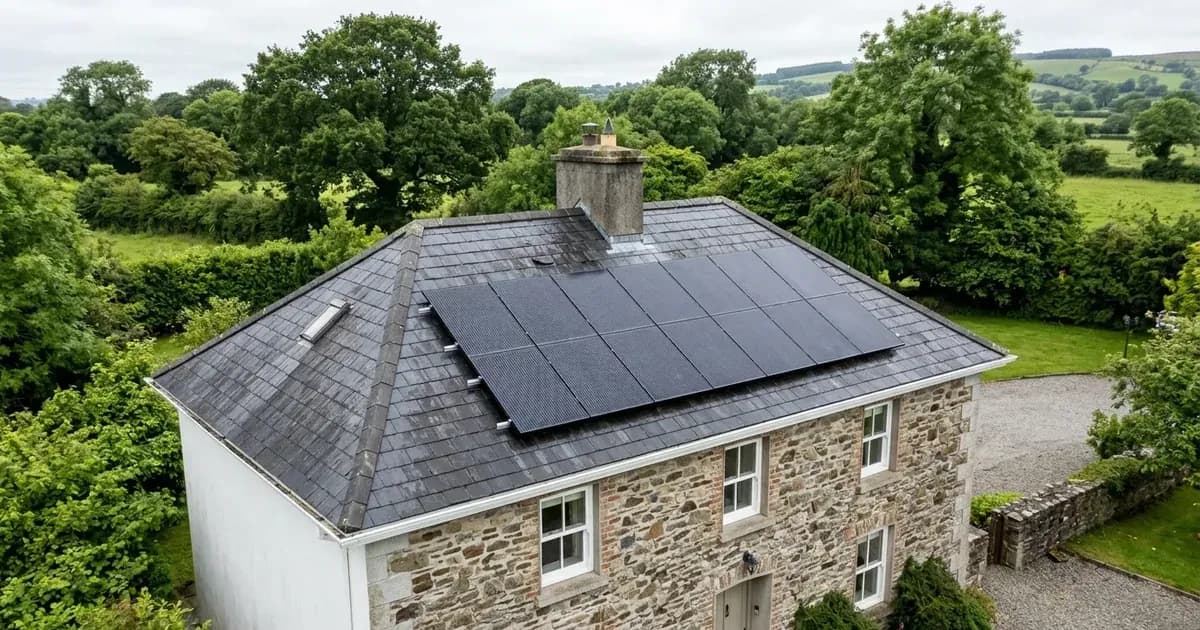
Key Takeaways
- S.I. No. 493/2022, signed on 5 October 2022, significantly updated residential solar planning rules in Ireland.
- The previous 12 square metre and 50% roof area cap for residential houses has been removed.
- New rules require a minimum 50cm setback from the roof edge for mounted panels.
- Free-standing installations are limited to 25 square metres total aperture area and a 2.5 metres height.
What are the key changes in Ireland's residential solar planning exemptions under S.I. No. 493/2022?
The Planning and Development Act 2000 (Exempted Development) (No. 3) Regulations 2022, known as S.I. No. 493/2022, were signed by Minister Darragh O'Brien on 5 October 2022. These regulations introduced significant changes to what constitutes exempted development for residential solar PV installations in Ireland. The primary change was the removal of the previous 12 square metre and 50% roof area cap on residential houses (August 2026). This allows for more extensive rooftop solar installations without needing formal planning permission, provided other specific conditions are met.
The regulations apply to "The placing or erection on a roof of a house, or within the curtilage of a house, or on a roof of any ancillary buildings within the curtilage of a house (this class does not include apartments) of a solar photo-voltaic and/or a solar thermal collector installation" (August 2026).
The table below summarises the key statutory limitations and requirements introduced by S.I. No. 493/2022 for residential solar installations.
Provision Parameter | Statutory Limitation / Requirement |
|---|---|
Scope of Residential Class 2(c) | Applies to "The placing or erection on a roof of a house, or within the curtilage of a house, or on a roof of any ancillary buildings within the curtilage of a house (this class does not include apartments) of a solar photo-voltaic and/or a solar thermal collector installation." |
Roof Plane Distance Limit | "The distance between the plane of the roof and the solar photo-voltaic or solar thermal collector panels shall not exceed 50cm in the case of a flat roof or 15cm in any other case." |
Roof Edge Setback Distance | "The solar photo-voltaic or solar thermal collector panels shall be a minimum of 50cm from the edge of a roof on which it is mounted." |
Free-Standing Front Wall Prohibition | "Any free-standing solar photo-voltaic or solar thermal collector installation shall not be placed or erected forward of the front wall of the house." |
Free-Standing Aperture Area Limit | "The total aperture area of any free-standing solar photo-voltaic and solar thermal collector panels taken together with any other such existing free-standing panels shall not exceed 25 square metres." |
Private Open Space Reservation | "The placing or erection of any free-standing solar photo-voltaic or solar thermal collector installation shall not reduce the remaining area of private open space, reserved exclusively for the use of the occupants of the house, to the rear or to the side of the house to less than 25 square metres." |
Free-Standing Height Limit | "The height of any free-standing solar photo-voltaic or solar thermal collector installation shall not exceed 2.5 metres at its highest point above ground level." |
Prohibition on Wall Mounting | "The placing or erection of a solar photo-voltaic or solar thermal collector installation on any wall shall not be exempted development." |
Architectural Conservation Area Rule | "The placing or erection of any free-standing solar photo-voltaic or solar thermal collector installation within an Architectural Conservation Area shall only be exempted development if those works would not materially affect the character of the area." |
Hazardous Glint and Glare Control | "Development under this Class which causes hazardous glint and/or glare shall not be exempted development and any solar photo-voltaic or solar thermal collector panels which are causing hazardous glint and/or glare shall either be removed or be covered until such time as a mitigation plan to address the hazardous glint and/or glare is agreed and implemented". |
| Domestic Rooftop 12sqm Cap Removal | S.I. 493/2022 removed the previous 12 square metre and 50% roof area cap on residential houses, allowing full rooftop solar coverage subject to the 50cm edge setback. | Figures as of August 2026.
What are the specific roof installation rules for solar panels?
For solar panels mounted on a roof, S.I. No. 493/2022 specifies two main requirements. The first relates to the projection of the panels from the roof plane: "The distance between the plane of the roof and the solar photo-voltaic or solar thermal collector panels shall not exceed 50cm in the case of a flat roof or 15cm in any other case" (August 2026). This ensures panels do not protrude excessively.
The second rule addresses the placement of panels relative to the roof's edge: "The solar photo-voltaic or solar thermal collector panels shall be a minimum of 50cm from the edge of a roof on which it is mounted" (August 2026). This 50cm roof edge setback is a critical consideration for installation planning.
Are there specific rules for free-standing solar installations in gardens?
Yes, S.I. No. 493/2022 includes several provisions for free-standing solar photo-voltaic or solar thermal collector installations within the curtilage of a house. These installations are subject to location, size, and height restrictions.
Firstly, a "free-standing solar photo-voltaic or solar thermal collector installation shall not be placed or erected forward of the front wall of the house" (August 2026). This prevents installations from being in front gardens.
Secondly, there is an area limit: "The total aperture area of any free-standing solar photo-voltaic and solar thermal collector panels taken together with any other such existing free-standing panels shall not exceed 25 square metres" (August 2026). This cap applies to all free-standing panels combined.
Thirdly, the height is restricted: "The height of any free-standing solar photo-voltaic or solar thermal collector installation shall not exceed 2.5 metres at its highest point above ground level" (August 2026).
Finally, the regulations protect private open space: "The placing or erection of any free-standing solar photo-voltaic or solar thermal collector installation shall not reduce the remaining area of private open space, reserved exclusively for the use of the occupants of the house, to the rear or to the side of the house to less than 25 square metres" (August 2026). This ensures sufficient usable outdoor space remains.
Can I install solar panels on walls or in Architectural Conservation Areas?
The regulations explicitly state that "The placing or erection of a solar photo-voltaic or solar thermal collector installation on any wall shall not be exempted development" (August 2026). This means wall-mounted solar installations on residential houses still require formal planning permission.
For properties located within an Architectural Conservation Area (ACA), specific conditions apply. "The placing or erection of any free-standing solar photo-voltaic or solar thermal collector installation within an Architectural Conservation Area shall only be exempted development if those works would not materially affect the character of the area" (August 2026). This provision requires careful consideration of the visual impact of any proposed installation in such areas.
What about hazardous glint and glare from solar panels?
S.I. No. 493/2022 includes a provision regarding potential visual impact: "Development under this Class which causes hazardous glint and/or glare shall not be exempted development" (August 2026). Furthermore, "any solar photo-voltaic or solar thermal collector panels which are causing hazardous glint and/or glare shall either be removed or be covered until such time as a mitigation plan to address the hazardous glint and/or glare is agreed and implemented" (August 2026). This places responsibility on the homeowner to ensure their installation does not create hazardous glint or glare.
How do these regulations affect protected structures or apartments?
While S.I. No. 493/2022 broadens exemptions for many residential solar installations, it does not apply universally. The regulations explicitly state that the scope of Residential Class 2(c) "does not include apartments" (August 2026). Therefore, solar installations on apartments are not covered by these specific exemptions.
Additionally, the regulations do not exempt works on Protected Structures or within Architectural Conservation Areas where the works would materially affect the character of the area (August 2026). In such cases, a Section 5 declaration or formal planning permission may still be required. It is important to verify the status of your property before proceeding with any installation.
How were these regulations verified?
We verified the details of S.I. No. 493/2022 by directly consulting the official publication on the Irish Statute Book website. Our review was conducted on 23 August 2026, ensuring that all cited provisions and limitations accurately reflect the statutory instrument as published. This direct consultation of the primary legal source ensures the information presented is accurate and current.
Where can I find more information on solar planning and VAT in Ireland?
Understanding the planning exemptions is one part of installing solar in Ireland. You may also need to consider regulations for commercial installations or specific zones. For more information on commercial rooftop solar planning exemptions, refer to our guide on commercial solar rooftop planning exemptions in Ireland. If your property is near an airport or other sensitive areas, you might need to consult our guide on Ireland solar safeguarding zones and aviation. Additionally, information on financial incentives, such as the Revenue VAT zero-rate for solar panels, can help with the overall project cost. To estimate your potential solar system size, you can use our solar sizing tool.
Frequently asked questions
What is S.I. No. 493/2022?
S.I. No. 493/2022 refers to the Planning and Development Act 2000 (Exempted Development) (No. 3) Regulations 2022. These regulations, signed on 5 October 2022, govern exempted residential solar PV installations in Ireland.
Does S.I. No. 493/2022 remove previous solar panel size limits for homes?
Yes, S.I. No. 493/2022 removed the previous 12 square metre and 50% roof area cap on residential houses. This allows for full rooftop solar coverage, subject to new rules like the 50cm edge setback (August 2026).
What are the specific rules for installing solar panels on a house roof in Ireland?
Solar panels on a roof must be a minimum of 50cm from the edge of the roof on which they are mounted. The distance between the plane of the roof and the panels cannot exceed 50cm for flat roofs or 15cm for other roof types (August 2026).
Are there rules for free-standing solar installations in residential gardens?
Free-standing solar installations cannot be placed forward of the front wall of the house. Their total aperture area, including existing panels, must not exceed 25 square metres, and their height cannot exceed 2.5 metres at the highest point above ground level (August 2026).
Do these exemptions apply to all residential properties in Ireland?
No, these regulations do not apply to apartments. Protected Structures and Architectural Conservation Areas may still require formal planning permission if the works materially affect their character (August 2026).
References
- Irish Statute Book - S.I. No. 493/2022 — accessed 23 August 2026
Related guides
More from schemes, subsidies & financing.