Flat Roof and Metal Deck Solar Panel Mounting Guide for Ireland
Updated 9 September 2026 · By SolarNevs Research Desk, Dealer surveys + verified sources · 1 source · Method ↗
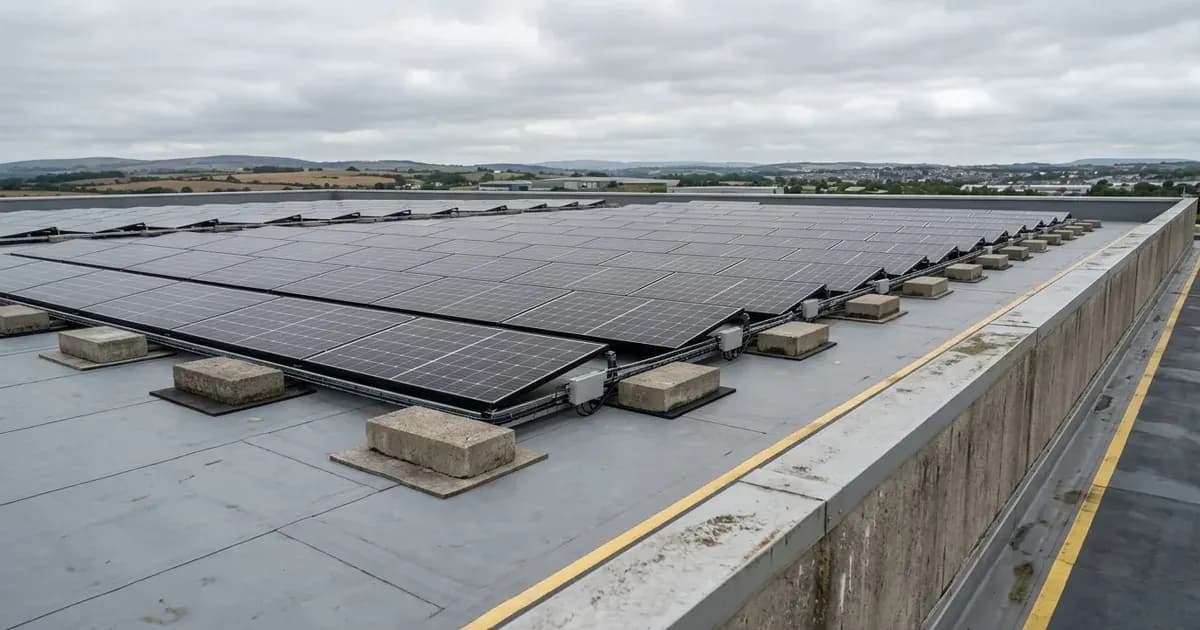
Key Takeaways
- Metal deck, trapezoidal, and standing seam roofs require non-penetrating clamp systems that meet the roofing manufacturer's specifications.
- Flat roof solar installations can use either ballasted frames or engineered fixed solutions, both requiring structural assessment.
- PV modules on flat roofs must maintain a minimum 200mm setback from any parapet wall for maintenance access.
- All solar PV mounting systems in Ireland must comply with the Sustainable Energy Authority of Ireland (SEAI) Code of Practice, including earthing and structural integrity.
Mounting Solar Panels on Flat Roofs in Ireland
In Ireland, the Sustainable Energy Authority of Ireland (SEAI) publishes a Code of Practice for Installers of Domestic Solar Photovoltaic systems, which outlines specific requirements for mounting solar panels. For flat roof systems, installers have two primary options: a ballasted frame system or an engineered fixed solution.
A ballasted frame system uses weight to secure the PV modules without penetrating the roof surface. The appropriate ballast must be calculated for the specific site conditions. An engineered fixed solution, such as upstands or structural supports, is also acceptable. This type of system requires assessment and approval by a qualified structural engineer to ensure it does not affect the weathertightness of the roof.
Regardless of the method chosen, the mounting system must not penetrate or deform the roof surface in a way that could lead to rainwater pooling or damage. Suitable protection must also be installed between the mounting frame and the roof surface.
Understanding Metal Deck and Trapezoidal Roof Mounting
For metal deck, trapezoidal, and standing seam roofs, the SEAI Code of Practice specifies a non-penetrating approach. A fixing or clamping system should be used that meets the requirements of the roofing manufacturer. This system must not penetrate the entire roof system. Instead, it should connect to the external roof surface, typically through a clamp.
For single skin roofs of unoccupied buildings, such as a shed, garage, workshop, or lean-to, a through-fixing to the rafter or purlins is permitted. This fixing must meet the requirements of the building regulations (Part D) and must not affect the weathertightness of the building.
Detailed Requirements for Flat Roof Solar Systems
When installing solar panels on flat roofs, several specific requirements must be met to ensure safety, stability, and compliance.
Requirement | Detail |
|---|---|
Mounting System Type | For flat roof mounted systems, a ballasted frame, or engineered fixed solution, is acceptable. |
Ballasted Systems | A mounting frame, with appropriate ballast (calculated for the site conditions), shall be used for mounting the PV modules. The required ballast, and the structural and wind loading, shall be assessed. |
Non-Ballasted Systems | An engineered solution, such as upstands or structural supports, is acceptable where this is assessed and approved by a qualified structural engineer and does not affect the weather-tightness of the roof. |
Roof Surface Integrity | The mounting system must not penetrate the roof surface, and must not deform the roof surface such that pooling of rainwater or damage may occur. |
Parapet Setback | The PV Modules must not be within 200mm of inside of parapet wall. This is to allow for maintenance of both the array and any roof penetration/mounting/flashings. |
Wind Loading | In the case of a low-rise parapet, further set back may be required if deemed necessary due to wind loading. |
Surface Protection | Suitable protection between the mounting frame and roof surface shall be installed. |
Earthing, Bonding, and Lightning Protection for Solar PV Systems
Proper earthing, equipotential bonding, and lightning protection are critical safety aspects for any solar PV installation. The SEAI Code of Practice provides clear guidelines:
- Earthing: Earthing of the metallic parts of the solar PV modules and mounting system should be made in accordance with I.S. 10101. This ensures that any fault currents are safely directed to the earth, protecting people and equipment.
- Equipotential Bonding: In general, where there are no adjacent metallic elements of the building (e.g., structural steel or piping) that are connected to the building earth, no additional equipotential bonding or connections to building earth are required.
- Lightning Protection: The risk of lightning should be assessed for individual buildings in accordance with EN 62305. If a building already has a lightning protection system, the solar PV modules and frame must be bonded to that system with an appropriately sized conductor.
These measures are essential for preventing electrical hazards and protecting the integrity of the solar PV system and the building.
Professional Responsibilities and Owner-Managed Aspects
While owners can understand the principles of their solar PV system, the installation and structural integrity aspects are strictly within the domain of qualified professionals.
- Professional Work: Tasks such as structural and wind loading assessments, calculating appropriate ballast for flat roof systems, designing engineered fixed solutions, and ensuring compliance with building regulations (Part D) require the expertise of qualified structural engineers and certified installers. Earthing, equipotential bonding, and lightning protection assessments must also be carried out by registered electricians in accordance with I.S. 10101 and EN 62305. Attempting these tasks without the necessary qualifications can compromise safety, invalidate warranties, and lead to non-compliance with local regulations.
- Owner's Role: As an owner, your primary responsibilities include ensuring that maintenance access, such as the 200mm setback from parapet walls on flat roofs, is maintained. You should also be aware of the design choices made for your system, such as whether it is ballasted or an engineered fixed solution, and understand that any modifications to the mounting structure or roof without professional assessment are not permitted.
Any work that affects the structural integrity of the roof, the electrical safety of the system, or compliance with building codes must be performed by a registered person.
What the Published Sources Do Not Tell You
The SEAI Code of Practice provides essential guidelines, but like many regulatory documents, it does not detail every specific calculation or methodology.
- Roofing Manufacturer Requirements: The document specifies that metal deck systems must meet the requirements of the roofing manufacturer but does not provide specific details on what these requirements entail.
- Building Regulations (Part D): While through-fixing for single skin roofs must meet Part D building regulations, the document does not elaborate on these specific requirements.
- Other Codes and Certifications: Specific details on the "NSAI Code of Practice (SR 50-2)" and "Irish Agrément Certified" standards, which may be relevant to mounting systems, are not provided.
- Earthing and Lightning Protection Standards: While I.S. 10101 for earthing and EN 62305 for lightning protection assessment are referenced, the document does not provide specific details from these standards.
- Ballast Calculations: The document states that ballast for flat roof systems must be "calculated for the site conditions" and "assessed in accordance with section 4.3.2," but it does not provide specific calculations or methodologies for determining appropriate ballast.
- Ground-Mounted System Details: For ground-mounted systems, the document mentions considering the "strength and suitability of the ground area, soil conditions, stability, and risk of subsidence," but it does not provide specific details or methodologies for assessing these factors.
These gaps mean that installers and structural engineers must consult additional specific standards and manufacturer documentation to ensure full compliance and safety.
Frequently asked questions
What are the main mounting options for flat roofs in Ireland?
For flat roof mounted systems in Ireland, the Sustainable Energy Authority of Ireland (SEAI) Code of Practice permits either a ballasted frame or an engineered fixed solution. Ballasted systems require the ballast to be calculated for site conditions, while engineered solutions need assessment and approval by a qualified structural engineer.
Are there specific setback requirements for solar panels on flat roofs?
Yes, PV modules on flat roofs must not be within 200mm of the inside of any parapet wall. This setback ensures adequate space for maintenance of both the array and any roof penetrations or flashings. Further setback may be necessary for low-rise parapets due to wind loading.
How should solar panels be mounted on metal deck or standing seam roofs?
For metal deck, trapezoidal, and standing seam roofs, the SEAI Code of Practice requires a fixing or clamping system that meets the roofing manufacturer's requirements. This system must not penetrate the entire roof system, instead connecting to the external roof surface, such as with a clamp.
What are the earthing requirements for solar PV systems in Ireland?
Earthing of the metallic parts of solar PV modules and their mounting system must be made in accordance with I.S. 10101. Where a building has an existing lightning protection system, the solar PV modules and frame must be bonded to it with an appropriately sized conductor.
Can I install solar panels on a single skin roof of an unoccupied building?
Yes, for single skin roofs of unoccupied buildings like sheds, garages, workshops, or lean-tos, a through-fixing to the rafter or purlins is permitted. This fixing must meet the requirements of the building regulations (Part D) and must not affect the weathertightness of the building.
References
- SEAI Code of Practice for Installers of Domestic Solar Photovoltaic systems — accessed 27 August 2026
Related guides
More from sizing, net billing & installation.