Ireland Solar PV Electrical Requirements: I.S. 10101 for DC and AC Systems
Updated 17 September 2026 · By SolarNevs Research Desk, Dealer surveys + verified sources · 1 source · Method ↗
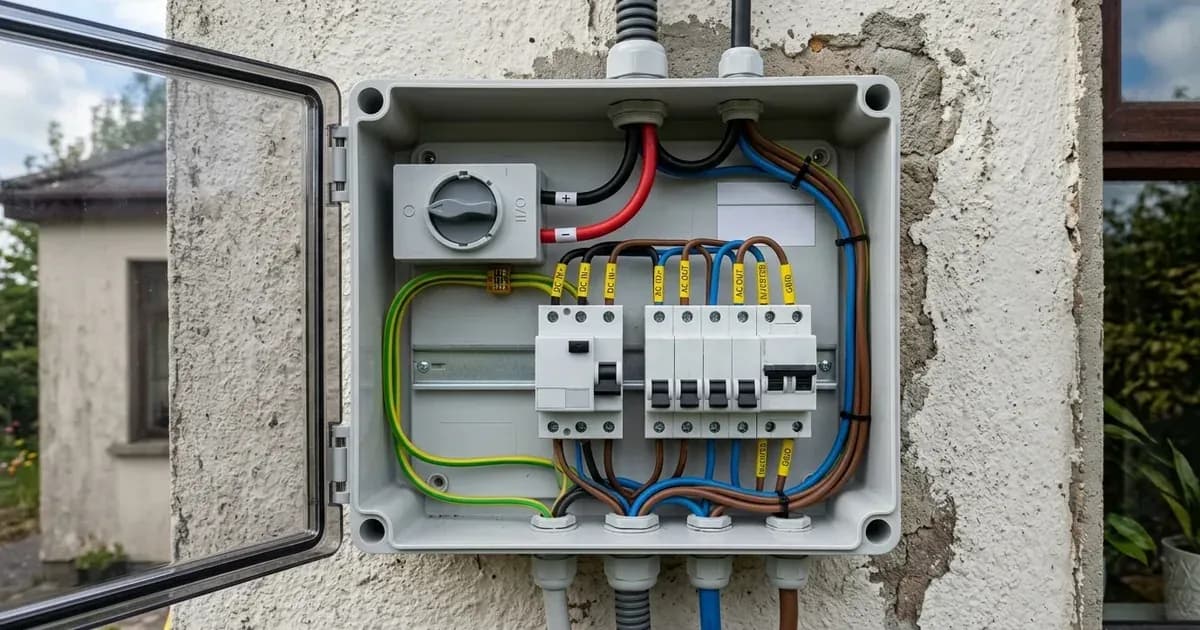
Key Takeaways
- All DC components must be rated with significant safety margins for voltage and current to handle peak conditions.
- An AC system typically requires a Type B RCD unless the inverter provides specific AC/DC separation.
- Inverters must meet strict efficiency and European standards, including specific Irish protection settings.
- Installation work on these electrical systems requires a registered professional to ensure compliance with I.S. 10101 and safety.
Understanding Electrical Compliance for Solar PV in Ireland
Installing a solar PV system in Ireland requires strict adherence to electrical safety and performance standards, primarily governed by I.S. 10101 and the Sustainable Energy Authority of Ireland (SEAI) Code of Practice. These guidelines ensure that all components, from DC cabling to AC connections and the inverter itself, meet the necessary specifications for safe and efficient operation. This article outlines the key electrical requirements for both the DC and AC sides of a solar PV installation in Ireland.
The Mechanism of Electrical Safety and Performance
The electrical requirements for solar PV systems are designed to protect against hazards like overcurrent, overvoltage, and earth faults, while also ensuring the system operates efficiently. On the DC side, this involves selecting components that can withstand the maximum voltages and currents generated by the solar array, even under extreme conditions. On the AC side, appropriate protection devices like Residual Current Devices (RCDs) prevent electric shock and fire by detecting imbalances in current flow. Inverters, as the bridge between DC and AC, must convert power efficiently and safely, integrating with the grid according to national standards.
Specific Electrical Requirements for Irish Solar PV Systems
The following tables detail the critical electrical requirements for solar PV installations in Ireland, as outlined by the SEAI Code of Practice. These specifications are mandatory for ensuring compliance and safety.
DC Electrical System Requirements
Requirement | Detail |
|---|---|
DC component voltage rating | DC components must be "rated for Voc with 15% safety margin". This ensures components can handle the maximum open-circuit voltage, especially in cold conditions. |
DC component current rating | Components must be rated for "Isc with 25% margin". This accounts for potential short-circuit currents, which can be higher than normal operating currents. |
DC circuit resistive/voltage-drop losses | "DC circuits must keep resistive/voltage-drop losses under 3%". Minimising voltage drop ensures maximum power transfer from the array to the inverter. |
DC connectors (MC4) standards | "DC connectors (typically MC4) must meet IP21/Class II and EN 62852/EN 50521". These standards ensure connectors are robust, weather-resistant, and safe. |
DC isolator requirement | A "2-pole DC isolator required at inverter connection point". This allows for safe disconnection of the DC array from the inverter during maintenance or emergencies. |
DC isolator warning label | "specific warning label wording" is required. This label alerts personnel to the presence of live DC voltage. |
AC Electrical System Requirements
Requirement | Detail |
|---|---|
AC RCD type | "AC system needs a Type B RCD (per I.S. EN62423/EN60947-2) unless the inverter provides simple AC/DC separation". Type B RCDs are crucial for detecting smooth DC earth fault currents that Type A or AC RCDs cannot. |
AC isolator requirement | A "2-pole AC isolator required between inverter and consumer unit". This allows for safe disconnection of the inverter from the household electrical supply and the grid. |
Inverter Requirements
Requirement | Detail |
|---|---|
Inverter standards compliance | "inverters must meet EN 62109, EN50549 with Irish protection settings". Compliance with these European standards, along with specific Irish grid protection settings, is essential for grid connection. |
Inverter efficiency | Inverters must "have >95% rated efficiency". High efficiency ensures minimal energy loss during the DC to AC conversion process. |
What you can change yourself, and what you cannot
As a homeowner, you are generally responsible for monitoring your solar PV system's performance and ensuring it is well-maintained. This might include checking system outputs via an app or display, and keeping the solar panels clean.
However, any work involving the electrical connections, such as installing isolators, wiring new components, or configuring grid protection settings on the inverter, must be carried out by a registered electrical professional. Modifying these settings or working on live electrical circuits without proper qualifications is dangerous and can invalidate your system's warranty, insurance, and connection agreement with the grid operator. In Ireland, all electrical work must comply with I.S. 10101 and be certified by a qualified electrician.
What the published sources do not tell you
While the SEAI Code of Practice provides comprehensive guidelines, certain specific details are not always explicitly stated in the publicly available summary documents. For instance, the exact "specific warning label wording" for the DC isolator is mentioned as a requirement but the precise text is not published in that summary. Installers would typically refer to the full I.S. 10101 standard or detailed SEAI guidance documents for this precise wording.
Furthermore, while the document specifies "Irish protection settings" for inverters, the exact values for these settings (e.g., voltage and frequency trip points) are not detailed. These are critical for grid synchronisation and safety and are typically provided by the grid operator or specified in more detailed technical appendices to the standards. Installers must ensure their chosen inverter models are pre-approved or configurable to these specific local grid requirements.
Frequently asked questions
What are the DC voltage and current rating requirements for solar PV components in Ireland?
DC components must be rated for the open-circuit voltage (Voc) with a 15% safety margin. For current, they must be rated for the short-circuit current (Isc) with a 25% margin, as per SEAI guidelines for solar PV installations in Ireland.
What type of RCD is required for AC solar PV systems in Ireland?
An AC system in Ireland requires a Type B RCD, compliant with I.S. EN62423/EN60947-2. This is unless the inverter itself provides simple AC/DC separation, in which case other RCD types might be permissible.
What efficiency is required for solar PV inverters in Ireland?
Inverters installed in Ireland for solar PV systems must have a rated efficiency greater than 95%. They must also comply with EN 62109 and EN50549, incorporating specific Irish protection settings.
Are DC and AC isolators mandatory for solar PV installations in Ireland?
Yes, a 2-pole DC isolator is required at the inverter connection point, and a 2-pole AC isolator is needed between the inverter and the consumer unit. These are critical safety components for isolating the system.
What standards must DC connectors meet for solar PV in Ireland?
DC connectors, typically MC4 type, must meet IP21/Class II protection standards. They must also comply with EN 62852 and EN 50521 standards to ensure safety and reliability in Irish solar PV installations.
References
- SEAI Code of Practice for Installers for the Domestic Solar PV Scheme — accessed 27 August 2026
Related guides
More from sizing, net billing & installation.