Ireland Solar Roof Structural Assessment and Wind Load Guide
Updated 17 September 2026 · By SolarNevs Research Desk, Dealer surveys + verified sources · 1 source · Method ↗
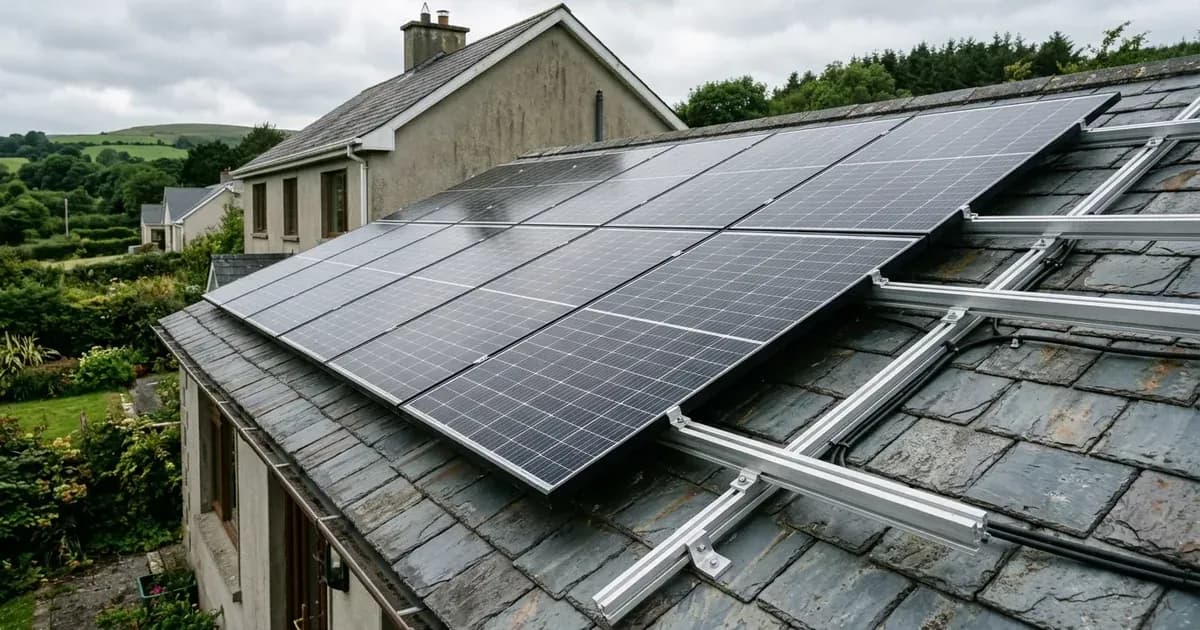
Key Takeaways
- Solar PV systems in Ireland require a minimum design life of 20 years, necessitating a thorough assessment of the existing roof's condition and construction.
- Installers must consider site-specific wind and snow loads, applying Eurocode-1 and Eurocode-0 with their Irish National Annexes.
- A qualified structural engineer must be consulted for roofs showing distress, modifications, shallow pitches (<30°), snow build-up potential, or unusual construction.
- All PV modules must withstand minimum positive and negative pressures of 1000 Pa, as per SR 50-2.
Ensuring Your Irish Solar PV Roof Can Withstand the Elements
Installing solar PV panels in Ireland requires more than just mounting them on a roof; it demands a rigorous structural assessment to ensure the roof can safely support the added weight and withstand local weather conditions, particularly wind and snow. This guide outlines the key regulatory requirements and best practices for structural and wind load assessments for solar PV installations in Ireland, drawing from the SEAI Code of Practice for Solar PV.
The Mechanism: Why Structural Integrity Matters for Solar PV
Solar PV systems add static weight to a roof structure. More critically, their exposed surface area significantly increases the roof's susceptibility to wind uplift and pressure. Ireland's climate, with its strong winds and occasional heavy snow, makes these considerations paramount. A poorly assessed or inadequately reinforced roof can lead to structural failure, panel damage, or even pose a safety risk to occupants and the public. The design must also account for the system's longevity, as solar PV installations are expected to have a minimum design life of 20 years. This means the roof must remain sound for at least two decades after installation.
Regulatory Framework for Irish Solar PV Roof Assessments
The design and installation of solar PV systems in Ireland are governed by a comprehensive set of regulations and codes of practice. Installers must ensure compliance with these standards to guarantee the safety and durability of the system.
Requirement | Detail |
|---|---|
Roof Age and Condition | The installer must assess "The age, condition, and construction of the roof (for roof-mounted systems). considering the current age, the design life of the roof, and the requirement of the solar PV system to have a design life of 20 years." |
Minimum PV Design Life | The solar PV system must have "A minimum design life of 20 years." |
Building Regulations (Structure) | The design must consider "Building Regulations TGD A – Structure." |
Building Regulations (Materials/Workmanship) | The design must consider "Building Regulations TGD D – Materials and Workmanship." |
SR 50-2 Reference | The design must consider "SR 50-2 “Code of Practice for Building Services Part 2: Thermal Solar Systems” and Agrément Certificates for Solar Thermal and Solar PV systems." |
Wind and Snow Loads | The design must consider "Site specific design wind and snow loads – derived from Eurocode-1 (and Irish National Annex)." |
Safety Factors | The design must consider "Appropriate safety factors – derived from Eurocode-0 (and Irish National Annex)." |
Fixing Strength | The design must consider "Strength of the fixing – using fixing data from Eurocode-5 (for standard fixings)." |
Module Wind Pressure | PV Modules "Must be designed to withstand a minimum positive pressure of 1000 Pa, and negative pressure of -1000 Pa in line with SR 50-2 “Code of Practice for Building Services Part 2: Thermal Solar Systems”." |
Roof Structure Check | "The roof structure shall be checked to ensure it can withstand the imposed loads from the solar PV system. This should include a site inspection by a competent person." |
Documentation Retention | "The Installer must retain documentary evidence of the calculations and assessment undertaken in the design of the mounting system showing that site specific structural and wind risks have been considered appropriately in the design." |
When to Consult a Qualified Structural Engineer
While installers are responsible for initial assessments, certain conditions necessitate the involvement of a qualified structural engineer. This ensures that complex or high-risk installations receive expert evaluation, safeguarding the integrity of the building.
A qualified structural engineer should be consulted if any of the following conditions are present:
- Signs of structural distress: This includes visible cracks, sagging, or other indicators that the roof structure may be compromised.
- Signs of post-construction modification: Any alterations to the original roof structure could affect its load-bearing capacity.
- Shallow roof pitch (<30°): Roofs with a shallow pitch may experience different wind load dynamics and require specific engineering analysis.
- Potential for snow build-up: Features like dormers, valleys, or parapets can lead to localised snow accumulation, increasing the load beyond standard assumptions.
- Unusual, non-standard, construction: Roofs with unique designs or materials may not conform to standard engineering assumptions and require bespoke assessment.
What You Can Change Yourself, and What You Cannot
For solar PV structural assessments in Ireland, the division of responsibility is clear:
- What you, as the property owner, can do: You can ensure your roof is in good general repair before installation. You can provide historical information about any previous roof repairs or modifications. You are responsible for ensuring access for assessments.
- What requires a registered person (installer/engineer): All structural assessments, load calculations, and design considerations fall under the responsibility of the installer or a qualified structural engineer. The installer is mandated to perform a "site inspection by a competent person" to ensure the roof structure can withstand the imposed loads. They must also retain "documentary evidence of the calculations and assessment" for compliance. Changing structural elements or mounting methods without professional assessment can invalidate warranties, breach building regulations, and compromise safety.
What the Published Sources Do Not Tell You
While the SEAI Code of Practice provides a robust framework, it outlines what needs to be done rather than how to do every specific calculation.
- Specific calculation methodologies: The document references Eurocode-1 (for wind and snow loads) and Eurocode-0 (for safety factors) but does not detail the specific calculation methodologies or the precise values within their Irish National Annexes. These require specialist engineering knowledge.
- Detailed safety factors: While Eurocode-0 is cited for "Appropriate safety factors", the exact factors to be applied for various load combinations or material types are not specified within the SEAI document.
- Specific fixing data: Eurocode-5 is mentioned for "fixing data from Eurocode-5 (for standard fixings)", but the document does not provide specific data for common fixing types, leaving this to the installer or engineer to source from the Eurocode itself.
- Criteria for structural engineer qualification: The document refers to a "qualified structural engineer" but does not provide specific criteria for what constitutes such a qualification in this context, beyond the general professional standards. Installers are expected to engage appropriately qualified professionals.
These gaps highlight the need for installers and engineers to possess deep expertise in relevant Eurocodes and Irish building standards, ensuring that all aspects of structural integrity are thoroughly addressed for solar PV installations.
```
Frequently asked questions
What is the minimum design life for a solar PV system in Ireland?
In Ireland, a solar PV system must have a minimum design life of 20 years. This requirement influences the assessment of the existing roof structure's condition and its ability to support the system long-term.
When should a structural engineer be consulted for a solar PV installation in Ireland?
A qualified structural engineer should be consulted if there are signs of structural distress, post-construction modification, a shallow roof pitch (less than 30°), potential for snow build-up, or if the roof construction is unusual or non-standard.
What wind pressure must solar PV modules withstand in Ireland?
Solar PV modules in Ireland must be designed to withstand a minimum positive pressure of 1000 Pa and a negative pressure of -1000 Pa. This is in line with SR 50-2 “Code of Practice for Building Services Part 2: Thermal Solar Systems”.
Which Irish Building Regulations apply to solar PV structural design?
The structural design of solar PV systems in Ireland must consider Building Regulations TGD A – Structure, and TGD D – Materials and Workmanship. These regulations ensure the safety and durability of the installation.
What documentation must an installer retain for structural assessments?
Installers must retain documentary evidence of all calculations and assessments undertaken in the design of the mounting system. This demonstrates that site-specific structural and wind risks have been appropriately considered.
References
- SEAI Code of Practice for Solar PV — accessed 27 August 2026
Related guides
More from sizing, net billing & installation.