How Solar Panels Are Fixed to Slate and Tile Roofs in Ireland: SEAI Mounting Rules
Updated 9 September 2026 · By SolarNevs Research Desk, Dealer surveys + verified sources · 1 source · Method ↗
Key Takeaways
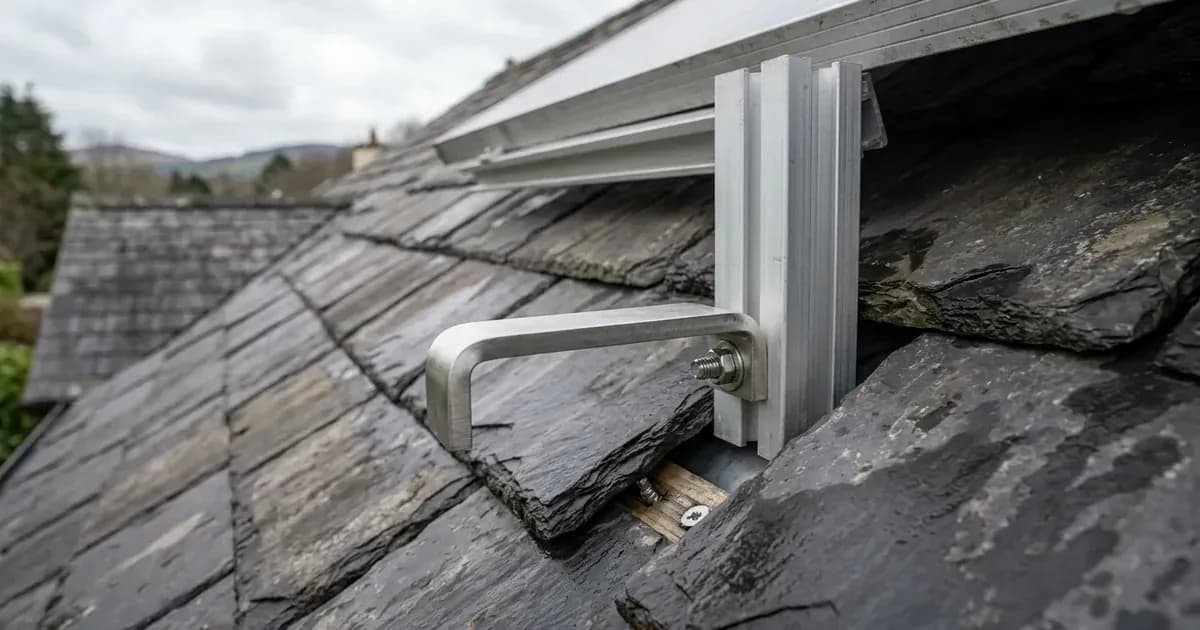
- The SEAI Code of Practice specifies permitted non-integrated mounting types, including hook brackets, stand-off brackets, and systems that replace a tile or slate.
- Mounting brackets must be constructed from durable materials such as austenitic (‘300 series’) stainless steel, aluminium, or galvanised steel with a minimum 80 microns coating.
- Strict clearance rules apply, requiring PV modules to be set back 500mm from roof edges and 200mm from ridges and penetrations.
- Modification of roof tiles or slates is allowed, provided it does not affect weather tightness and does not rely on sealants for waterproofing.
How solar panels are fixed to slate and tile roofs in Ireland
In Ireland, installing solar photovoltaic (PV) panels on slate and tile roofs requires adherence to the Sustainable Energy Authority of Ireland's (SEAI) Code of Practice. This code outlines specific requirements for mounting systems, ensuring safety, durability, and the long-term weather tightness of the roof. Installers must select appropriate bracket types, use specified materials, and follow strict clearance guidelines to comply with these regulations.
What is actually going on with SEAI mounting rules
The SEAI Code of Practice for Installers of Domestic Solar Photovoltaic systems is designed to ensure that all solar PV installations meet high standards of quality and safety. For slate and tile roofs, the primary concern is to integrate the PV system without compromising the structural integrity or weatherproofing of the existing roof. This involves specifying suitable mounting hardware, materials, and installation techniques that can withstand Irish weather conditions and prevent issues such as leaks or damage to the roof structure. The rules aim to protect both the homeowner's property and the investment in solar energy, while also ensuring that installations are eligible for SEAI grants where applicable.
SEAI requirements for solar panel mounting on slate and tile roofs
The following table details the specific requirements and recommendations from the SEAI Code of Practice for mounting solar panels on slate and tile roofs in Ireland.
Requirement | Detail | Compliance Note |
|---|---|---|
Permitted Non-Integrated Mounting Types | "hook brackets" | These brackets typically slide under existing tiles or slates and hook onto the roof rafter or batten. |
| "stand-off brackets" | These brackets are fixed to the roof structure, with the PV module rails mounted above them. |
| "mounting systems which replace a tile/slate with a durable mounting point (sometimes referred to as slate sets/slate plates)" | These systems integrate a mounting point directly into the roof by replacing a section of tile or slate. |
Mounting Bracket Material Specification | "austenitic (‘300 series’) stainless steel" | This material offers high corrosion resistance and strength. |
| "aluminium" | A lightweight and corrosion-resistant option. |
| "galvanised steel (80 microns minimum, not BZP)" | Galvanised steel must have a minimum coating thickness of 80 microns; bright zinc plated (BZP) steel is not acceptable due to insufficient corrosion protection. |
Minimum Setback from Roof Edge/Perimeter | "must not extend within 500mm of the roof edge/perimeter" | This clearance helps prevent wind uplift issues and allows for roof maintenance. |
Minimum Clearance from Ridge Cap | "must not be fixed at the ridge cap/tile... or within 200mm of the top of the ridge" | Ensures proper ventilation and avoids interference with the roof's highest point. |
Minimum Clearance from Roof Penetrations | "PV modules must not be within 200mm of any roof penetration or mountings, such as but not limited to, chimneys, roof windows, soil pipes etc." | This prevents shading, allows for maintenance of penetrations, and reduces the risk of leaks. |
Through-bolts/Hanger Bolts | "hanger bolts / through bolts or any mounting system which penetrates the roof tile or slate are generally not permitted, unless complying with SR 50-2... or approved with Irish Agrément Certified or equivalent." | Direct penetration of tiles/slates is restricted unless specific standards or certifications are met to ensure weather tightness. |
Cutting/Notching of Slates/Tiles | "Cutting, notching and other modification of roof tiles/slates is permitted, so long as... The modification does not affect the weather tightness of the roof... Silicone or other sealant is not required for weather tightness following modification of the tile/slate." | Modifications are allowed if they do not compromise the roof's ability to shed water naturally, without relying on sealants. |
Minimum Mounting Brackets per Module | "Two mounting brackets are required, at a minimum, per PV module installed." | This ensures adequate support for each solar panel. |
Minimum Clamping Points per Module | "Four clamping points are required, at a minimum, per PV module installed (middle clamps counting as two clamping points for each of the adjacent PV modules)." | Proper clamping secures the modules to the mounting rails, preventing movement and damage. |
Integrated ('In-Roof') Systems Weatherproofing | "a waterproof membrane must be installed underneath the system, and the weather tightness must be the same, or better than the existing roof system." | For systems designed to sit flush with the roof, an additional waterproof layer is mandatory to ensure superior weather protection. |
What you can change yourself, and what you cannot
When it comes to the physical installation of solar panels on your roof, particularly concerning mounting methods and structural integration, these are not aspects that a homeowner can or should change themselves. The SEAI Code of Practice sets out mandatory requirements that must be followed by certified installers.
As a homeowner, your role is to ensure that any installer you engage is aware of and adheres to these guidelines. Compliance with the SEAI Code of Practice is critical for the safety and longevity of your solar PV system and your roof. It also ensures that your installation meets the necessary standards for any potential grants or incentives offered by SEAI. Attempting to modify mounting systems or disregard these rules could lead to structural damage, leaks, or invalidate warranties and certifications.
What the published sources do not tell you
While the SEAI Code of Practice provides clear guidelines for solar PV installations, there are some areas where more specific detail is not provided within the document itself. For instance, the document mentions "SR 50-2" and "Irish Agrément Certified" requirements for through-bolts/hanger bolts, but does not elaborate on what these specific standards entail.
Similarly, the document refers to "Building Regulations TGD A – Structure" and "TGD D – Materials and Workmanship," as well as "Eurocode-1 (and Irish National Annex)" and "Eurocode-0 (and Irish National Annex)" for wind and snow loads and safety factors. However, it does not detail the specific figures, methodologies, or structural calculations required under these codes. The document also references "Eurocode-5 (for standard fixings)" without providing specific fixing data. Installers are expected to consult these external standards and regulations to ensure full compliance, as the SEAI Code of Practice serves as an overarching guide rather than a comprehensive engineering manual.
Frequently asked questions
What types of mounting systems are permitted for solar panels on Irish slate and tile roofs?
The SEAI Code of Practice permits non-integrated mounting systems such as hook brackets, stand-off brackets, and systems that replace a tile or slate with a durable mounting point. These are sometimes referred to as slate sets or slate plates.
What materials must solar panel mounting brackets be made from according to SEAI rules?
Mounting brackets must be made from austenitic (‘300 series’) stainless steel, aluminium, or galvanised steel with a minimum 80 microns of galvanisation. BZP (bright zinc plated) steel is not permitted.
Are there specific clearance requirements for solar panels installed on Irish roofs?
Yes, PV modules must not extend within 500mm of the roof edge or perimeter. They must also not be fixed at the ridge cap or within 200mm of the top of the ridge. Additionally, modules must maintain a 200mm clearance from any roof penetrations like chimneys or soil pipes.
Can roof tiles or slates be modified during solar panel installation in Ireland?
Cutting, notching, or other modifications of roof tiles or slates are permitted, provided the modification does not compromise the roof's weather tightness. Importantly, silicone or other sealants should not be required to maintain weather tightness after modification.
How many mounting brackets and clamping points are required per solar panel module?
A minimum of two mounting brackets are required per PV module. For clamping, a minimum of four clamping points are required per PV module, with middle clamps counting as two clamping points for each adjacent module.
References
- SEAI Code of Practice for Installers of Domestic Solar Photovoltaic systems — accessed 27 August 2026
Related guides
More from sizing, net billing & installation.