Ireland Solar Battery Backup: Automatic Changeover Switch Rules
Updated 9 September 2026 · By SolarNevs Research Desk, Dealer surveys + verified sources · 1 source · Method ↗
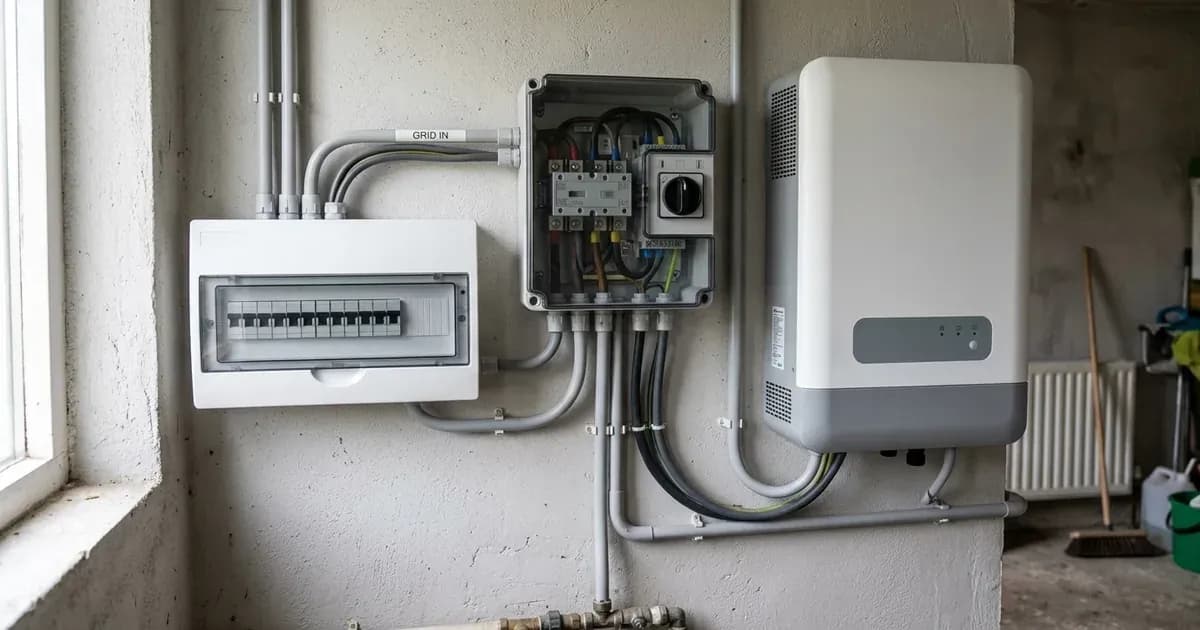
Key Takeaways
- Solar PV battery backup systems in Ireland must comply with I.S. 10101, particularly the 2024 amendment's Part 8.82.
- All circuits supplied in island mode must be protected by Residual Current Devices (RCDs) due to insufficient fault current for MCBs/fuses.
- Battery locations require adequate ventilation and fire protection; attic spaces are often unsuitable.
- Installation work, especially related to earthing and isolation, requires a Registered Electrical Contractor (REC) to ensure compliance and safety.
Understanding Ireland's Regulations for Solar Battery Backup Systems
Installing a solar PV system with battery backup in Ireland involves adherence to specific electrical safety standards to ensure both grid compliance and safe operation during power outages. The primary reference for these standards is the National Rules for Electrical Installations, known as I.S. 10101. A significant update in 2024 introduced Part 8.82, which specifically addresses micro-generators, including solar PV systems with battery storage and automatic changeover switches.
These rules, overseen by Safe Electric, focus on critical aspects such as automatic disconnection of supply, earthing arrangements, fault protection, and the safe location of batteries. Compliance ensures that your system operates safely, protects against electrical hazards, and prevents unintended back-feeding into the grid.
What is Actually Going On: Safety and Compliance in Island Mode
When a solar PV system with battery backup operates in "island mode" – disconnected from the main grid – the electrical characteristics of the supply change. This shift has implications for fault protection and earthing.
Normally, Miniature Circuit Breakers (MCBs) and fuses rely on a high fault current from the grid to trip quickly in the event of a live to earth fault. However, a typical battery backup system in island mode may not be capable of providing enough fault current to trip these devices effectively. To address this, I.S. 10101 mandates that automatic disconnection in island mode must rely on Residual Current Devices (RCDs). This means all circuits supplied when the system is in island mode must be RCD protected.
Furthermore, the earthing arrangements can change in island mode. The system may transition to a TN-S earthing system, relying on the customer’s existing installation earth electrode and a separate neutral-earth connection on the backup supply. Proper isolation and prevention of unintended backup supply operation are also critical to protect both the installation and utility workers.
Key Regulatory Requirements for Solar Battery Backup
The following table summarises the essential requirements and considerations for solar PV battery backup systems with automatic changeover switches, as per I.S. 10101 and Safe Electric guidance.
Requirement | Detail | I.S. 10101 Clause |
|---|---|---|
RCD Protection for Island Mode Circuits | All circuits supplied in island mode must be RCD protected. This ensures automatic disconnection in case of a live to earth fault, as battery systems may not provide sufficient fault current to trip MCBs/fuses. | 411.4.5 and 8.82.8.2.2.5 |
Load Shedding in Island Mode | Consideration for load shedding may be necessary for large loads (e.g., electric cooker) to prevent overloading the micro-generator, which may have a maximum backup output of approximately 25 A. | 433.1 and 8.82.7.1 |
Main Isolating Switch | Every installation must have a main isolating switch, located within 2 metres of the main supply point. For multiple supplies, each requires its own isolating switch. | 462.2 |
Prevention of Unintended Backup Supply Operation | It is critical to prevent unintended operation of any backup supply to ensure safety and prevent back-feeding into the grid. | 462.3, 551.6.3, and 8.82.6.3.4 |
Earthing in Island Mode | Earthing may change to TN-S, relying on the customer’s installation earth electrode and a separate neutral-earth connection on the backup supply. The PEN connection (neutralising link) and earth electrode must be verified. | 8.82.8.2.2.2 and Figure 8.82.5 |
Battery Location Ventilation | The location of the battery shall be adequately ventilated to prevent thermal runaway. Attic spaces are often unsuitable due to inadequate ventilation, fire protection, and heat build-up. | 551.8 |
Battery Fire Protection | Attics must have sufficient fire protection to warn occupants of smoke/fire in time to allow escape. | Part 56 |
Existing Installation Assessment | The rating and condition of existing equipment must be determined to be adequate for the altered circumstances of the new works. | 134.1.9 |
What You Can Change Yourself, and What You Cannot
Most of the requirements outlined by Safe Electric and I.S. 10101 relate to the design, installation, and commissioning of the solar PV and battery backup system. These are tasks that must be performed by a Registered Electrical Contractor (REC).
What a Registered Electrical Contractor (REC) must handle:
- System Design and Installation: Ensuring the entire system, including the automatic changeover switch, inverter, and battery, complies with I.S. 10101.
- RCD Protection: Installing and verifying RCD protection for all circuits supplied in island mode.
- Earthing Arrangements: Verifying and, if necessary, modifying the earthing system to meet requirements for both grid-connected and island modes, including the PEN connection and earth electrode.
- Isolation Switches: Installing main isolating switches within 2 metres of the main supply point and ensuring proper isolation for multiple supplies.
- Prevention of Unintended Operation: Implementing measures to prevent the backup supply from operating unintentionally or back-feeding into the grid.
- Battery Location Assessment: Determining the suitability of battery locations, ensuring adequate ventilation and fire protection, especially when considering attic spaces.
- Existing Installation Assessment: Assessing the existing electrical installation to ensure it can safely accommodate the new solar PV and battery system.
- Issuing Certificates: Providing the necessary completion certificates (e.g., a Certificate of Compliance) after the work is completed and tested.
What you, as the system owner, can typically manage (after professional installation):
- Monitoring System Performance: Using the system's monitoring interface to track energy generation, consumption, and battery state of charge.
- Setting Operational Modes: Adjusting basic operational modes (e.g., self-consumption, time-of-use charging) if these settings are user-accessible and do not affect grid protection or safety parameters.
- Reporting Faults: Notifying your REC if you observe any fault codes, unusual behaviour, or safety concerns with your system.
Attempting to modify critical electrical settings, earthing arrangements, or components related to grid connection and safety without proper qualifications can be dangerous, invalidate your system's compliance, and may pose a risk to life. Always consult a Registered Electrical Contractor for any work beyond routine monitoring or user-level adjustments.
What the Published Sources Do Not Tell You
While the Safe Electric document provides comprehensive guidance on regulatory compliance for solar PV battery backup systems in Ireland, there are several areas it does not cover in detail:
- Specific Product Information: The document does not mention specific brands or models of automatic changeover switches, inverters, or batteries. It also lacks detailed technical specifications for various battery backup systems, such as capacity or specific battery chemistries.
- Detailed Fire Protection Requirements: While it states that attics must have "sufficient fire protection," it does not specify exact requirements, such as fire ratings or materials, for battery installations in these spaces.
- Load Shedding Implementation: The guidance mentions the need for load shedding but does not provide specific strategies or examples of how to implement it effectively for different types of loads.
- Manufacturer Instructions: The document frequently refers to "manufacturers’ instructions" but does not provide examples or links to where these can be found, which can vary significantly between products.
- Cost Implications: There is no information regarding the cost implications of implementing these safety and compliance measures, which can be a significant factor for homeowners.
- Fault Loop Impedance: The document does not detail typical fault loop impedance values for island mode or how these compare to grid-connected mode, which is a technical detail relevant to fault protection design.
These gaps mean that installers and homeowners must often refer to additional manufacturer documentation and apply general electrical engineering principles to ensure a fully compliant and safe installation.
Frequently asked questions
What are the key regulations for solar battery backup systems in Ireland?
Solar battery backup systems in Ireland must comply with the National Rules for Electrical Installations (I.S. 10101), particularly Part 8.82, introduced in 2024. This includes requirements for automatic changeover switches, RCD protection in island mode, and safe battery location.
Why is RCD protection critical for battery backup systems in island mode?
In island mode, battery backup systems may not provide enough fault current to trip standard MCBs or fuses. Therefore, automatic disconnection in case of a live to earth fault relies on Residual Current Devices (RCDs). All circuits supplied in island mode must be RCD protected.
What are the rules for locating solar batteries in Ireland?
Battery locations must be adequately ventilated, as detailed in I.S. 10101 Clause 551.8. Attic spaces are often unsuitable due to inadequate ventilation, fire protection, heat build-up, and dusty environments. External IP65-rated batteries should be strongly considered where suitable.
What is load shedding, and when is it required for Irish solar battery systems?
Load shedding may be required in island mode for large loads, such as an electric cooker, to comply with I.S. 10101 clauses 433.1 and 8.82.7.1. A single-phase micro-generator may have a maximum backup output of approximately 25 A, which might not be sufficient for all loads.
Who sets the electrical safety standards for solar PV systems in Ireland?
Safe Electric is the regulatory body for electrical safety in Ireland. Their guidance, based on I.S. 10101, outlines the requirements for solar PV systems, including those with battery backup and automatic changeover switches.
References
Related guides
More from sizing, net billing & installation.