Enphase Production And Consumption CT Split Phase Wiring Guide
Updated 15 September 2026 · By SolarNevs Research Desk, Dealer surveys + verified sources · 2 sources · Method ↗
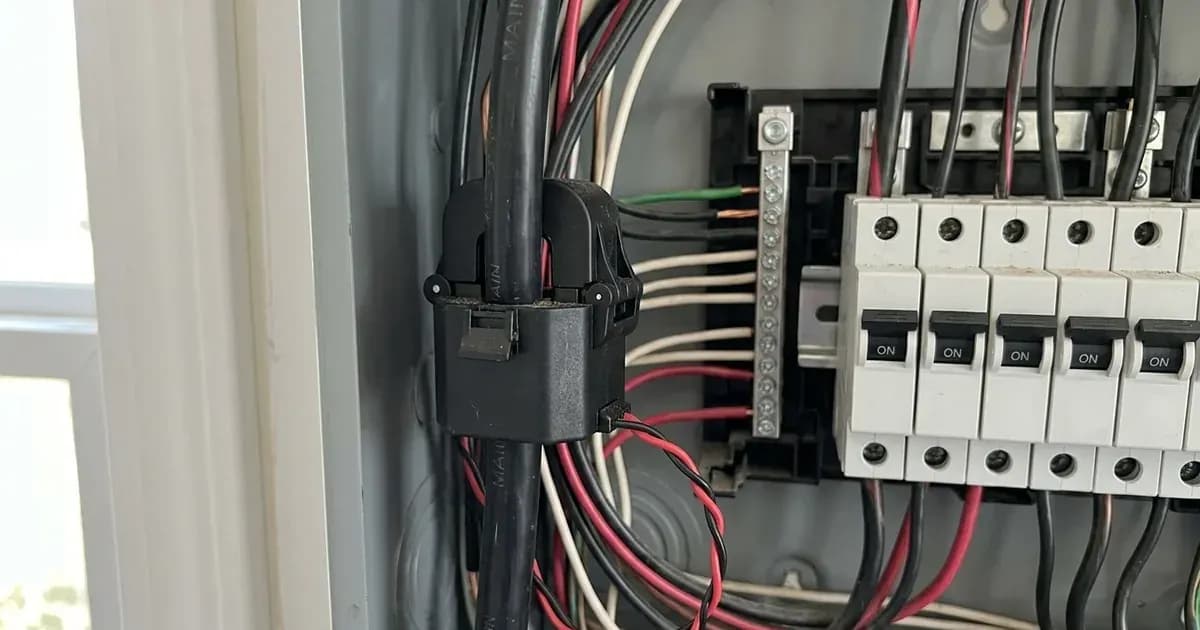
Key Takeaways
- Correct CT arrow orientation is critical for accurate energy monitoring.
- Consumption CTs must point towards the loads in the electrical panel.
- CT wire polarity (blue/white) must be correctly observed during termination.
- Incorrect wiring can lead to inaccurate readings in the Enphase Installer App.
Understanding Enphase CTs for Accurate Energy Monitoring
Enphase Current Transformers (CTs) are essential components for monitoring your home's energy consumption and solar production. In a split-phase electrical system, typically found in some regions, two Consumption CTs are used to measure the current on each of the two main live conductors (L1 and L2). A Production CT measures the output of your solar array. Correct installation, including arrow orientation and wire polarity, ensures that the Enphase system accurately reports energy data, which is vital for understanding your energy usage and solar performance.
What is actually going on with CTs?
A Current Transformer (CT) works by sensing the magnetic field created by current flowing through a conductor. It then produces a proportional, smaller current that the Enphase Envoy or IQ Gateway can measure. The direction of the current flow relative to the CT's orientation determines the polarity of the signal it sends. If the CT is installed backward, the system will interpret energy flow in the wrong direction, leading to incorrect readings.
For Consumption CTs, the goal is to measure how much electricity your home is drawing from or sending to the grid. For Production CTs, the goal is to measure how much electricity your solar system is generating. The arrows on the CTs indicate the expected direction of current flow for a positive reading.
The Critical Role of Arrow Orientation and Polarity
The most common issues with Enphase CT installations stem from incorrect arrow orientation or reversed wire polarity. These errors can cause the Enphase system to display inaccurate consumption or production data, such as showing energy export when you are importing, or vice versa.
Consumption CT Wiring Checklist
Checkpoint | What it means | What to do |
|---|---|---|
Arrow Orientation | The arrow on the CT indicates the direction of current flow. For consumption, this means towards the loads. | In Enphase Consumption CT installations, verify that both CT arrows point towards the load. |
Wire Polarity | CTs have specific wiring for positive and negative signals (typically blue and white). Reversing these wires will invert the reading. | In Enphase Consumption CT installations, verify that the CT wires are terminated in the correct blue/white polarity. |
Phase Matching | Each Consumption CT must be connected to the correct phase (L1 or L2) as measured by the Envoy/IQ Gateway. | Ensure the CT for L1 is connected to the L1 input on the Envoy/IQ Gateway, and similarly for L2. |
Production CT Wiring Checklist
Checkpoint | What it means | What to do |
|---|---|---|
Arrow Orientation | The arrow on the Production CT indicates the direction of current flow from the solar system. | The Production CT arrow should point towards the grid (away from the solar inverter/combiner). |
Wire Polarity | As with Consumption CTs, correct wire termination is crucial for accurate readings. | Ensure the Production CT wires are terminated with the correct blue/white polarity at the Envoy/IQ Gateway. |
What you can check yourself, and what you cannot
As a homeowner, you can visually inspect the arrow orientation on your installed CTs if they are accessible and you can safely view them without opening the electrical panel. You can also review your Enphase Installer App or MyEnphase app data for anomalies, such as negative consumption readings when you expect to be importing power, or production figures that seem unusually low or high.
You cannot, and should not, attempt to open your electrical panel or modify any wiring yourself. This work involves high voltage and requires a qualified, accredited electrician or solar installer. Opening the panel or tampering with wiring can lead to severe injury, electrocution, fire, or damage to your electrical system and equipment.
If you suspect an issue with your CT wiring based on app data or visual inspection, contact your original installer or a certified Enphase installer to diagnose and rectify the problem. They have the necessary training, tools, and safety equipment to work safely within your electrical system.
What the published sources do not tell you
While general principles of CT installation are widely available, specific details regarding the exact positioning of CTs within a crowded electrical panel, the precise routing of CT wiring to avoid interference, or diagnostic steps for intermittent issues are often not fully detailed in public documentation. The behaviour of the Enphase Installer App's diagnostic features for specific wiring faults, beyond general "CT Inverted" warnings, can also vary and may require an installer's expertise to interpret fully. Furthermore, local electrical codes and utility connection requirements in Great Britain may impose additional constraints or preferred methods for CT installation that are not covered by general manufacturer guidelines.
Add a battery at a surveyed price
Installers quote supply and fitting of the battery on this page for your existing or new system.
How this pays for the site: installers pay SolarNevs a fixed introduction fee when we pass them a genuine enquiry. They cannot pay to appear higher, and our surveyed prices are published before any introduction. You can also take our dated price tables straight to any installer.
Frequently asked questions
What are the primary technical requirements for enphase production and consumption ct split phase wiring guide?
Key requirements include compliance with local grid codes, correct equipment certification, and proper electrical isolation.
Who is authorized to install and inspect enphase production and consumption ct split phase wiring guide?
All high-voltage DC, AC grid tie-in, and switchboard modifications must be performed by a qualified, accredited electrical professional.
How is export power limited in enphase production and consumption ct split phase wiring guide?
Export limiting is achieved using certified bidirectional smart meters or power sensors providing dynamic feedback to the inverter system.
References
- Enphase: IQ Gateway Quick Install Guide (production and consumption CT arrow orientation, blue/white C1/C2 terminals, L1/L2 phase matching) — accessed 6 September 2026
- NEPRA (Prosumer) Regulations, 2026, SRO 251(I)/2026 - interconnection, metering and two-direction meter requirements for Pakistani distributed generation — accessed 6 September 2026
Related guides
More from what to buy — and how not to get cheated.