Sungrow Isolarcloud Hybrid Inverter And Sbr Battery Setup Guide
Updated 15 September 2026 · By SolarNevs Research Desk, Dealer surveys + verified sources · 3 sources · Method ↗
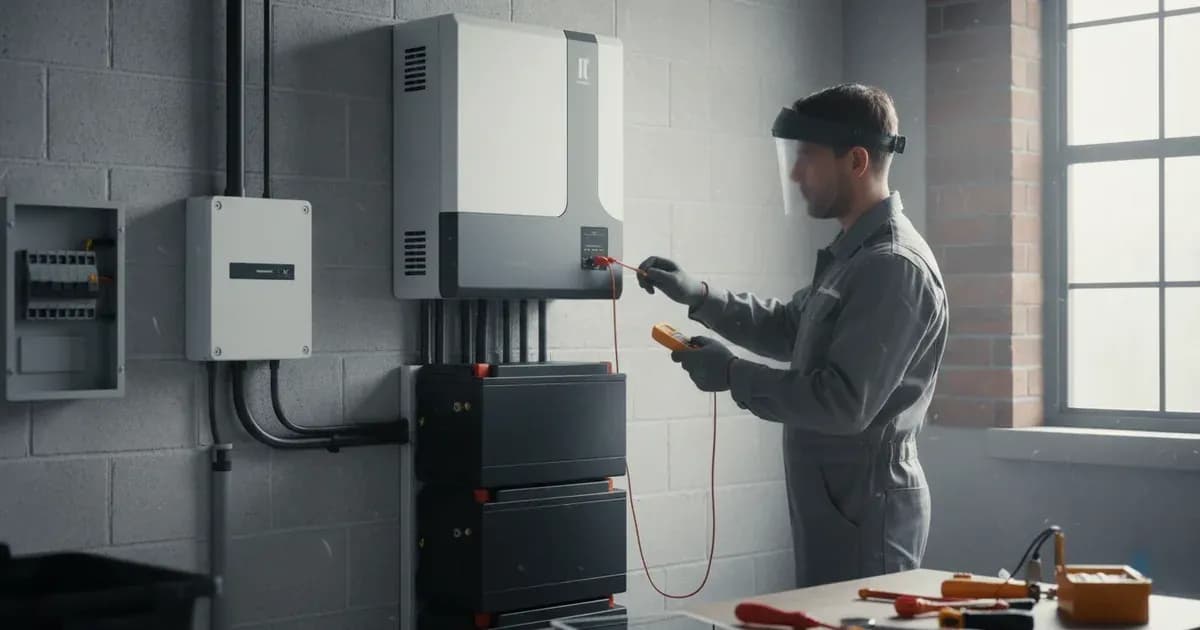
Key Takeaways
- All hybrid inverter and battery storage installations in Great Britain must comply with national electrical codes and grid protection standards.
- An MCS Certificate is required to access export tariffs and confirm building regulations compliance for your system.
- Proper earthing of the inverter chassis and battery enclosure to the main installation terminal is a critical safety step.
- Incorrect Current Transformer (CT) clamp installation can lead to negative power readings during high household consumption.
General Commissioning Requirements for Hybrid Inverters and Battery Storage
Commissioning a hybrid inverter and battery storage system, such as a Sungrow SH5.0-10RT with an SBR battery, involves a series of checks to ensure safe and compliant operation. These steps are crucial before the system is energised and connected to the grid in Great Britain. The process ensures the installation meets regulatory standards and operates as intended.
What is actually going on: Ensuring Compliance and Safety
The commissioning process verifies that the physical installation of your Sungrow hybrid inverter and SBR battery adheres to established safety protocols and regulatory standards. This includes electrical bonding, correct wiring, and proper configuration of monitoring components like Current Transformers (CTs). The goal is to achieve a system that is safe for occupants, stable for the grid, and eligible for any available export tariffs.
The system must comply with international microgeneration safety and grid protection standards. An MCS Certificate is required to access export tariffs and verify building regulations compliance.
General Installation Checks and Safety Measures
Check | What it means | What to do |
|---|---|---|
Earthing | Proper grounding of equipment prevents electrical hazards. | Bond inverter chassis ground and battery metal enclosure to the main installation earthing terminal. |
CT Clamp Orientation | Incorrect installation can lead to inaccurate power readings. | Install Current Transformer clamps with arrows pointing towards the household loads away from the grid incomer. |
Wiring Compliance | All electrical connections must meet national standards. | All DC conductors, AC feeders, and auxiliary control cables must be installed in compliance with applicable national electrical codes and verified by an accredited electrical engineer. |
Communication Cabling | Ensures reliable data exchange between system components. | Maintain shielded twisted-pair cabling and verify proper RS485 communication baud rate settings. |
Pre-Energization Testing | Confirms system integrity before power-up. | Complete pre-commissioning checks, insulation resistance testing, and polarity verification prior to final energization and utility permission to operate. |
AC Circuit Isolation | Essential safety measure before working with live components. | Ensure complete AC circuit isolation and lock-out before installing CT clamps on live busbars. |
What you can check yourself, and what you cannot
As a homeowner, you can visually inspect the general neatness of the installation, confirm that all visible cables are secured, and ensure that the inverter and battery enclosures appear undamaged. You can also check that the MCS Certificate has been issued for your installation.
However, all electrical checks, including insulation resistance testing, polarity verification, and the bonding of earthing terminals, must be performed by an accredited electrical engineer or certified installer. Never attempt to open the inverter or battery enclosures, or work on live electrical circuits yourself. This is dangerous and can void warranties and connection agreements. For example, ensuring complete AC circuit isolation and lock-out before installing CT clamps on live busbars is a task for a qualified professional.
What the published sources do not tell you
The specific commissioning steps for a Sungrow SH5.0-10RT hybrid inverter with an SBR battery, including detailed iSolarCloud app configuration, closed-loop CAN communication setup, and smart meter pairing instructions, are not publicly available in general regulatory documents. These details are typically found in manufacturer-specific installation and commissioning manuals, which are often restricted to certified installers.
published guidance does not provide specific fault codes, recommended settings for battery charge/discharge, or detailed troubleshooting steps for the Sungrow iSolarCloud app. It also does not specify the exact grid connection requirements or export limits that may vary by Distribution Network Operator (grid operator) within Great Britain. These specifics are critical for a functional and compliant installation.
official documentation also does not contain any specific technical figures such as voltages, currents, capacities, or program numbers for the Sungrow equipment. Therefore, this guide cannot provide those details.
Add a battery at a surveyed price
Installers quote supply and fitting of the battery on this page for your existing or new system.
How this pays for the site: installers pay SolarNevs a fixed introduction fee when we pass them a genuine enquiry. They cannot pay to appear higher, and our surveyed prices are published before any introduction. You can also take our dated price tables straight to any installer.
Frequently asked questions
What are the primary technical requirements for sungrow isolarcloud hybrid inverter and sbr battery setup guide?
Key requirements include compliance with local grid codes, correct equipment certification, and proper electrical isolation.
Who is authorized to install and inspect sungrow isolarcloud hybrid inverter and sbr battery setup guide?
All high-voltage DC, AC grid tie-in, and switchboard modifications must be performed by a qualified, accredited electrical professional.
How is export power limited in sungrow isolarcloud hybrid inverter and sbr battery setup guide?
Export limiting is achieved using certified bidirectional smart meters or power sensors providing dynamic feedback to the inverter system.
References
- Sungrow SH5.0RT / SH6.0RT / SH8.0RT / SH10RT (and -20) three-phase hybrid inverter user manual, Ver24 (PDF) — accessed 15 September 2026
- Sungrow SBR096/128/160/192/224/256 high-voltage LFP battery user manual, Ver18 (PDF) — accessed 15 September 2026
- Sungrow SBR064-256 high-voltage LFP battery datasheet, Version 4 (PDF) — accessed 15 September 2026
Related guides
More from what to buy — and how not to get cheated.