Sungrow SG33CX to SG125CX Commercial String Inverter Setup Guide
Updated 7 September 2026 · By SolarNevs Research Desk, Dealer surveys + verified sources · 3 sources · Method ↗
Key Takeaways
- Sungrow CX Commercial PV Inverters are a product line with a power range of 30-110kW.
- The iSolarCloud system is used for monitoring these inverters.
- Detailed setup procedures, specific model specifications, and Bluetooth commissioning steps are not publicly available from the provided sources.
- For specific installation and commissioning data, consult official Sungrow technical manuals and datasheets.
Understanding Sungrow CX Commercial PV Inverters
The Sungrow CX Commercial PV Inverters represent a product line designed for commercial solar installations. This series encompasses inverters with a power output range of "30-110kW". These are typically multi-MPPT (Maximum Power Point Tracking) string inverters, meaning they can manage multiple strings of solar panels, each potentially operating at its optimal power point, which is beneficial for complex or partially shaded arrays.
While the specific models such as SG33CX, SG50CX, SG110CX, and SG125CX are part of this family, detailed individual specifications for these models, including their exact number of MPPTs, input/output voltage ranges, or current ratings, are not available in the provided documentation. The general purpose of these inverters is to convert direct current (DC) electricity from solar panels into alternating current (AC) for grid injection or local consumption in commercial settings.
General Principles of Commercial String Inverter Installation
Installing a commercial string inverter involves several critical steps, adhering to general electrical and solar practice. While specific Sungrow CX series instructions are not detailed in the available sources, the fundamental process typically includes:
- Site Assessment and Mounting: Ensuring the inverter is mounted in a suitable location, protected from direct weather, with adequate ventilation for cooling, and structurally sound support.
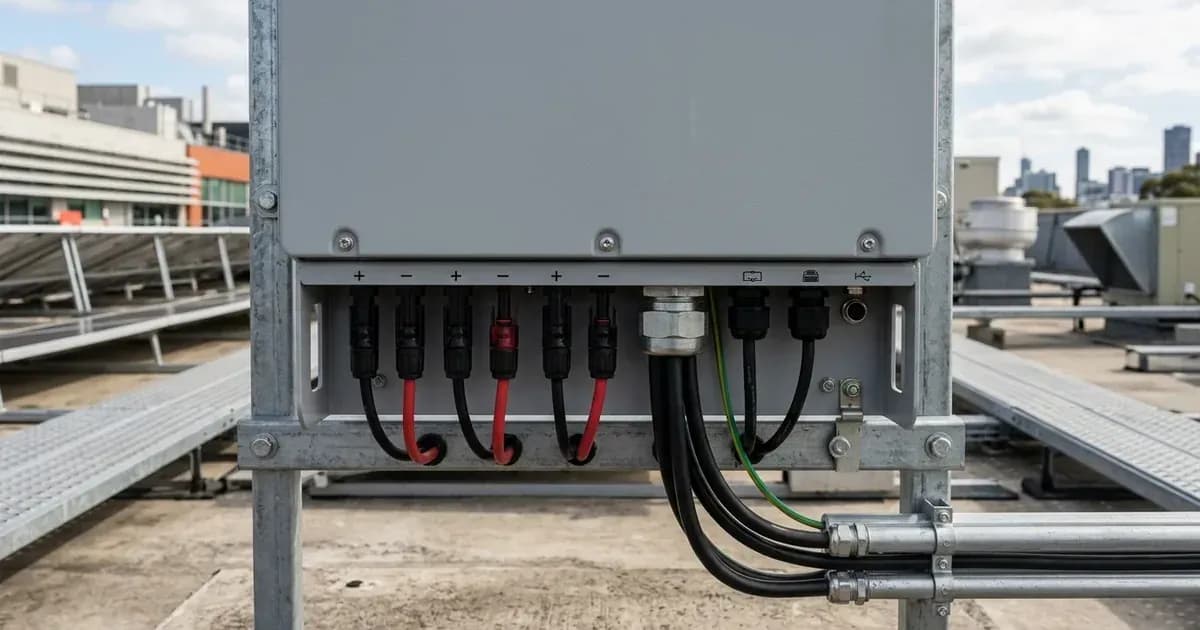
- DC Wiring: Connecting the solar panel strings to the inverter's DC input terminals. This involves careful attention to polarity, string voltage, and current limits, ensuring that the combined voltage and current of each string remain within the inverter's specified operating window. Each string typically requires overcurrent protection and a means of isolation.
- AC Wiring: Connecting the inverter's AC output to the main electrical distribution board or grid connection point. This requires appropriately sized AC cables, circuit breakers, and protective devices to handle the inverter's maximum AC output current.
- Earthing (Grounding): Establishing a robust earthing connection for the inverter chassis and, where required, for the DC array, to ensure safety and proper operation of protective devices.
- Communication Wiring: Connecting communication cables for monitoring (e.g., iSolarCloud) and potentially for grid interaction or system control. This may involve Ethernet, RS485, or other protocols.
- Commissioning: Powering up the inverter, performing initial configuration, and verifying correct operation. This often includes setting grid parameters, safety limits, and monitoring system integration.
iSolarCloud Monitoring and Commissioning Overview
Sungrow's designated monitoring system for its inverters, including the CX Commercial PV Inverters, is "iSolarCloud". This platform allows users to monitor the performance of their solar PV system, track energy generation, and receive alerts regarding system status or faults.
Commissioning an inverter with iSolarCloud typically involves connecting the inverter to a communication device (such as a Wi-Fi dongle or Ethernet module) and then configuring the connection through a mobile application or web interface. The provided sources mention "iSolarCloud" as the "Monitoring System" but do not offer specific step-by-step instructions for "iSolarCloud Bluetooth commissioning", required app versions, or the exact configuration options available via Bluetooth for the CX series. Users would generally expect to download the iSolarCloud app, connect to the inverter via a local wireless connection (often Bluetooth or a temporary Wi-Fi hotspot created by the inverter), and follow the in-app prompts for initial setup and registration.
Sungrow CX Series Technical Specifications and Setup Parameters
The provided documentation confirms the existence of the "CX Commercial PV Inverters" product line with a power range of "30-110kW". However, specific technical specifications for individual models within this series (e.g., SG33CX, SG50CX, SG110CX, SG125CX) are not detailed. This includes critical parameters such as:
- Number of MPPTs and their voltage/current ranges
- Maximum DC input voltage and current
- Nominal AC output voltage and current
- Efficiency ratings
- Dimensions and weight
- Operating temperature range
- Specific communication protocols and ports
Consequently, a detailed table of settings or parameters cannot be constructed from the available information. Installers must refer to the specific model's official datasheet and installation manual for precise technical data and configuration values.
Setting / Parameter | Specification / Action | Technical Reference |
|---|---|---|
Product Line | CX Commercial PV Inverters | Sungrow Australia Service |
Power Range | 30-110kW | Sungrow Australia Service |
Monitoring System | iSolarCloud | Sungrow Australia Service |
Specific Model Specs | Not available in provided sources | N/A |
Bluetooth Commissioning | Specific procedure not available in provided sources | N/A |
Installation Safety and Electrical Requirements
Working with commercial-scale solar inverters involves high DC voltages and significant AC currents, posing substantial electrical hazards. Adherence to safety protocols is paramount.
Before any installation or maintenance work on Sungrow CX Commercial PV Inverters, the following safety measures are mandatory:
- Isolation: Completely isolate the inverter from all power sources. This includes opening the DC isolator(s) for the solar array and opening the AC circuit breaker(s) connecting the inverter to the grid or load.
- Verification of Zero Voltage: Use a certified voltage tester to confirm that both the DC input terminals and AC output terminals are de-energised.
- Capacitor Discharge Time: Allow sufficient time for internal capacitors to discharge after isolation. The exact discharge time will be specified in the inverter's official manual, but typically ranges from 5 to 10 minutes for high-power inverters.
- Personal Protective Equipment (PPE): Always wear appropriate PPE, including insulated gloves, safety glasses, and arc-flash rated clothing, especially when working near live electrical components.
- Earthing: Ensure the inverter chassis is properly earthed according to local electrical codes to protect against electrical shock.
- Authorised Personnel: Installation, commissioning, and maintenance should only be performed by qualified and authorised electricians or solar technicians familiar with high-voltage DC and AC systems. Opening the inverter enclosure is generally considered authorised-service work.
DC breaker ratings and cable sizing must always comply with the inverter's specifications and local electrical standards to prevent overcurrent and fire hazards.
What the published sources do not tell you
The provided source documents, primarily a high-level service portal for Sungrow Australia, confirm the existence of "CX Commercial PV Inverters (30-110kW)" and "Monitoring System (iSolarCloud)". However, they lack the specific technical details crucial for a comprehensive setup guide.
Specifically, the following critical information for "Sungrow SG33CX to SG125CX commercial multi-MPPT string inverter setup, iSolarCloud Bluetooth commissioning, and PID recovery" could not be sourced:
- Specific Model Details: There are no individual specifications (e.g., number of MPPTs, input/output voltages, current ratings, dimensions, weight) for SG33CX, SG50CX, SG110CX, SG125CX, or any other specific CX models. The range "30-110kW" is mentioned, but not individual models within it.
- Multi-MPPT String Inverter Setup Guide: No details on the physical installation, wiring, configuration steps, or best practices for setting up these commercial string inverters.
- iSolarCloud Bluetooth Commissioning: No step-by-step instructions, required app versions, specific Bluetooth pairing procedures, or configuration options available via Bluetooth for iSolarCloud.
- PID Recovery: No information regarding PID (Potential Induced Degradation) recovery features, how to activate or monitor them, or any related settings or procedures for the CX series inverters.
- Error/Fault Codes: No list of error codes, their meanings, or troubleshooting steps for the CX commercial inverters.
- Fault Modes: No descriptions of common fault modes, their symptoms, causes, or diagnostic procedures.
- Settings/Pairing Table: No specific settings, values, or communication protocols for pairing with batteries or other system components.
- Safety Facts: No detailed safety guidelines, warnings, or specific hardware safety features for the commercial inverter class.
To obtain the necessary detailed technical documentation, such as installation manuals, commissioning guides, troubleshooting manuals, and datasheets, it is essential to consult official Sungrow channels or their specific product documentation portals.
Still showing the fault? Book a technician
If the steps above did not clear it, tell us the inverter or battery and the exact code. We pass it to a technician who covers your city; visit charges are quoted before they come.
How this pays for the site: the technician or verifier pays SolarNevs a fixed introduction fee. Nobody pays to be recommended, and you are free to use our free guides instead.
Frequently asked questions
What is the power range of Sungrow CX Commercial PV Inverters?
Sungrow CX Commercial PV Inverters are specified with a power range of 30-110kW. Specific individual model ratings are not detailed in the available sources.
What monitoring system does Sungrow use for its CX Commercial PV Inverters?
The designated monitoring system for Sungrow CX Commercial PV Inverters is iSolarCloud. Detailed setup or commissioning instructions for iSolarCloud via Bluetooth are not provided in the available documentation.
Are specific installation details available for Sungrow SG33CX, SG50CX, or SG110CX inverters?
Specific installation details, wiring diagrams, or commissioning steps for individual models like the SG33CX, SG50CX, or SG110CX are not available from the provided sources. General electrical and solar practices apply, but model-specific guidance requires official manuals.
Does Sungrow provide information on PID recovery for CX series inverters?
Information regarding PID (Potential Induced Degradation) recovery features, activation, or monitoring for the Sungrow CX series inverters is not available in the provided documentation.
References
- Sungrow Service Knowledge Base — CX Commercial PV Inverters (30-110kW): SG30CX/SG50CX/SG110CX commissioning guides, iSolarCloud App commissioning and grid-settings documents — accessed 6 September 2026
- Sungrow official product page — SG30/50CX-P2 multi-MPPT string inverter for 1000 Vdc systems: 50 kW rated AC, 1100 V max DC input, 98.5% max efficiency, built-in PID recovery — accessed 6 September 2026
- Sungrow official product page — SG100/110CX-P2 commercial string inverter: 110 kW rated AC, 12 MPPTs, 1100 V max DC input, 98.5% max efficiency, iSolarCloud monitoring — accessed 6 September 2026
Related guides
More from inverter errors & fixes.