Solar Panels Planning Permission Permitted Development UK
Updated 15 September 2026 · By SolarNevs Research Desk, Dealer surveys + verified sources · 3 sources · Method ↗
Key Takeaways
- Domestic solar installations on dwellinghouses and outbuildings are permitted development under Schedule 2, Part 14, Class A of the the 2015 General Permitted Development Order.
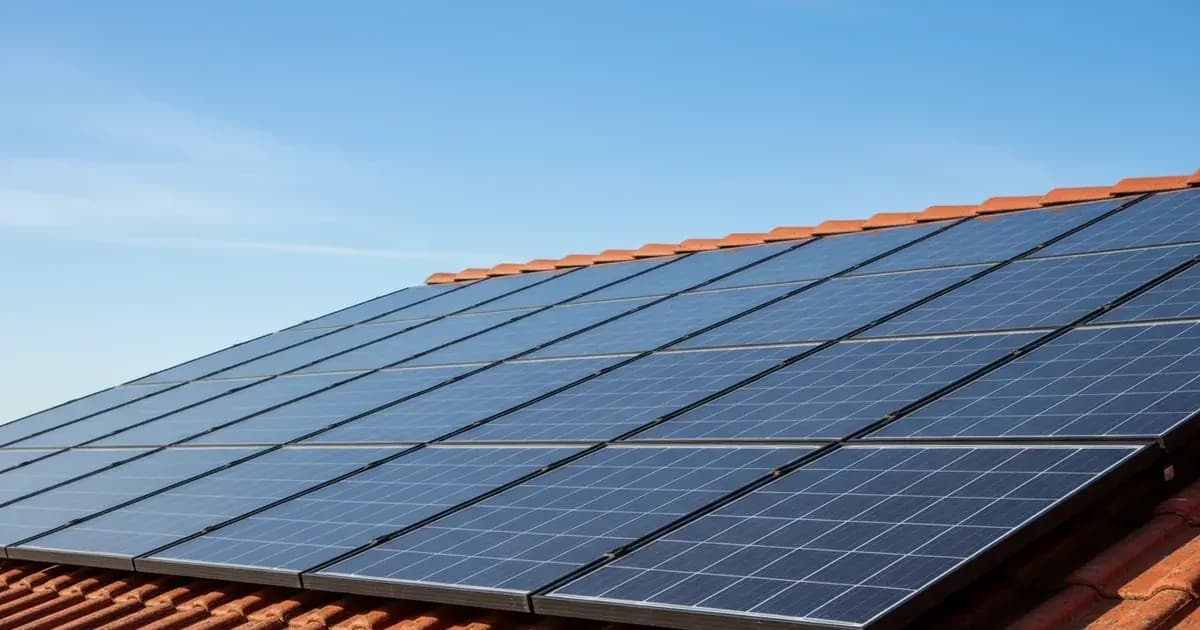
- Rooftop panels must not protrude more than 0.2 metres (200mm) from the roof plane and cannot rise above the highest part of the roof (excluding chimneys).
- In conservation areas and World Heritage Sites, panels must not be installed on a wall fronting a highway.
- Stand-alone ground-mounted arrays under Class B are restricted to one installation per curtilage, capped at 4 metres in height and 9 square metres in area.
- Stand-alone arrays must be set back at least 5m from property curtilage boundaries.
- Permitted development does not apply to listed buildings or sites designated as scheduled monuments.
Permitted Development Under GPDO Schedule 2, Part 14
In England, domestic microgeneration is regulated under the Town and Country Planning (General Permitted Development) (England) Order 2015. Under Schedule 2, Part 14, home installations generally proceed without the need for a full planning application, divided into building-mounted systems (Class A) and stand-alone installations (Class B).
Class A: Roof-Mounted and Building-Mounted Solar PV
Class A grants rights for the installation, alteration or replacement of microgeneration solar PV or solar thermal equipment on a dwellinghouse or a block of flats, or a building situated within the curtilage of a dwellinghouse or a block of flats.
Dimensional Limits and Siting Constraints
To qualify as permitted development, the installation must satisfy strict statutory limits:
- Protrusion Limit: The equipment must not protrude more than 0.2 metres beyond the plane of the wall or the roof slope when measured from the perpendicular with the external surface of the wall or roof slope.
- Ridge Height: The installation must not result in the highest part of the solar PV or solar thermal equipment being higher than the highest part of the roof (excluding any chimney).
- Conservation Areas: On land within a conservation area or a World Heritage Site, equipment must not be installed on a wall which fronts a highway.
- Listed Buildings: Equipment must not be installed on a building within the curtilage of the dwellinghouse or block of flats if the dwellinghouse or block of flats is a listed building.
Mandatory Operational Conditions
Class A development is permitted subject to standard statutory conditions:
- Solar equipment is, so far as practicable, sited so as to minimise its effect on the external appearance of the building.
- Equipment is, so far as practicable, sited so as to minimise its effect on the amenity of the area.
- Equipment is removed as soon as reasonably practicable when no longer needed.
Class B: Stand-Alone Ground-Mounted Solar Arrays
For properties with extensive gardens or complex roof geometries, stand-alone ground-mounted solar arrays can be installed within the curtilage under Class B.
Dimensional and Scale Constraints
- Single System Limitation: Only the first stand alone solar installation will be permitted development. Further installations will require planning permission.
- Maximum Height: No part of the installation should be higher than four metres.
- Conservation Area Height Limit: In a conservation area, where the solar equipment will be installed closer to the highway than the nearest part of the house or flats, the equipment should not be higher than 2 metres.
- Boundary Setback: The installation should be at least 5m from the boundary of the property.
- Surface Area Limit: The size of the array should be no more that 9 square metres or 3m wide by 3m deep.
- Heritage Restrictions: Panels should not be installed within boundary of a listed building or a scheduled monument.
Planning Permission Triggers
Where a domestic installation cannot meet all permitted development conditions, a formal Householder Planning Application must be submitted to the Local Planning Authority:
- Article 4 Directions: If the local council has issued an Article 4 Direction withdrawing permitted development rights in a specific conservation area.
- Exceeded Envelope Limits: Installations on flat roofs exceeding 600mm above roof height, or pitched roof systems protruding more than 0.2 metres.
- Listed Buildings: Any solar work on a listed building or its curtilage requires listed building consent alongside planning permission.
Frequently asked questions
Do domestic solar panels require planning permission in the UK?
Most domestic rooftop solar panels are permitted development under Class A of the GPDO, provided they meet specific height, protrusion, and siting limits.
What is the maximum permitted protrusion for roof-mounted panels?
Panels on pitched roofs must not protrude more than 0.2 metres (200mm) beyond the plane of the roof slope or wall surface.
What height restrictions apply to stand-alone ground-mounted solar?
Stand-alone domestic solar under Class B must not exceed 4 metres in height, or 2 metres if installed in a conservation area closer to a highway than the house.
What is the maximum surface area for stand-alone domestic solar?
The surface area of the solar panels forming part of a stand-alone solar installation must not exceed 9 square metres, with no array dimension over 3 metres.
Can solar panels be installed on listed buildings under permitted development?
No, permitted development rights do not apply to listed buildings or buildings within the curtilage of a listed building.
References
- Town and Country Planning General Permitted Development Order 2015 Part 14 — accessed 28 August 2026
- Planning Portal Domestic Solar Equipment Mounted Guidance — accessed 28 August 2026
- Planning Portal Stand-Alone Solar Equipment Guidance — accessed 28 August 2026
Related guides
More from what to buy — and how not to get cheated.