Solar PV DC Arc Fault Circuit Interrupters (AFCI) Guide UK
Updated 6 September 2026 · By SolarNevs Research Desk, Dealer surveys + verified sources · 6 sources · Method ↗
Key Takeaways
- Direct current (DC) arcs in photovoltaic systems lack natural alternating zero-crossings, allowing sustained high-temperature plasma to ignite combustible roof materials.
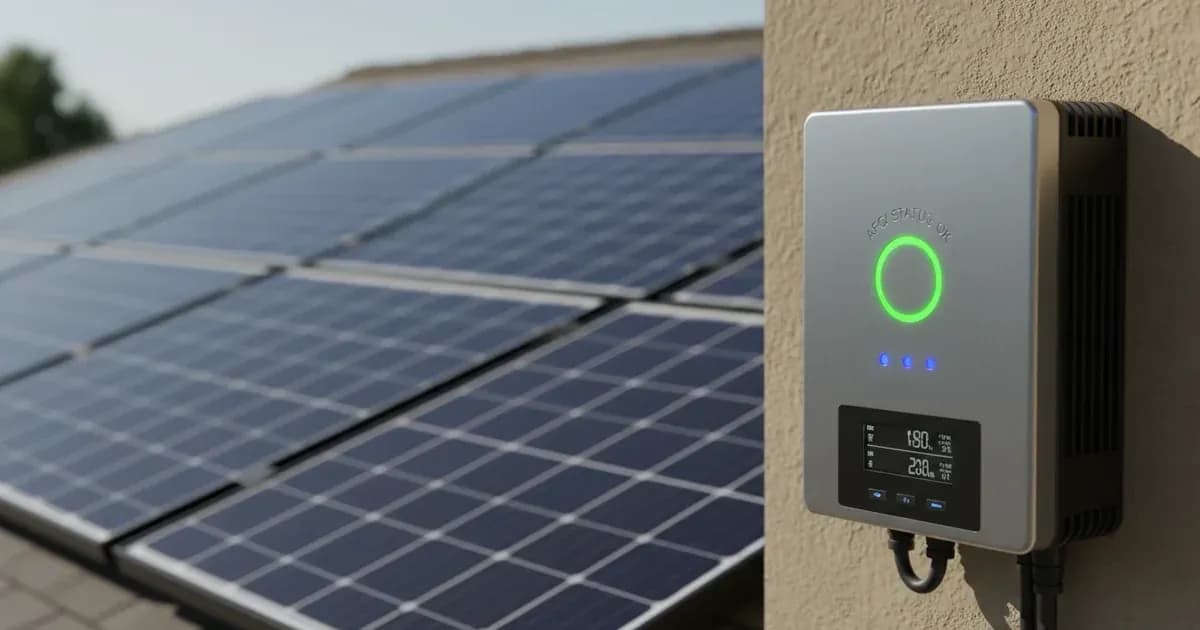
- DC Arc Fault Circuit Interrupters (AFCI) continuously monitor string current signatures, isolating inverter inputs upon detecting characteristic arc patterns.
- Under Regulation 5 of the Electricity at Work Regulations 1989, electrical equipment must never be operated where its capability or strength may be exceeded.
- Regulation 4 mandates that all electrical systems must be designed, constructed, and maintained to prevent danger so far as is reasonably practicable.
- Control functions must feature fail-to-safe operation to manage faults effectively and reduce ignition risk.
- Commercial installations must conduct formal fire risk assessments under Article 9 of the Regulatory Reform (Fire Safety) Order 2005.
The Physics and Danger of DC Arcing in Solar Arrays
In photovoltaic strings operating operating at high direct-current voltages, loose mechanical connections, corroded crimps, rodent damage, or degraded cable insulation can trigger electrical arcing. Arcs fall into two categories:
- Series Arcs: Occur along a single conductor when a terminal loosens or a connector fails under load. Current continues to flow across the air gap.
- Parallel Arcs: Occur between positive and negative conductors, or between a live conductor and an earthed metal frame.
Because DC current has no periodic sinusoidal zero-voltage crossing, an established DC arc does not self-extinguish. Temperatures at the arc core exceed several thousand degrees, quickly melting surrounding junction boxes and igniting roofing felt or timber rafters.
Statutory Safety Foundations: the 1989 Electricity at Work Regulations Regulations 4 and 5
Deploying arc fault mitigation technologies directly satisfies statutory legal duties under the Electricity at Work Regulations 1989:
Equipment Strength and Capability (Regulation 5)
Regulation 5 dictates:
- No electrical equipment shall be put into use where its strength and capability may be exceeded in such a way as may give rise to danger.
- Where cables and connectors experience mechanical strain or thermal expansion that degrades contact resistance, deploying automated AFCI protection ensures current is severed before thermal limits are exceeded.
System Safety and Maintenance (Regulation 4)
Regulation 4 requires:
- All systems shall at all times be of such construction as to prevent, so far as is reasonably practicable, danger.
- As may be necessary to prevent danger, all systems shall be maintained so as to prevent, so far as is reasonably practicable, such danger.
- Every work activity, including operation, use and maintenance of a system and work near a system, shall be carried out in such a manner as not to give rise, so far as is reasonably practicable, to danger.
- Any equipment provided for protecting persons at work shall be suitable for its use, maintained in suitable condition, and properly used.
Fail-Safe Standards and Fire Risk Mitigation
Incorporating intelligent arc protection aligns with broader UK fire engineering principles established in recent standards:
Fail-to-Safe Control Architecture
Under British Standards Institution specification PAS 63100:2024, energy systems must define fire safety requirements including fault management and fail-to-safe operation of all control and monitoring functions.
The fundamental objective of these provisions is to reduce the risk of electrical systems becoming a source of ignition and to limit the impact of a fire if one occurs.
Commercial Fire Safety Responsibilities
On commercial and industrial properties, solar fire safety falls under the Regulatory Reform (Fire Safety) Order 2005:
- Article 8: The responsible person must take such general fire precautions as will ensure the safety of employees and ensure premises are safe for relevant persons.
- Article 9: The responsible person must make a suitable and sufficient assessment of the risks to which relevant persons are exposed for the purpose of identifying the general fire precautions needed to comply with the Order.
Furthermore, national heritage guidance from Historic England confirms that official solar advice has been updated to include measures for mitigating the risk of fire.
Frequently asked questions
What is a DC Arc Fault Circuit Interrupter (AFCI)?
An AFCI is an advanced protection device that detects high-frequency electrical noise from DC arcing and trips circuit breakers to extinguish the arc.
Why is DC arcing dangerous in solar PV installations?
Unlike alternating current, DC current has no natural zero-crossing point, allowing arcs caused by loose connectors or damaged insulation to sustain high heat and start fires.
What statutory duty requires electrical equipment to prevent danger?
Regulation 4 and Regulation 5 of the Electricity at Work Regulations 1989 require systems to be constructed and operated so equipment capability is not exceeded.
What fail-safe requirements apply to solar safety controls?
PAS 63100 mandates fault management and fail-to-safe operation across all control and monitoring functions to reduce ignition hazards.
How does the Fire Safety Order 2005 apply to solar fire risks?
Article 9 requires a suitable and sufficient fire risk assessment to identify general fire precautions needed to keep commercial premises safe.
References
- Electricity at Work Regulations 1989 Regulation 5 — accessed 28 August 2026
- Electricity at Work Regulations 1989 Regulation 4 — accessed 28 August 2026
- BSI PAS 63100:2024 Electrical Installations Fire Protection Specification — accessed 28 August 2026
- Regulatory Reform Fire Safety Order 2005 Article 8 — accessed 28 August 2026
- Regulatory Reform Fire Safety Order 2005 Article 9 — accessed 28 August 2026
- GOV.UK Review of Adapting Historic Homes for Energy Efficiency — accessed 28 August 2026
Related guides
More from what to buy — and how not to get cheated.