UK Three Phase EV Charging Hub G99 Interconnection Guide
Updated 6 September 2026 · By SolarNevs Research Desk, Dealer surveys + verified sources · 3 sources · Method ↗
Key Takeaways
- Commercial three-phase EV charging hubs combining solar canopies and battery storage exceed microgeneration thresholds, falling under apply to connect.
- Installers must submit an Engineering Recommendation G99 application form (or G100 if export is limited) before installing the equipment.
- DNOs evaluate connections within 45 days for low voltage supplies and within 65 days for high voltage connections.
- Application documentation requires recording the customer's make and model together with an ENA EVCP Database register number.
- Fast track applications (Form A1-2) can reduce approval times to 10 days or less for fully type-tested integrated microgeneration and storage.
- Under statutory ESQCR Regulation 22, parallel operation requires agreeing specific requirements with the operating DNO and installing protective switchgear.
The Grid Impact of Multi-Bay Commercial EV Charging Hubs
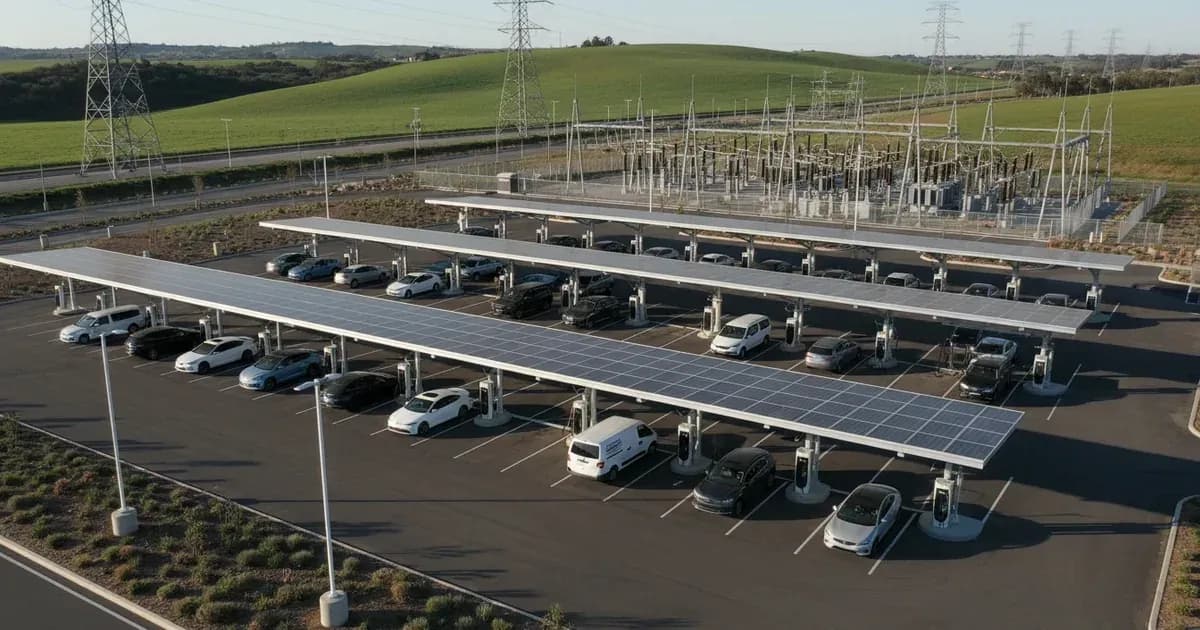
The transition to fleet electrification has driven rapid deployment of commercial three-phase electric vehicle (EV) charging hubs across motorway services, retail destinations, and logistics depots. High-power DC rapid chargers demand substantial grid capacity.
To mitigate steep peak demand charges and grid capacity shortfalls, modern charging hubs incorporate solar photovoltaic canopies and stationary battery energy storage systems (BESS). However, because bi-directional storage and solar generation operate in parallel with the distribution network, the site must undergo formal grid connection review under Engineering Recommendation G99.
Procedural Requirements: G99 Applications and ENA EVCP Registration
National guidance issued by the Department for Energy Security and Net Zero specifies clear application rules for low-carbon technology hubs:
Prior Submission and Assessment Timelines
- If an energy device is classified as apply to connect, installers must submit the relevant Engineering Recommendation G99 application form (or G100 if export is limited) to the DNO before installing the device to ensure safe and effective operation of the electricity network.
- The DNO will be in touch within 45 days for low voltage energy devices and 65 days for high voltage energy devices to approve installation or suggest required amendments.
- It is the energy device owner's responsibility to ensure that the DNO has received this notification and, in the case when the energy device is classified as apply to connect, granted authorisation before the work is carried out.
Equipment Database Registration
To verify technical compliance:
- Part of the application form includes reference to the customer's make and model of Electric Vehicle Charge Point, together with an ENA EVCP Database register number.
- If the energy device is not type tested, the DNO may require additional documentation to demonstrate that it complies with relevant engineering recommendations.
Accelerated Fast Track Pathway for Integrated Storage
Where the charging hub incorporates on-site battery storage alongside solar generation:
- Installers can utilise a fast track application process by submitting the G99 Form A1-2 application form for connection of Fully Type Tested Integrated Microgeneration and Storage installations.
- Submitting Form A1-2 prior to installation reduces the connection time to 10 days or less, dramatically expediting project commissioning.
Statutory Safety Standards: ESQCR Regulation 21 and 22
Connecting a commercial charging hub to the electricity grid requires full adherence to the Electricity Safety, Quality and Continuity Regulations 2002:
Protection Against Grid Interference
Under Regulation 22(1)(a), the operator must have the necessary and appropriate equipment to prevent danger or interference with that network or with the supply to consumers so far as is reasonably practicable. Charging hub switchboards must incorporate certified loss-of-mains protection and harmonic filters.
Formal Agreement with Network Distributor
Regulation 22(1)(d) dictates that the operator agrees specific requirements with the distributor who owns or operates the network before commencing parallel operation.
Automatic Disconnection Architecture
Under Regulation 22(2)(b), the source of energy must be configured to disconnect itself electrically from the parallel connection when the distributor's equipment disconnects the supply of electricity to the installation.
Switched Alternative Rules (Regulation 21)
Where backup diesel generators or standalone microgrids operate as switched alternatives during power outages, Regulation 21 mandates that the installer ensures the source cannot operate in parallel with the distributor's network and complies with British Standard Requirements.
Frequently asked questions
Why do three-phase EV charging hubs require a G99 application?
Charging hubs paired with on-site solar PV and battery storage exceed the 16 amperes per phase limit, requiring formal G99 apply to connect approval.
What information is required to register commercial EV chargepoints?
Applications must reference the customer's make and model of EV chargepoint together with an official ENA EVCP Database register number.
How long does the DNO take to evaluate commercial EV hub connections?
The DNO assessment window is 45 days for low voltage connections and 65 days for high voltage substations.
Can battery storage at an EV charging hub use fast track processing?
Yes, submitting G99 Form A1-2 for fully type-tested integrated microgeneration and storage reduces connection review to 10 days or less.
What statutory safety rules govern EV charging hubs connected in parallel?
Under ESQCR Regulation 22, the operator must agree specific requirements with the distributor and install equipment preventing danger or network interference.
References
- DESNZ Register Energy Devices in Homes or Small Businesses Guidance — accessed 28 August 2026
- Electricity Safety Quality and Continuity Regulations 2002 Regulation 22 — accessed 28 August 2026
- Electricity Safety Quality and Continuity Regulations 2002 Regulation 21 — accessed 28 August 2026
Related guides
More from what to buy — and how not to get cheated.