Great British Insulation Scheme: Rules & Solar PV Interaction
Updated 18 September 2026 · By SolarNevs Research Desk, Dealer surveys + verified sources · 1 source · Method ↗
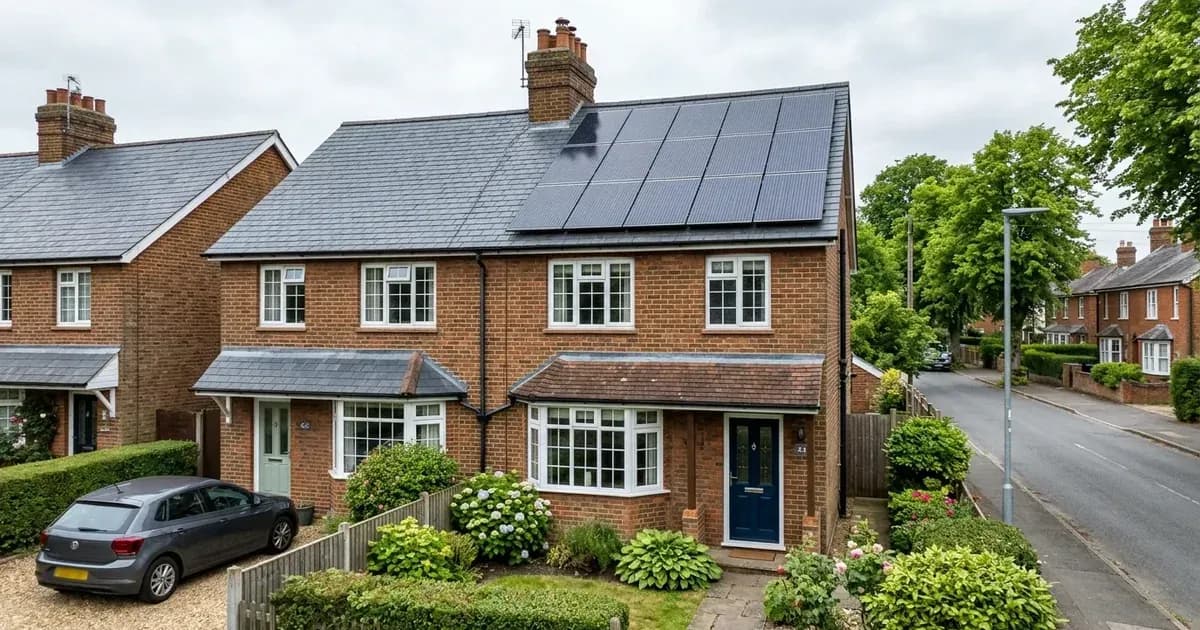
Energy efficiency policy across Great Britain has evolved through targeted supplier obligations aimed at reducing domestic carbon intensity and mitigating fuel poverty. Many domestic property owners exploring rooftop solar microgeneration and battery storage encounter references to the Great British Insulation Scheme alongside broader government grant offerings.
Understanding how the Great British Insulation Scheme operates, which measures it finances, and why standalone solar photovoltaics sit outside its statutory remit is essential for households planning comprehensive home energy retrofits.
<Callout type="info" title="Key Facts: Great British Insulation Scheme">
- Regulatory Administration: The Great British Insulation Scheme is a government energy efficiency scheme (formerly known as ECO+) administered by Ofgem.
- Statutory Timescale: The scheme began in April 2023 and closed on 31st March 2026 under the official statutory framework.
- Targeted Single Measure Focus: The scheme complements ECO4, yet unlike ECO4's whole-house approach, it mostly delivers single insulation measures.
- Broad Household Eligibility: Available to low-income households and those with an EPC rating of D-G within Council Tax bands A-D in England and A-E in Scotland and Wales.
- Supplier Obligation Model: The scheme works by placing an obligation on medium and large energy companies to deliver measures reducing energy usage.
- Jurisdictional Remit: Governed across the least energy-efficient homes in Great Britain.
</Callout>
Legislative Origins and Ofgem Administration
The Great British Insulation Scheme was introduced by the British Government to expand insulation support beyond strict means-tested benefit recipients. Formally established as an evolution of the Energy Company Obligation framework, the scheme was formerly known as ECO+ before its legislative enactment.
The regulatory framework is administered directly by the Office of Gas and Electricity Markets (Ofgem), following policy decisions established in the Government Response issued by the Department for Energy Security and Net Zero. The overarching objective is to deliver improvements to the least energy-efficient homes in Great Britain to tackle fuel poverty and help reduce energy bills.
Scheme Timetable and Duration
The Great British Insulation Scheme was designed as a targeted, time-limited intervention operating alongside long-term decarbonisation programs:
- Commencement: The scheme began in April 2023, enabling licensed electricity and gas suppliers to commence retrofit project delivery.
- Closure Date: The scheme was legislated to run through to a statutory close on 31st March 2026.
- Regulatory Governance: Throughout its operational lifetime, Ofgem continuously monitors supplier compliance and engages in formal consultation regarding administrative rules.
Single-Measure Approach vs ECO4 Whole House
To understand where domestic microgeneration fits within the government's energy efficiency framework, homeowners must distinguish between the two primary supplier obligations:
1. ECO4 Whole-House Retrofit
The broader Energy Company Obligation (ECO4) mandates a whole-house multi-measure approach. Under ECO4, obligated energy suppliers must deliver a comprehensive package designed to raise a dwelling's Energy Performance Certificate rating significantly. This can include heat pumps, solid wall insulation, and rooftop solar photovoltaic panels where heating and fabric upgrades alone are insufficient.
2. Great British Insulation Scheme (GBIS) Focus
By contrast, the Great British Insulation Scheme operates with a focused, streamlined scope. The scheme complements the Energy Company Obligation (ECO4) scheme, yet unlike ECO4’s ‘whole house’ approach, this scheme will mostly deliver single insulation measures.
Approved measures under GBIS focus primarily on:
- Cavity wall insulation.
- Loft and roof space insulation.
- External and internal solid wall insulation.
- Underfloor insulation.
Because the legislative focus is concentrated on cost-effective fabric insulation, the Great British Insulation Scheme does not fund standalone rooftop solar photovoltaic systems. Householders seeking funded solar PV must explore ECO4, the Warm Homes Local Grant in England, or devolved programmes such as Nest in Wales.
Obligated Energy Suppliers and Funding Model
The Great British Insulation Scheme does not operate via government vouchers or direct local authority treasury disbursements. Instead, the scheme works by placing an obligation on medium and large energy companies to deliver measures that result in reduced energy usage.
Under this statutory model:
- Large and medium retail energy suppliers (such as British Gas, E.ON Next, Octopus Energy, EDF Energy, and ScottishPower) are allocated binding annual carbon saving targets.
- Obligated suppliers contract accredited retrofit installers to survey qualifying homes and execute single insulation installations at low or zero cost to the resident.
- Ofgem oversees the validation of submitted measures, ensuring installed insulation products satisfy accredited industry retrofit standards.
Eligibility Criteria: General Group and Low-Income Group
One of the defining innovations of the Great British Insulation Scheme was the creation of two distinct eligibility pathways, expanding support to a broader cross-section of British homeowners:
1. Low-Income Group
Targeted at vulnerable households in receipt of qualifying means-tested benefits, or households identified as fuel poor under local authority flexible eligibility rules.
2. General Group
Recognising that many middle-income households struggle with heating costs due to poor housing fabric, the scheme opened support to the General Group. Dwellings qualify under this group based on property energy efficiency and municipal tax banding:
- EPC Rating: Dwellings must hold an Energy Performance Certificate rating between D and G (EPC D-G). Highly rated homes (EPC A, B, or C) do not qualify.
- Council Tax Bands in England: Eligible properties must sit within Council Tax bands A, B, C, or D (Council Tax bands A-D in England).
- Council Tax Bands in Scotland and Wales: Eligible properties must sit within Council Tax bands A, B, C, D, or E (bands A-E in Scotland and Wales).
Combining Fabric Insulation with Solar PV
While the Great British Insulation Scheme does not finance solar panels directly, optimizing building fabric through single insulation measures provides the essential foundation for subsequent solar microgeneration:
- Reduced Thermal Losses: Insulating lofts and cavity walls lowers space heating requirements, allowing homeowners to size heating systems more effectively.
- Maximized Solar Self-Consumption: When a well-insulated home pairs rooftop solar panels with a heat pump, generated solar electricity satisfies space heating demand with minimal energy leakage.
- Phased Retrofit Strategy: Householders often utilize GBIS to secure subsidized fabric insulation, subsequently funding solar PV arrays privately or via low-interest devolved loans to achieve complete domestic energy independence.
Frequently asked questions
Can I get free solar panels through the Great British Insulation Scheme?
No. The Great British Insulation Scheme (GBIS) is designed specifically to deliver single insulation measures such as cavity wall or loft insulation, rather than domestic solar photovoltaic installations.
What was the operational timeline of the Great British Insulation Scheme?
The scheme began in April 2023 and closed on 31st March 2026, operating under regulatory administration by Ofgem.
What are the property eligibility criteria for the GBIS General Group?
Dwellings qualify under the General Group if they hold an Energy Performance Certificate (EPC) rating between D and G, and sit within Council Tax bands A-D in England, or bands A-E in Scotland and Wales.
How is the Great British Insulation Scheme funded?
The scheme is funded through a statutory obligation placed on medium and large energy companies across Great Britain to deliver energy usage reduction measures.
References
- Ofgem Great British Insulation Scheme Administration Portal — accessed 16 September 2026
Related guides
More from schemes, subsidies & financing.