UK Solar Panel Costs and Savings Guide
Updated 18 September 2026 · By SolarNevs Research Desk, Dealer surveys + verified sources · 1 source · Method ↗
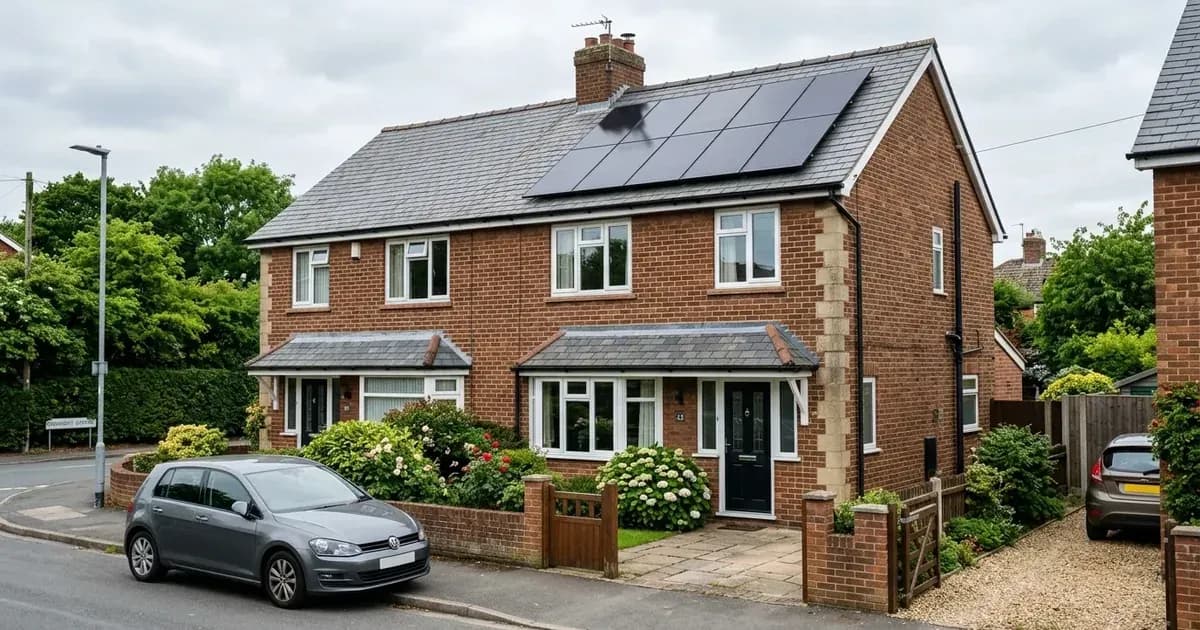
Investing in residential rooftop solar photovoltaic microgeneration has established itself as one of the most effective long-term capital improvements available to homeowners across England, Scotland, and Wales. Against a backdrop of persistent volatility in wholesale energy markets and regulated default retail tariffs under Ofgem price caps, generating zero-marginal-cost electricity on-site provides direct, predictable insulation against escalating household utility overheads.
However, navigating the financial landscape of domestic solar requires an objective understanding of initial capital expenditures, hardware component costs, balancing storage equipment, and realistic annual bill reductions. Drawing upon verified benchmark data from the Energy Saving Trust (EST) and national energy pricing baselines, this guide provides a transparent financial and technical evaluation of domestic solar economics across Great Britain.
<Callout type="info" title="Key Takeaways: UK Solar Costs & Financial Returns">
- Average Capital Expenditure: An average home solar panel system costs around £7600* to install for a typical residential installation.
- Benchmark System Size: Domestic solar panel systems are around 4.5 kWp, typically utilizing an array of approximately 12 photovoltaic panels.
- Physical Roof Space: A 4.5 kWp system requires between 20 to 30m 2 of unshaded roof surface area to achieve optimal generation.
- Battery Storage Capex: Adding stationary domestic battery storage to an existing or new array tends to cost around £5000 to £8000.
- Annual Bill Savings: Real-world household case studies demonstrate energy bill reductions in the region of £750 a year under prevailing tariffs.
- Decarbonisation Benefit: A typical domestic array saves around one tonne of carbon per year across British operating environments.
- Statutory Planning: Solar installations on residential properties represent permitted development and rarely require planning consent.
</Callout>
Benchmark System Sizing & Upfront Capital Expenditure
When scoping a residential solar installation, system sizing must be balanced against available unshaded roof area and annual domestic electrical consumption. In the UK market, domestic installations have coalesced around a standard residential scale:
Generally, domestic solar panel systems are around 4.5 kWp and cost around £7600*.
This capital investment covers the entire turn-key installation process, comprising tier-1 monocrystalline photovoltaic modules, a matched grid-tied or hybrid string inverter, roof-mounting structural rails and brackets, DC/AC safety isolation switches, balance-of-system wiring, scaffolding access, and MCS commissioning documentation.
Roof Geometry & Array Dimensions
The spatial footprint of a domestic solar array depends on individual module wattages and roof pitch:
- Spatial Requirement: A 4.5 kWp array typically occupies between 20 to 30m 2 of roof surface area, typically using around 12 panels. Modern residential modules deliver high power outputs per panel, requiring roughly two square meters per module.
- Roof Structural Strength: On pitched roofs, modules are fixed to timber rafters using roof hooks and aluminium mounting rails. Where installations occur on flat residential roofs, systems are weighted down rather than fixed through the roof covering, requiring a preliminary structural check to verify that rafters can support ballast blocks and wind uplift loads.
System Parameter | Benchmark Value | Technical / Financial Context |
|---|---|---|
Nominal Peak Power | 4.5 kWp | Maximum DC rating under standard test conditions |
Turn-Key Installation Cost | ~£7,600 | Fully commissioned residential system cost |
Typical Panel Quantity | ~12 panels | High-efficiency monocrystalline PV modules |
Roof Surface Area | 20 to 30 m2 | Minimum contiguous unshaded roof aperture |
Battery Storage Add-On | £5,000 to £8,000 | Co-located or AC-coupled lithium storage |
Heating System Reference | ~£12,000 | Baseline cost for electric air source heat pump |
Orientation, Shading & Generation Economics
The volume of electrical energy harvested by a rooftop array is dictated primarily by roof azimuth (compass heading) and surface tilt angle. In the northern hemisphere, direct south-facing roof elevations deliver peak solar irradiation:
East-West vs South Orientation
Many British semi-detached and terraced dwellings feature east-west roof orientations rather than true south-facing aspects. While south-facing arrays generate the highest total annual kilowatt-hour yield, east-west arrays offer distinct operational advantages:
- Generation Differential: A system facing east or west tends to get around 15-20% less energy than one facing directly south.
- Consumption Profile Alignment: Rather than producing a sharp peak at midday when household demand may be low, an east-west split generates power earlier in the morning and later into the late afternoon, matching morning domestic routines and evening cooking loads.
Shading Mitigation Algorithms
Micro-shading caused by neighbouring chimney stacks, gables, vent pipes, or mature trees can disproportionately reduce string generation if left unaddressed. To safeguard array yield:
- Module Optimisation: Modern systems can minimise the impact of shading using ‘optimisers’. DC optimisers or integrated MPPT shadow scanning prevent a single shaded cell or panel from pulling down the electrical current of the entire string.
Battery Storage Costs & Self-Consumption Dynamics
Generating solar electricity during daylight hours only yields financial value if that electricity is either consumed directly within the dwelling or exported to the electricity grid under an export agreement. Without battery storage, typical British households consume only 30% to 50% of daytime solar generation directly, with the remainder spilling into the distribution network.
Co-locating chemical energy storage transforms domestic solar economics:
- Capital Cost of Storage: Adding battery storage tends to cost around £5000 to £8000 depending on battery chemistry, cycle warranty, and usable capacity.
- Time-of-Use Arbitrage: Pairing battery storage with domestic solar enables homeowners to store daytime photovoltaic surplus for discharge during peak evening tariff periods. Furthermore, during winter months when solar irradiation is low, smart hybrid storage can be recharged overnight at off-peak rates to offset expensive daytime consumption.
```
DOMESTIC SOLAR & STORAGE FINANCIAL ARCHITECTURE
══════════════════════════════════════════════════════
4.5 kWp Solar PV Array: ~£7,600
Optional Battery Storage: ~£5,000 to £8,000
──────────────────────────────────────────────────────
Combined System Investment: ~£12,600 to £15,600
Annual Case Study Savings: ~£750 / Year
Annual Carbon Offset: ~1.0 Tonne CO2e / Year
```
Modeling Household Savings, Payback & Carbon Abatement
The financial return on investment (ROI) delivered by a residential solar system is driven by two distinct revenue streams: avoided grid import costs and Smart Export Guarantee (SEG) payments.
Empirical Case Study & Energy Price Baselines
Based on comprehensive modeling using fuel prices as of July 2026 (England Scotland Wales), domestic solar installations deliver substantial operational savings:
- Annual Cost Reductions: Documented case studies demonstrate significant financial impact. In Somerset, homeowners Russell and Kate installed 18 solar panels and reported: "They will reduce our energy costs by around £750 a year."
- Self-Consumption Displacement: Every kilowatt-hour generated on the roof and consumed within the home replaces grid electricity otherwise purchased at prevailing default tariff rates under Ofgem price caps.
- Carbon Reductions: Beyond utility bill reductions, clean solar microgeneration delivers direct environmental benefits: a typical home solar panel system could save around one tonne of carbon per year depending on where you live in the UK.
Statutory Planning Permission & DNO Compliance
Installing domestic solar panels across Great Britain benefits from clear, permissive statutory planning and electrical regulatory frameworks:
Permitted Development Rights
For standard domestic dwellings, physical roof installation avoids lengthy bureaucratic planning procedures:
Solar panels on houses are considered ‘permitted development’ and don’t usually need planning permission.
Planning exemptions apply provided that panels do not project excessively from the roof slope, are not positioned higher than the highest part of the roof (excluding chimneys), and are installed with consideration to minimizing visual impact. Properties located in conservation areas or on listed buildings are subject to specific heritage constraints.
Distribution Network Operator (DNO) Registration
To ensure grid stability and electrical safety, statutory regulations require formal network notification:
- Mandatory Notification: Once you have commissioned a system in your home you must register it with your Distribution Network Operator (DNO).
- Connection Procedures: Single-phase residential micro-generators connect under standard EREC G98 procedures following commissioning. Larger setups or high-output hybrid arrangements co-located with powerful storage batteries require prior connection authorization under EREC G99 before energisation.
By aligning accurate upfront capital budgeting with realistic annual generation modeling, UK homeowners can deploy domestic solar PV as a robust, high-yielding investment that permanently lowers domestic living costs while advancing decarbonisation goals.
Frequently asked questions
How much does a typical domestic solar panel system cost in the UK?
An average home solar panel system costs around £7600 to install for a benchmark 4.5 kWp array consisting of approximately 12 panels.
How much can a UK homeowner save annually with solar panels?
A typical domestic installation can reduce household energy costs by around £750 a year, alongside cutting carbon emissions by approximately one tonne annually.
What does it cost to add battery storage to a domestic solar system?
Adding a home battery storage system typically costs between £5000 and £8000, depending on usable storage capacity and inverter coupling architecture.
Do domestic solar panel installations require planning permission?
No. In most cases, solar panels on houses are considered permitted development and do not require formal planning permission.
References
- Energy Saving Trust Solar Panels Advice and Savings Guide — accessed 29 August 2026
Related guides
More from schemes, subsidies & financing.