UK Warm Homes Local Grant Solar PV Guide
Updated 18 September 2026 · By SolarNevs Research Desk, Dealer surveys + verified sources · 2 sources · Method ↗
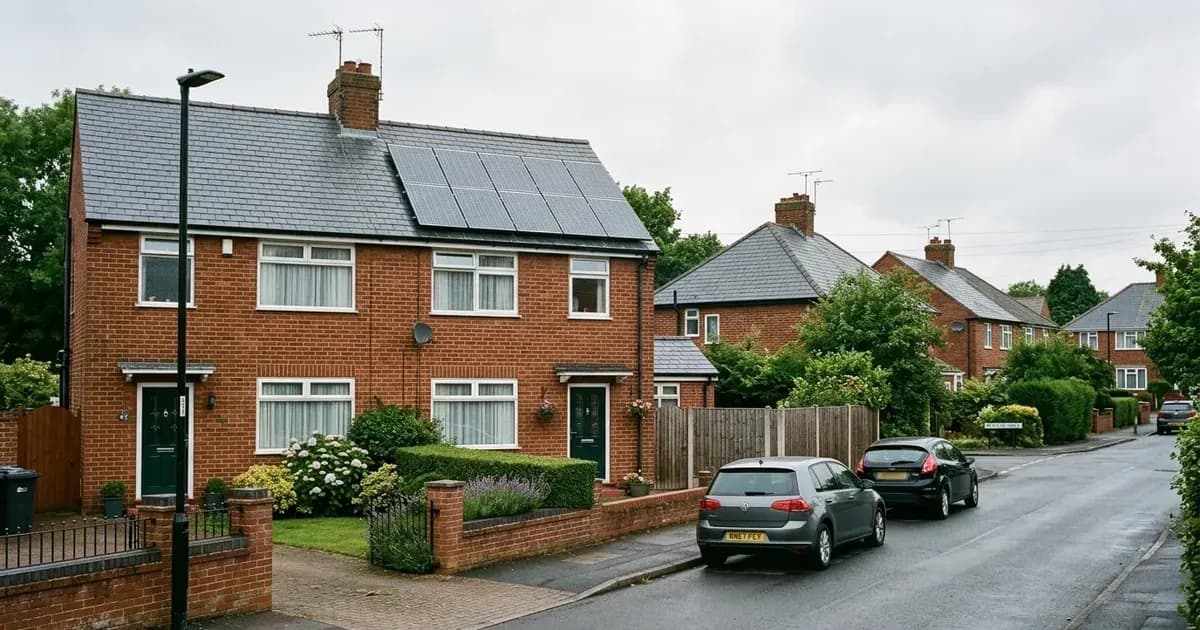
The transition toward residential decarbonisation in the United Kingdom has undergone significant structural evolution as regional fuel poverty programs adapt to deliver permanent home energy improvements. For low-income households and properties situated off the mains gas network, accessing renewable microgeneration has historically been constrained by high upfront capital requirements. While energy supplier obligations such as ECO4 have provided essential retrofits, central government capital funding delivered directly via local authorities represents the primary route to zero-cost domestic renewable energy.
The Warm Homes: Local Grant (WH:LG) is the central government funding instrument administered by the Department for Energy Security and Net Zero (DESNZ) to deliver domestic clean energy upgrades. Formally replacing previous local authority delivery channels and the former Home Upgrade Grant Phase 2 (HUG 2), the initiative channels direct capital funding through English local authority consortiums to deliver fully funded renewable installations, including rooftop solar photovoltaic arrays, domestic heat pumps, and comprehensive thermal insulation packages.
<Callout type="info" title="Key Takeaways: Warm Homes Local Grant">
- National Funding Envelope: The Warm Homes: Local Grant scheme has been allocated £500 million as part of the Autumn Budget to deliver domestic decarbonisation.
- Rollout Timetable: The scheme begins full operational delivery in 2025 to install energy efficiency and clean heating measures in eligible homes.
- Household Income Limit: Standard household eligibility requires an annual income of £36000 a year or less, with automatic qualification available in specific areas.
- Property Energy Rating: Dwellings must hold an Energy Performance Certificate (EPC) rating of D, E, F, or G to be eligible for energy performance upgrades.
- Zero-Cost Provision: Local councils organise and pay for all agreed capital improvement works, ensuring eligible owner-occupiers pay nothing.
- Jurisdictional Scope: The Warm Homes: Local Grant is only available in England; devolved nations access alternative schemes such as Home Energy Scotland and Nest in Wales.
</Callout>
Statutory Framework & Scheme Budget Allocation
Local authority delivery of residential energy upgrades represents a cornerstone of the British Government's Warm Homes Plan. Rather than requiring private homeowners to negotiate commercial loan packages or navigate complex energy supplier rebate schemes, the Warm Homes: Local Grant provides direct, non-repayable public capital investment into domestic building fabric and on-site microgeneration.
The scheme has been allocated £500 million as part of the Autumn Budget, establishing a substantial funding stream distributed across participating local councils and combined authorities in England. The formal delivery framework specifies:
- Delivery Commencement: Warm Homes: Local Grant will begin delivery in 2025 and will provide energy performance upgrades and low carbon heating to low-income households across England.
- Administrative Model: Participating local authorities act as lead delivery partners, procuring accredited retrofit assessment providers, coordinating whole-house surveys, and appointing certified installation contractors.
- Targeting Fuel Poverty: The £500 million funding allocation prioritises dwellings suffering from inadequate space heating and severe thermal heat loss, ensuring public funds achieve maximum carbon abatement and energy bill reduction.
```
WARM HOMES: LOCAL GRANT (WH:LG) ALLOCATION
════════════════════════════════════════════════
Total Funding Envelope: £500 Million
Lead Ministry: DESNZ (England Delivery)
Rollout Schedule: Operational Delivery from 2025
Local Partners: Unitary, District & Combined Councils
```
Property & Household Eligibility Criteria
Securing funding under the Warm Homes: Local Grant requires applicants to satisfy both property-level structural criteria and household-level income tests. The statutory eligibility framework is designed to direct capital resources toward households most vulnerable to volatile retail electricity tariffs while ensuring that public funds are invested in dwellings capable of delivering measurable energy performance improvements.
Household Income Ceiling & Area-Based Pre-Qualification
To qualify for grant-funded home improvements, applicants must demonstrate qualifying income status through one of three distinct compliance routes:
- Gross Household Income Limit: Your household income must usually be £36000 a year or less. This calculation accounts for the total combined gross earnings of all adults residing in the domestic property.
- Area-Based Deprivation Deciles: Where household income exceeds the threshold, applicants may still qualify if their property falls within designated geographical zones. The Income Decile eligible postcode list has separated out the income element from broader indices of multiple deprivation, automatically pre-qualifying properties situated in income deciles 1-2.
- Qualifying Means-Tested Benefits: Households receiving specific means-tested social welfare benefits automatically fulfill the income requirement without submitting detailed proof of earnings.
Property Tenure & Energy Performance Certificate (EPC) Rules
Beyond household income, the physical dwelling must fulfill strict building performance requirements:
- Energy Performance Rating: The property must have an Energy Performance Certificate (EPC) of D E F or G. Dwellings already achieving higher energy efficiency standards (EPC bands A, B, or C) are deemed energy-efficient and do not qualify for public grant funding. Homeowners who do not hold a current EPC can have an assessment arranged as part of the initial application process.
- Tenure Verification: Eligible dwellings must be privately owned (owner occupied or privately rented). Social housing properties managed by housing associations or local councils are covered under separate dedicated public sector decarbonisation mechanisms. In privately rented properties, landlords are required to contribute toward project costs, ensuring that tenants benefit directly from reduced energy bills.
Eligibility Criterion | Statutory Requirement | Verification Method |
|---|---|---|
Geographic Jurisdiction | England only | UK property address verification |
Household Income Limit | Maximum £36,000 per annum | P60, payslips, or tax returns |
Area-Based Alternative | Postcodes within Income Deciles 1-2 | Government eligible postcode registry |
Energy Performance Standard | EPC band D, E, F, or G | National EPC Register lookup |
Property Ownership Status | Owner-occupier or private tenant | Title deeds or tenancy agreement |
Approved Renewable Measures: Solar Panels & Heating
The engineering methodology underlying the Warm Homes: Local Grant adheres strictly to a "fabric first" approach combined with high-efficiency renewable microgeneration. Under the scheme's technical rules, local councils assess the specific physical requirements of each dwelling to determine the optimal measure package.
The statutory scope of funded improvements includes:
- Solar Photovoltaic Systems: Installing rooftop solar panels to generate clean daytime electricity, directly lowering domestic electricity bills and providing export capability.
- Low-Carbon Heat Pumps: Deploying an air source heat pump if suitable to replace inefficient direct electric heaters, oil boilers, or LPG heating systems.
- Thermal Fabric Upgrades: Installing: wall loft and underfloor insulation to permanently reduce space heating demand before sizing mechanical heating hardware.
- Intelligent Controls: Fitting smart controls and automated time-and-temperature zone thermostats to optimize energy consumption patterns.
Full Grant Subsidy & Zero-Cost Guarantee
A defining characteristic of the Warm Homes: Local Grant is its non-repayable capital grant structure. For eligible owner-occupiers, the program operates on a complete turn-key basis:
Your local council will then organise and pay for any improvement work they’ve agreed with you. You will not need to pay for it.
The lead local authority manages all financial disbursement directly with accredited contractors. Homeowners are not required to provide upfront deposits, submit retrospective grant claims, or manage contractor invoices. Once the home survey confirms that rooftop solar PV is structurally and electrically viable, the entire installation cost—including scaffolding, photovoltaic panels, mounting rails, hybrid inverters, and electrical connection switchgear—is settled directly through the council's central funding allocation.
Application Process, Delivery Consortiums & Support
Securing domestic solar PV through the Warm Homes: Local Grant follows a streamlined, multi-stage administrative process designed to guide homeowners from initial digital screening through to final commissioning.
```
WH:LG APPLICATION & COMMISSIONING PIPELINE
═══════════════════════════════════════════
Step 1: Online Eligibility Screening (GOV.UK)
│
▼
Step 2: Local Council Verification (Within 10 Working Days)
│
▼
Step 3: Accredited Whole-House Retrofit Survey
│
▼
Step 4: Measure Agreement & Council Funding Approval
│
▼
Step 5: MCS Certified Solar Installation & Handover
```
- Digital Screening: Homeowners access the central government portal on GOV.UK to submit property details, postcode data, and income verification documents.
- Council Assessment: Your local council will usually contact you within 10 working days to review application details and initiate the formal delivery process.
- Whole-House Retrofit Survey: A qualified retrofit assessor visits the dwelling to assess roof orientation, structural timber condition, electrical consumer unit capacity, and wall insulation levels.
- Contractor Appointment: The local council issues project instructions to accredited installation contractors who hold Microgeneration Certification Scheme (MCS) accreditation and TrustMark registration.
- Assisted Digital Support: For applicants requiring telephone assistance or guidance with application paperwork, DESNZ operates a dedicated assisted digital support service reachable on Telephone: 0800 098 7950.
Through this coordinated local authority model, the Warm Homes: Local Grant ensures that domestic solar microgeneration is made accessible to British households with the greatest need, providing permanent protection against elevated retail electricity prices and advancing the United Kingdom's net-zero transition.
Frequently asked questions
What is the Warm Homes: Local Grant?
The Warm Homes: Local Grant is a UK Government initiative funded with £500 million to deliver energy performance upgrades and low-carbon heating across England.
What is the income eligibility threshold for the Warm Homes: Local Grant?
Qualifying households must usually have an annual household income of £36000 a year or less, or reside in eligible postcodes within income deciles 1 and 2.
Do homeowners have to contribute to the cost of solar panel installation?
No. Your local council will organise and pay for any agreed improvement work, meaning eligible owner-occupiers do not need to pay anything.
What property EPC rating is required to qualify for solar panels under the grant?
To qualify, domestic dwellings must be privately owned in England and hold an Energy Performance Certificate (EPC) rating between D and G.
References
- GOV.UK Apply for Warm Homes: Local Grant — accessed 29 August 2026
- GOV.UK Warm Homes: Local Grant Guidance for Local Authorities — accessed 29 August 2026
Related guides
More from schemes, subsidies & financing.