VAT on Solar Panels & Batteries UK: 0% Relief Rules & 2027 Reversion
Updated 18 September 2026 · By SolarNevs Research Desk, Dealer surveys + verified sources · 1 source · Method ↗
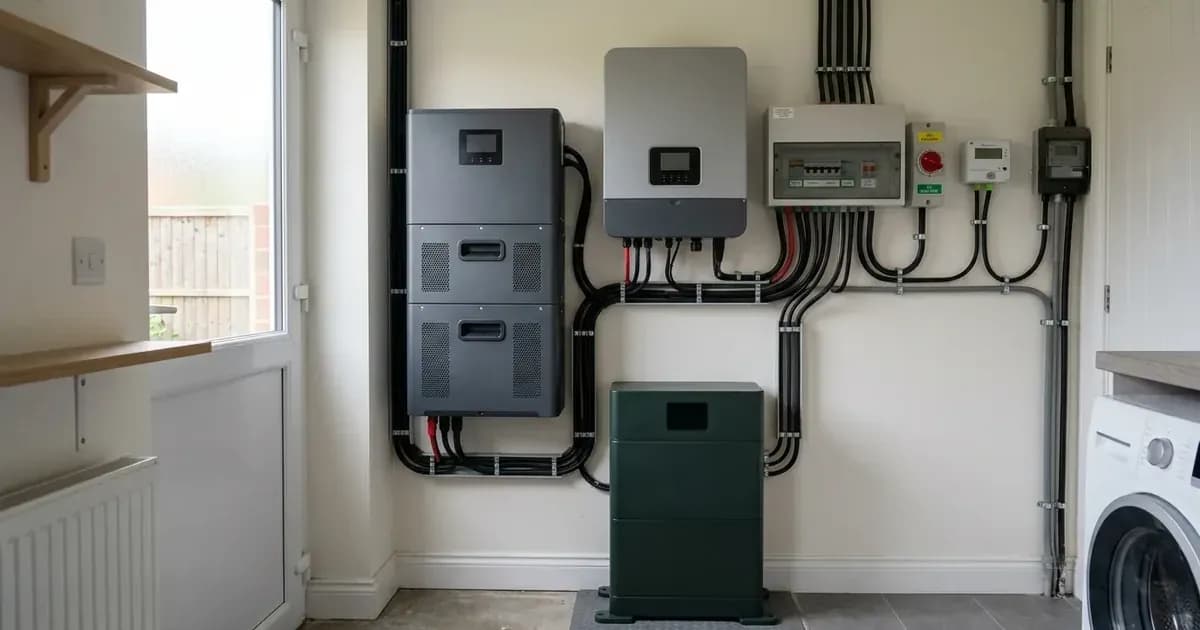
The tax treatment of domestic renewable energy installations in Great Britain and Northern Ireland represents one of the most direct fiscal incentives for residential decarbonisation. Administered by HM Revenue & Customs (HMRC), statutory tax relief removes Value Added Tax (VAT) from qualifying installations of energy-saving materials.
For homeowners, landlords, and charitable organisations investing in solar photovoltaic (PV) systems, battery energy storage systems (BESS), and intelligent energy management hardware, understanding the exact statutory boundaries of HMRC VAT Notice 708/6 is essential. Tax rules govern which hardware qualifies, how services must be contracted, and the firm statutory deadline when rates revert.
<Callout type="info" title="Key Statutory Facts: HMRC VAT Notice 708/6">
- 0% Zero Rate Window: A zero rate applies to the installation of certain specified energy-saving materials from 1 May 2023 to 31 March 2027.
- Scheduled Reversion: From 1 April 2027 onwards, supplies of installations of energy-saving materials will revert to the reduced rate of VAT of 5%.
- Battery Expansion: From 1 February 2024, electrical storage batteries installed in residential accommodation or buildings intended for use solely for a relevant charitable purpose qualify for the temporary zero rate.
- Standalone and Retrofit Storage: Relief covers retrofitting batteries to microgeneration (such as solar panels, wind turbines, and water turbines), standalone batteries storing electricity from the grid, and combined systems.
- Smart Diverters Included: From 1 February 2024, retrofitting a smart diverter to microgeneration systems qualifies for the temporary zero rate.
- Supply and Install Requirement: The relief applies to installation services and materials supplied by the installer; supply-only retail purchases remain standard-rated.
</Callout>
Statutory Foundation and Legal Authority
The statutory basis for renewable energy tax relief is established under primary United Kingdom legislation. Specifically, Section 30 of the VAT Act 1994 provides that goods and services specified in Schedule 8 to the Act are zero-rated.
Within this legislative framework, Group 23 of Schedule 8 specifies when installations of energy-saving materials are zero-rated. HMRC outlines the administrative interpretation and enforcement guidelines for businesses and consumers within HMRC VAT Notice 708/6 (Energy-saving materials and heating equipment).
Under these provisions, the relief operates at the point of sale on the invoice issued by the VAT-registered installation business. Homeowners and charities do not need to submit rebate claims or grant applications to HMRC; rather, the installing contractor applies the zero rate (0%) directly to qualifying work.
The Temporary Zero Rate Window and 2027 Reversion
A critical dimension of the current tax policy is its scheduled expiration date. Under statutory rules:
- 1 May 2023 to 31 March 2027: A zero rate applies to the installation of certain specified energy-saving materials across residential accommodation and qualifying charitable properties.
- 1 April 2027 Onwards: From 1 April 2027 onwards, supplies of installations of energy-saving materials will revert to the reduced rate of VAT of 5%.
This temporary window provides a 0% tax rate across equipment and labour for solar arrays, heat pumps, and insulation. After 31 March 2027, the tax rate steps up to the permanent reduced rate of 5%, increasing the net invoice total for domestic installations completed on or after 1 April 2027.
Tax Period | Applicable VAT Rate | Legal Status | Qualifying Scope |
|---|---|---|---|
1 May 2023 to 31 March 2027 | 0% (Zero Rate) | Temporary statutory relief under Group 23 of Schedule 8 | Supply and installation of specified energy-saving materials in residential accommodation |
From 1 April 2027 onwards | 5% (Reduced Rate) | Statutory reversion under VAT Act 1994 | Supply and installation of specified energy-saving materials in residential accommodation |
Any period (Retail supply-only) | 20% (Standard Rate) | Standard statutory taxation | Supply of energy-saving materials without installation services |
Electrical Storage Batteries Expansion (1 February 2024)
When temporary zero-rating was initially expanded in 2022 and 2023, standalone battery installations occupied an ambiguous status, often requiring concurrent installation alongside solar panels to qualify for relief. This limitation was permanently resolved by HM Treasury and HMRC through statutory amendments.
From 1 February 2024, electrical storage batteries installed in residential accommodation or buildings intended for use solely for a relevant charitable purpose qualify for the temporary zero rate.
Notice 708/6 explicitly delineates three operational configurations for electrical storage batteries that qualify for 0% VAT:
- Retrofit Microgeneration Storage: The retrofitting of a battery for storing electricity generated by one or more of the microgeneration systems including solar panels, wind turbines, and water turbines. Existing solar homeowners can add modular battery storage to their system without incurring VAT.
- Standalone Grid Storage: The installation of a standalone battery for storing electricity from the grid (the mains electricity). Households without solar panels who install home batteries to capture off-peak electricity tariffs qualify for the 0% zero rate.
- Combined Solar and Grid Storage: The installation of a battery for storing electricity from one or more microgeneration systems and from the grid. This reflects typical modern AC-coupled and hybrid domestic storage setups.
Smart Diverters Relief
Alongside electrical storage batteries, statutory relief was extended to intelligent energy redirection devices. From 1 February 2024, the retrofitting of a smart diverter to one or more microgeneration systems installed in residential accommodation or buildings intended for use solely for a relevant charitable purpose qualifies for the temporary zero rate.
According to Notice 708/6, a smart diverter automatically diverts electricity generated by one or more microgeneration systems to electrical appliances in the accommodation or building, including other microgeneration systems such as ground and air source heat pumps.
Devices such as solar immersion diverters that channel excess daytime rooftop solar generation into hot water cylinders or thermal stores qualify under this provision, ensuring that ancillary energy management hardware benefits from identical tax relief.
Supply and Install vs Supply-Only Distinction
A fundamental rule of HMRC VAT Notice 708/6 is that the tax relief applies exclusively to contracting services that encompass both materials and installation.
- Installation Services Scope: The relief applies to the services of installing energy-saving materials in residential accommodation and charitable buildings.
- Supply and Install Scope: The relief also applies to the supply of energy-saving materials by the person who installs those materials in residential accommodation and charitable buildings.
- Supply-Only Exclusion: If you supply energy-saving materials without installing them, your supply will be standard-rated. For example, the sale of energy-saving materials by a retailer is always standard-rated.
This distinction is crucial for self-installers and DIY enthusiasts. Homeowners who purchase solar panels, inverters, mounting rails, or battery packs directly from trade counters, electrical wholesalers, or online retailers must pay the standard 20% VAT rate on those products. To benefit from the 0% rate, the equipment must be purchased through and installed by the contracting business.
Summary Checklist for UK Homeowners
To ensure a domestic solar and battery installation secures full statutory 0% VAT relief:
- Verify Contract Structure: Ensure the quotation and contract cover a turnkey supply-and-fit service from the installer rather than two disjointed contracts.
- Confirm Timeline: Ensure works are commissioned and invoiced prior to the 31 March 2027 deadline to avoid the statutory reversion to 5% from 1 April 2027.
- Include Storage and Controls: If retrofitting a battery or solar hot water diverter to an existing solar array, verify that the 1 February 2024 standalone battery and smart diverter rules are applied.
Frequently asked questions
Are solar panels zero-rated for VAT in the UK?
Yes. Under HMRC VAT Notice 708/6, a zero rate of 0% applies to the installation of specified energy-saving materials, including solar panels, from 1 May 2023 to 31 March 2027.
Does the 0% VAT relief apply to standalone battery storage?
Yes. From 1 February 2024, electrical storage batteries qualify for the temporary zero rate whether retrofitted to solar, installed standalone for grid charging, or operating across both.
When does the 0% VAT rate end for solar panels and batteries?
The temporary 0% zero rate ends on 31 March 2027. From 1 April 2027 onwards, supplies of installations of energy-saving materials will revert to the reduced VAT rate of 5%.
Can I buy solar panels or batteries without installation and pay 0% VAT?
No. If you supply energy-saving materials without installing them, the supply is standard-rated at 20%. For example, retail sales by merchants or equipment suppliers are always standard-rated.
References
- HMRC VAT Notice 708/6 — accessed 16 September 2026
Related guides
More from schemes, subsidies & financing.