Can You Charge an EV with a Solar Generator? The Math
Updated 6 September 2026 · By SolarNevs Research Desk, Dealer surveys + verified sources · 2 sources · Method ↗
Key Takeaways
- Yes, it plugs in and works — the EV's portable Level 1 charger treats a power station's AC outlet like any wall socket.
- The scale mismatch is brutal: a large 2–3 kWh station feeds a pack that holds 70–130+ kWh — think 5–10 miles of range per full discharge.
- Legitimate uses exist at the margins: emergency miles, camp power that spares the traction battery, outage bridging — just not routine charging.
- The sun can run your car — via the roof, not the tailgate: ~8 panels of home solar covers average US driving.
Why the answer is yes — and why yes misleads
Electrically, nothing objects. Your EV ships with (or offers) a portable charging cable whose household plug draws 1–1.5 kW — comfortably within the AC output of any serious portable power station. Plug the cable into the station, the connector into the car, and charging begins exactly as it would from a garage outlet. The internet's viral clips of power stations "rescuing" EVs are real footage of real physics.
The mislead is in the units — the kW-versus-kWh distinction our explainer belabors for exactly this moment. The station's output (kW) is adequate; its capacity (kWh) is the punchline. A flagship portable unit stores 2–3 kWh. A modern EV pack stores 70–130+. Emptying the entire station into the car — an hours-long affair — transfers a low-single-digit percentage of the pack: at a typical 3–4 miles per kWh, roughly 5 to 10 miles of range. The power station isn't a fuel depot; it's a thermos being poured into a swimming pool.
The gas generator variant, for completeness
Swap in a gasoline generator and the capacity ceiling lifts (it makes energy as long as fuel flows) but the rate ceiling remains: most portables sustain Level 1-ish output, meaning an overnight run for a few dozen miles. In a hurricane-outage emergency that's genuinely worth knowing — patient trickle beats stranded — and it's precisely how some households bridged extended blackouts. As routine practice, burning gasoline at generator efficiency to move an electric car is the worst of both drivetrains; even the emergency case is often outrun by driving to a live fast-charger while charge remains.
Where portable-plus-EV genuinely earns its keep
Scenario | What the station contributes | Verdict |
|---|---|---|
Stranded short of a charger | 5–10 emergency miles | Real, niche insurance |
Camping | Runs camp loads so the pack stays for driving | The honest sweet spot |
Home outage | Bridges fridge/lights; the EV (if bidirectional) is the bigger battery anyway | Useful, roles usually reversed |
Routine charging | A thermos into a swimming pool | Theater |
Scale figures: station 2–3 kWh vs pack 70–130+ kWh; both per current market norms.
Note the reversal in row three: for households with V2H-capable vehicles, the car is the outage battery and the portable station is its small assistant — our EV-as-home-backup guide runs that comparison properly.
What actually charges a car with sunshine
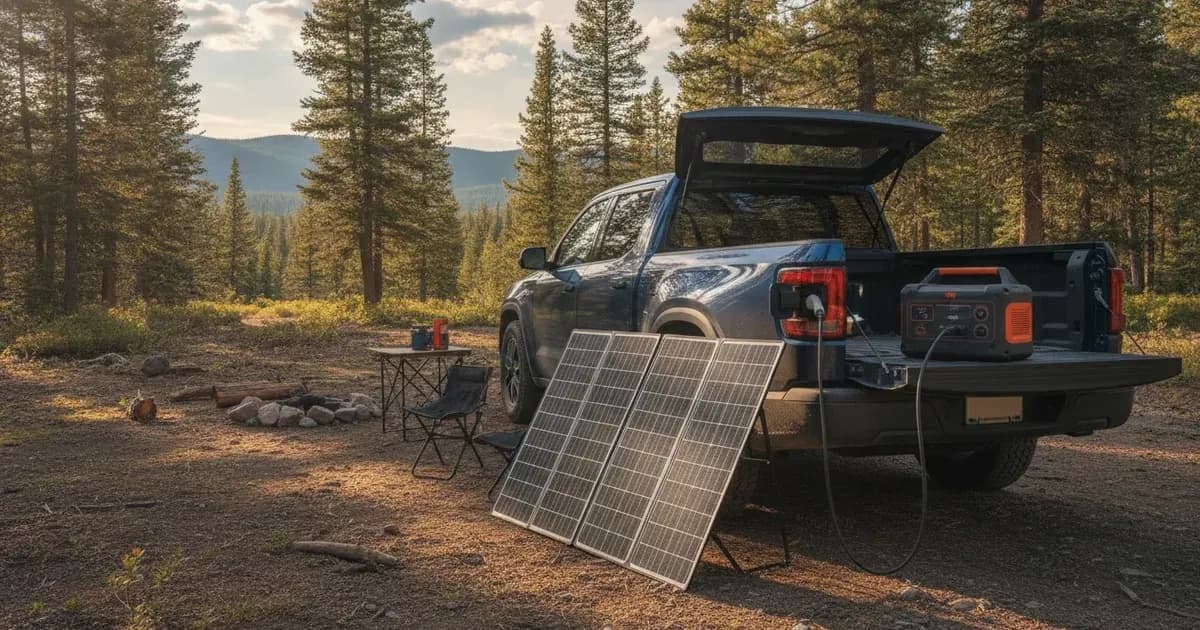
The legitimate version of this dream is stationary and boring: rooftop or carport panels feeding a Level 2 charger through your home's electrical panel. The scale finally matches — our sizing math shows about 8 modern panels covers the average American's 37 daily miles, and a two-car solar carport covers it with margin. Portable folding panels paired with a power station do have one honest niche (slowly topping the station at a long campsite, which then runs camp — not the car), but as EV infrastructure they're a rounding error wearing an adventure-brand price tag.
Sun-to-wheels is this site's favorite loop precisely because it works — measured in roofs, not briefcases.
Keep reading: V2H bidirectional charging · solar carports · playing TOU rates.
Frequently asked questions
Can a solar generator charge an electric car?
Yes — an EV's portable charger plugs into a power station's AC outlet like any appliance. The catch is scale: even a large 2–3 kWh station adds only around 5–10 miles of range per full discharge.
Can you charge an EV with a gas generator?
Also yes, with the same scale problem inverted: patient trickle-charging works for emergencies, but most portable units deliver Level 1 speeds — an overnight run for a modest range gain.
What's the real use case for a power station and an EV?
Emergency margin (a few miles to reach a working charger), powering camp loads so the car's battery stays for driving, and as a bridge during outages — not routine charging.
What actually charges an EV from the sun?
Rooftop or carport solar feeding a Level 2 charger through your home's panel — roughly 8 panels covers average driving, as our sizing guide shows. Portable kit is a snack; the roof is the meal.
References
- FuelEconomy.gov – EV energy use ratings — accessed 5 August 2026
- EIA – Measuring electricity (kW vs kWh) — accessed 5 August 2026
Related guides
More from going electric in pakistan.