Why Are Electric Cars So Expensive? And When They Aren't
Updated 6 September 2026 · By SolarNevs Research Desk, Dealer surveys + verified sources · 2 sources · Method ↗
Key Takeaways
- The premium has one dominant cause: the battery — the priciest component in any modern vehicle — with market positioning doing the rest.
- The trend runs downward: pack costs fell for a decade, cheaper chemistries spread, and down-market models keep arriving; the federal credit's death in 2025 obscured, not reversed, this.
- Sticker price is the EV's worst metric: fuel and maintenance flip the ledger over ownership, fastest for high-mileage drivers and solar households.
- The 2026 bargain hides in plain sight: used EVs, punished by early depreciation, plus the few state programs (Illinois foremost) that pay used buyers.
The honest anatomy of the premium
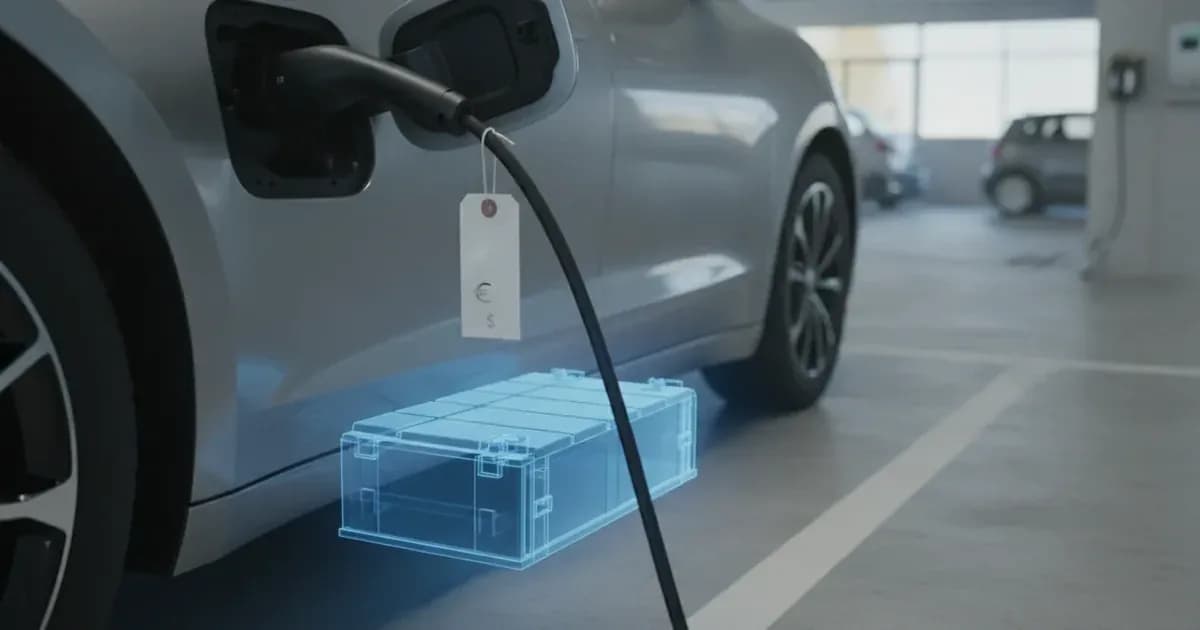
Strip an EV's sticker and one line dominates: tens of kilowatt-hours of lithium-ion cells, modules, cooling, and structure — the pack — still the most expensive single component in any car that carries one. Everything else about EV pricing is commentary: automakers launched electric lineups through premium models (where margins could bury pack costs), early supply chains were boutique, and demand from early adopters tolerated it. The result was a segment that entered the market expensive and spent a decade walking down.
That walk is real: cell chemistry advances, the spread of cheaper LFP packs into mainstream trims, factory scale, and — bluntly — competition have pulled per-kWh costs steadily lower. The US price gap widened optically in late 2025 when the federal $7,500 vanished from window math (vehicles acquired after September 30, 2025 get nothing federally), but the underlying hardware curve didn't blink.
Where the premium goes to die: the ownership ledger
Cost line | Gas car | EV | Where covered |
|---|---|---|---|
Sticker | Baseline | Premium (narrowing) | This page |
Fuel per mile | Gasoline | A fraction — grid rates; less on home solar | Our charging-with-solar math |
Maintenance | The full combustion schedule | An index card | Our maintenance guide |
Depreciation | Conventional | Historically steeper — the buyer's friend | Below |
State incentives | — | Alive in 9+ states | Our 2026 incentive map |
Directional; run your own miles and rates through the linked guides.
Per-mile fuel is the quiet giant: home charging beats gasoline per mile nearly everywhere, wider still on off-peak EV rates, and wider again when the roof makes the fuel (this site's founding arithmetic). Add maintenance's collapse and the total-cost crossover arrives fastest exactly where driving is heaviest — the commuter who most feels the sticker is the owner who most quickly stops feeling it.
The two doors around the premium
The used market. Early EVs depreciated hard — early-adopter churn, range anxiety folklore, and rate-of-improvement fears all pushed resale down — which converted yesterday's premium stickers into today's standing bargain. Modern packs age far better than the folklore assumed (degradation is gradual and warrantied for eight-plus years), making a lightly-used EV the segment's best value-per-dollar, full stop. Check pack health like you'd check any drivetrain — our battery-health guide shows how — and let the first owner's depreciation fund your fuel savings.
The surviving incentives. Post-federal, the state layer is the whole subsidy game, and it now aims down-market by design: Colorado's biggest money requires a sub-$35,000 car, Illinois gates by income and pays used EVs the same $2,000–$4,000 as new, Massachusetts and Connecticut run used-EV tracks. The map article catalogs all nine states — if you're price-sensitive, you're precisely who 2026's remaining programs were rebuilt for.
So — expensive, or mispriced question?
Both answers are true in sequence. Stickers still carry a real premium, born of real battery costs, shrinking on a real curve. And the sticker is the least informative number in the comparison — the ledger that includes fuel, maintenance, incentives, and depreciation routinely inverts it, without heroic assumptions, for exactly the drivers doing the asking. The expensive question, asked properly, becomes a timing question: pay the narrowing premium now and start collecting the cheap miles, or let a first owner pay it and buy the miles secondhand. Either door beats standing in front of the sticker.
Keep reading: the oil-change question · EV gears · jump-starting an EV.
Frequently asked questions
Why are electric cars so expensive?
The battery — tens of kilowatt-hours of it — remains the priciest component in any car, and automakers launched EVs as premium models to absorb that cost. Sticker premiums are mostly pack chemistry plus market positioning.
Are EVs getting cheaper?
Structurally yes: pack costs have fallen for a decade, cheaper chemistries like LFP are spreading, and competition keeps arriving down-market — a trend the loss of the US federal credit in 2025 obscured but didn't reverse.
Are EVs actually more expensive to own?
Often not: fuel-per-mile runs far below gasoline (further with home solar), and maintenance drops to a short list. High-mileage drivers frequently reach total-cost parity despite the sticker gap.
What's the cheapest way into an EV in 2026?
The used market — early depreciation was steep, making lightly-used EVs the segment's standing bargain — plus the state rebates that survived (Illinois pays used EVs the same $2,000-$4,000 as new).
References
- US DOE AFDC – Electric vehicle basics — accessed 5 August 2026
- IRS – OBBB clean vehicle credit FAQs — accessed 5 August 2026
Related guides
More from going electric in pakistan.