EmPOWER Maryland Rebates and BGE/Pepco Solar Interconnection Guide
Updated 18 September 2026 · By SolarNevs Research Desk, Dealer surveys + verified sources · 2 sources · Method ↗
Key Takeaways
- Maryland customers with BGE or Pepco benefit from a 1:1 retail net metering standard.
- Solar systems up to 10 kilowatts (AC) can qualify for an expedited Level 1 interconnection review.
- The federal 30% Section 25D Clean Energy Credit applies to qualifying residential solar and battery installations.
- Formal written Permission to Operate (PTO) from the utility is mandatory before energising a solar array.
Understanding Solar Incentives in Maryland
Policy / Interconnection Parameter | Maryland Standard (BGE / Pepco) | Customer & Operational Impact |
|---|---|---|
Net Metering Compensation | 1:1 full retail rate credit | Surplus solar exports directly offset retail electricity charges |
Annual True-Up Reconciliation | Customer-elected annual cycle | Remaining surplus credits trued up at utility generation rate |
Level 1 Expedited Review | Systems up to 10 kW AC | Fast-track administrative interconnection process for certified inverters |
Anti-Islanding Protection | Automatic millisecond trip | Halts export during public grid outages to protect line workers |
Safety Disconnect Switch | Lockable, visible-break manual switch | Required adjacent to revenue meter for Tier 2+ installations |
Federal Clean Energy Credit | 30% Section 25D (IRS Form 5695) | Covers qualifying residential solar arrays and standalone battery storage |
Grid Energization Requirement | Written Permission to Operate (PTO) | Mandatory utility authorization prior to switching system on |
For homeowners in Maryland served by Baltimore Gas and Electric (BGE) or Pepco, installing solar panels can lead to significant savings and benefits. These benefits are primarily driven by state-level net metering policies and a federal tax credit. The EmPOWER Maryland Energy Efficiency Act, alongside PSC COMAR 20.50, establishes the regulatory framework for clean energy, while federal incentives provide financial support.
Residential solar and battery installations in the United States may qualify for the 30% Section 25D Clean Energy Credit. This credit is claimed by homeowners on Form 5695. Importantly, residential battery energy storage systems also qualify for the federal 30% Section 25D tax credit with no solar requirement. This means that even if you install a battery system without solar, you may still be eligible for this federal incentive.
Maryland's Net Metering Standard
Maryland operates under a robust net metering policy that benefits solar owners. Under this policy, eligible customer generation receives full retail net metering credits for surplus solar exported to the grid. This is known as a 1:1 retail net metering standard.
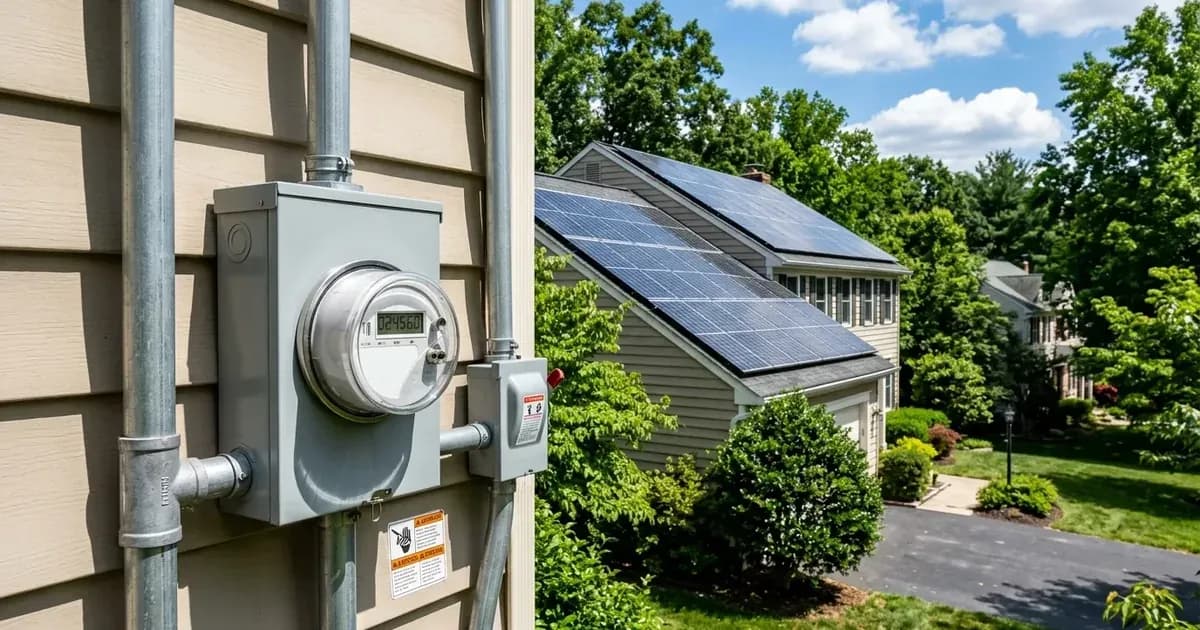
Customers elect an annual true-up billing cycle where remaining excess generation is credited at the generation rate. This annual reconciliation ensures that any surplus electricity you send back to the grid over a year is accounted for. The governing utilities, BGE and Pepco Maryland, facilitate this process. To manage the flow of electricity, the utility installs a certified bidirectional AMI smart meter to record import and export power flows.
Interconnecting Your Solar System with BGE or Pepco
Connecting your solar array to the grid requires following specific utility procedures. For many residential systems, an expedited process is available. Certified inverter systems up to 10 kilowatts (10kW AC) qualify for expedited Level 1 interconnection review. This streamlined process helps homeowners get their systems online more quickly.
For safety and grid stability, certain equipment is required. Certified grid-tied inverters must automatically isolate generation within milliseconds during public grid blackouts. This anti-islanding grid protection standard prevents solar systems from feeding power into a de-energised grid, which could endanger utility workers. Additionally, Tier 2 and larger installations require an exterior, lockable, visible-break manual disconnect switch adjacent to the meter. This provides a clear, physical means for utility personnel to disconnect the solar system from the grid if necessary.
The final and crucial step before your system can begin generating power is obtaining formal approval. Customers must receive formal written Permission to Operate from the utility prior to energising the solar array. Operating your system before receiving this permission can lead to penalties and safety risks.
What You Can Check Yourself, and What You Cannot
As a homeowner, you can take several steps to prepare for and understand your solar installation. You can research and confirm your eligibility for the 30% Section 25D Clean Energy Credit and understand the specifics of Maryland's 1:1 retail net metering standard. You can also ensure you are aware of the requirement for formal written Permission to Operate (PTO) from your utility.
However, certain tasks are strictly the domain of accredited professionals. You must not attempt to perform electrical work on your solar system or utility connection yourself. This includes installing or modifying wiring, inverters, or disconnect switches. Changing grid-protection settings on your inverter is also prohibited, as these are set by an accredited installer to comply with your connection agreement and ensure grid safety. The critical task of verifying earth continuity and bonding all solar array frames to the main electrical service earthing terminal is a professional installer's responsibility, ensuring safe working earthing and bonding. Energising your solar array before receiving formal PTO from the utility is also not permitted.
What the Published Sources Do Not Tell You
While the regulatory framework for solar in Maryland is well-defined, some specific details are not universally published or may vary. Official scheme guidelines does not specify the exact monetary value or mechanism of EmPOWER Maryland clean energy rebates; it only references the EmPOWER Maryland Energy Efficiency Act.
Furthermore, specific utility-level application forms, processing timelines for interconnection requests beyond Level 1, or the precise generation rates used for annual true-ups are not detailed in general regulatory documents. These specifics often require direct consultation with BGE or Pepco, or review of their dedicated interconnection guides. While COMAR 20.50 net metering standards apply identically in Delmarva Power and Potomac Edison territories in Maryland, the specific utility processes may differ.
Frequently asked questions
What is the net metering standard in Maryland for BGE and Pepco customers?
Eligible customer generation receives full retail net metering credits for surplus solar exported to the grid, under a 1:1 retail net metering standard.
Do residential battery storage systems qualify for federal tax credits without solar?
Yes, residential battery energy storage systems qualify for the federal 30% Section 25D tax credit with no solar requirement.
What is the limit for expedited solar interconnection review in Maryland?
Certified inverter systems up to 10 kilowatts (10kW AC) qualify for expedited Level 1 interconnection review with utilities like BGE and Pepco.
When can I energise my solar array after installation in Maryland?
Customers must receive formal written Permission to Operate from the utility prior to energising the solar array.
What federal tax credit is available for solar installations in the United States?
Homeowners claiming qualifying residential solar and battery installations receive the 30% Section 25D credit on Form 5695.
References
- BGE and Pepco Interconnection Tariffs and Net Metering — accessed 27 August 2026
- Maryland PSC COMAR 20.50 Interconnection Standards — accessed 27 August 2026
Related guides
More from schemes, subsidies & financing.