Georgia Power Solar Buyback and RNR Monthly Netting Guide
Updated 18 September 2026 · By SolarNevs Research Desk, Dealer surveys + verified sources · 2 sources · Method ↗
Key Takeaways
- Georgia Power provides solar compensation under the Renewable and Non-Renewable (RNR) tariff.
- Monthly netting for exported solar power is subject to a statutory capacity cap.
- Surplus generation beyond the monthly netting cap is compensated at hourly avoided-cost rates.
- Formal written Permission to Operate (PTO) from Georgia Power is mandatory before energising your system.
Understanding Georgia Power's RNR Solar Tariff
Tariff & Technical Parameter | Georgia Power RNR Standard | Consumer & Billing Impact |
|---|---|---|
Tariff Mechanism | RNR Tariff (Georgia PSC approved) | Framework for measuring and crediting customer-owned generation |
Monthly Netting | Subject to statutory capacity cap | Solar exports offset monthly retail consumption up to cap |
Surplus Export Compensation | Hourly avoided-cost rates | Exports beyond netting cap credited at wholesale avoided cost |
Revenue Metering | Bidirectional smart revenue meter | Utility-installed meter measuring import and export power flows |
Safety AC Disconnect | Lockable visible-break manual switch | Mandatory adjacent to utility meter for Tier 2+ installations |
Inverter Safety Protection | Millisecond anti-islanding isolation | Automatically disconnects PV export during distribution grid outages |
Federal Clean Energy Credit | 30% Section 25D (IRS Form 5695) | Applies to residential solar arrays and standalone battery storage |
Grid Authorization | Written Permission to Operate (PTO) | Mandatory Georgia Power approval required prior to energization |
If you are a Georgia Power customer considering or operating a solar energy system, your compensation for exported electricity falls under the Renewable and Non-Renewable (RNR) Tariff. This tariff is the official mechanism for solar compensation, as approved by the Georgia Public Service Commission (PSC). It defines how Georgia Power credits you for the electricity your solar panels generate and send back to the grid.
The RNR Tariff is designed to integrate customer-owned renewable generation into the utility's network while ensuring fair compensation. It establishes the framework for how your solar generation is measured and valued, distinguishing between electricity used on-site and surplus power exported to the grid.
How Monthly Netting and Avoided-Cost Exports Work
Under the RNR Tariff, Georgia Power employs a system of monthly netting, but with specific limitations. Monthly netting is restricted to a statutory capacity cap. This means that for a certain amount of your exported electricity each month, your bill is reduced by offsetting it against the electricity you import from the grid.
However, any surplus generation exceeding monthly netting caps is compensated at the utility's approved hourly avoided-cost rates. These rates are typically lower than the retail rate you pay for electricity and reflect the cost Georgia Power avoids by not having to generate that power itself. This mechanism encourages on-site consumption of your solar power.
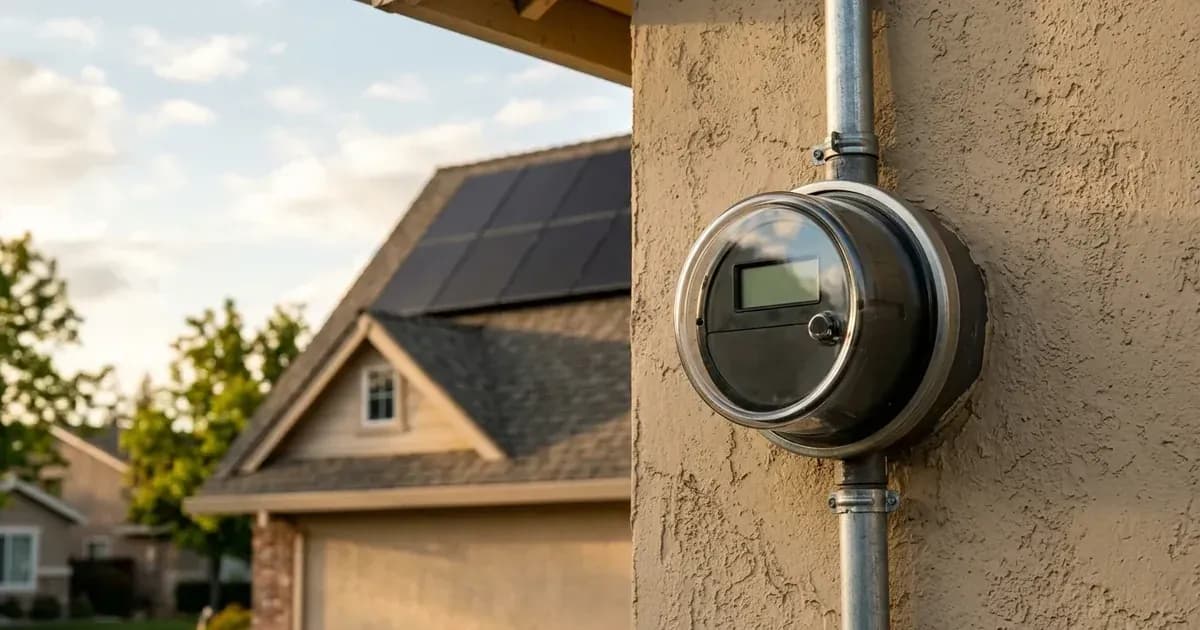
To accurately track these energy flows, the utility installs a certified bidirectional smart revenue meter. This meter records both the electricity you draw from the grid and the electricity your solar system exports to it, ensuring precise billing under the RNR Tariff.
Essential Interconnection Requirements for Georgia Power
Connecting your solar system to the Georgia Power grid involves several technical and safety requirements. These are in place to ensure the stability and safety of both your property and the wider electrical network.
Residential solar systems are sized to meet annual on-site energy requirements. This approach aims to match your system's generation capacity with your household's typical electricity consumption over a year.
For larger installations, specifically Tier 2 and larger, a lockable exterior AC disconnect switch is required. This visible-break manual disconnect switch must be located adjacent to the meter. It provides a clear and accessible means for utility personnel to safely de-energise your system if needed.
Safety protocols also extend to the inverter technology. Grid-tied inverters must automatically isolate within milliseconds during distribution grid outages. This anti-islanding protection prevents your system from feeding electricity into a de-energised grid, which could pose a hazard to utility workers.
Furthermore, proper earthing and bonding are critical. You must verify earth continuity and bond all solar array frames to the main electrical installation earthing terminal. This ensures electrical safety by providing a path for fault currents.
Federal Tax Credits for Georgia Solar and Battery Systems
Beyond the RNR tariff, significant financial incentives exist at the federal level for solar and battery storage installations in Georgia. Homeowners claiming qualifying residential solar and battery installations receive the 30% Section 25D credit on Form 5695. This federal tax credit can substantially reduce the upfront cost of your system.
A key advantage of this credit is that residential battery energy storage systems qualify for the federal 30% Section 25D tax credit with no solar requirement. This means you can install a standalone battery system and still be eligible for the credit, making battery storage an attractive option for energy independence and self-consumption, even if you do not install solar panels simultaneously.
In Georgia, battery storage is highly advantageous to maximise on-site self-consumption rather than exporting at wholesale avoided-cost rates. By storing excess solar generation for later use, you can reduce reliance on grid imports and minimise exports at lower compensation rates.
Permission to Operate (PTO) Your Solar System
Before you can energise your solar system and begin exporting power to the Georgia Power grid, you must obtain formal written Permission to Operate (PTO) from Georgia Power. This is a critical step in the interconnection process. Operating your system without PTO can lead to penalties and safety issues.
The PTO process ensures that your installation meets all technical, safety, and regulatory requirements set by Georgia Power and the Georgia Public Service Commission. It confirms that your system has been inspected and approved for safe and compliant operation.
What You Can Check Yourself, and What You Cannot
As a homeowner with a solar system connected to Georgia Power, there are certain aspects you can monitor and understand, but critical technical work must always be left to accredited professionals.
What you can check yourself:
- System Performance Monitoring: Many solar inverters and battery systems come with apps or online portals that allow you to track your daily and monthly electricity generation and consumption. You can observe how much electricity your system is producing, how much you are consuming, and how much is being exported.
- Bill Analysis: Review your Georgia Power bill to understand how monthly netting and avoided-cost credits are applied. Familiarise yourself with the charges and credits related to your solar generation.
- Visual Inspection: Periodically check your solar panels for obvious obstructions like leaves or debris. Ensure the area around your exterior disconnect switch remains clear and accessible.
What you cannot check or alter yourself:
- Interconnection Equipment: Do not attempt to open, inspect, or tamper with the bidirectional smart revenue meter or the exterior AC disconnect switch. These are utility-owned or critical safety devices.
- Inverter Settings: Never attempt to change grid-protection settings on your inverter. These settings are configured by your accredited installer to comply with Georgia Power's interconnection agreement and anti-islanding requirements. Incorrect settings can compromise grid safety and lead to disconnection.
- Electrical Wiring and Components: Any work involving the electrical wiring, earthing, bonding, or internal components of your solar array or inverter must be performed by a qualified and licensed electrician or solar installer.
- PTO Application: The formal application for Permission to Operate is a technical process typically handled by your solar installer, who ensures all necessary documentation and inspections are completed.
What the Published Sources Do Not Tell You
While the RNR Tariff outlines the general compensation structure, several specifics are not publicly detailed in general guidance.
The exact hourly avoided-cost rates are not fixed or universally published in a single document; they fluctuate based on market conditions and Georgia Power's operational costs. Similarly, the precise details of the statutory capacity cap for monthly netting are not typically found in broad consumer information but are part of the detailed tariff filings.
The step-by-step application process for Permission to Operate (PTO) is also not fully outlined in general public documents. This process often involves specific forms, technical diagrams, and inspections that are managed directly between your installer and Georgia Power.
Frequently asked questions
What is the Georgia Power RNR Tariff?
The Renewable and Non-Renewable (RNR) tariff is Georgia Power's approved mechanism for solar compensation, overseen by the Georgia Public Service Commission (PSC).
How does monthly netting work with Georgia Power?
Monthly netting is restricted to a statutory capacity cap. Any surplus generation beyond this cap is compensated at instantaneous avoided-cost rates.
What happens if I export more than my monthly netting cap?
Surplus generation exceeding monthly netting caps is compensated at the utility's approved hourly avoided-cost rates, which are typically wholesale.
Do I need a smart meter for solar with Georgia Power?
Yes, the utility installs a certified bidirectional smart revenue meter to accurately record both imported and exported power flows.
Does battery storage qualify for a tax credit in Georgia?
Residential battery energy storage systems qualify for the federal 30% Section 25D tax credit, even with no solar requirement.
When can I energize my solar system with Georgia Power?
Customer generation must receive formal written Permission to Operate (PTO) from Georgia Power prior to grid energisation.
References
- Georgia Power Renewable & Non-Renewable Tariff — accessed 27 August 2026
- Georgia PSC Solar Netting Docket Decisions — accessed 27 August 2026
Related guides
More from schemes, subsidies & financing.