Solar Inverter Over-Temperature & Thermal Derating Ireland
Updated 19 September 2026 · By SolarNevs Research Desk, Dealer surveys + verified sources · 3 sources · Method ↗
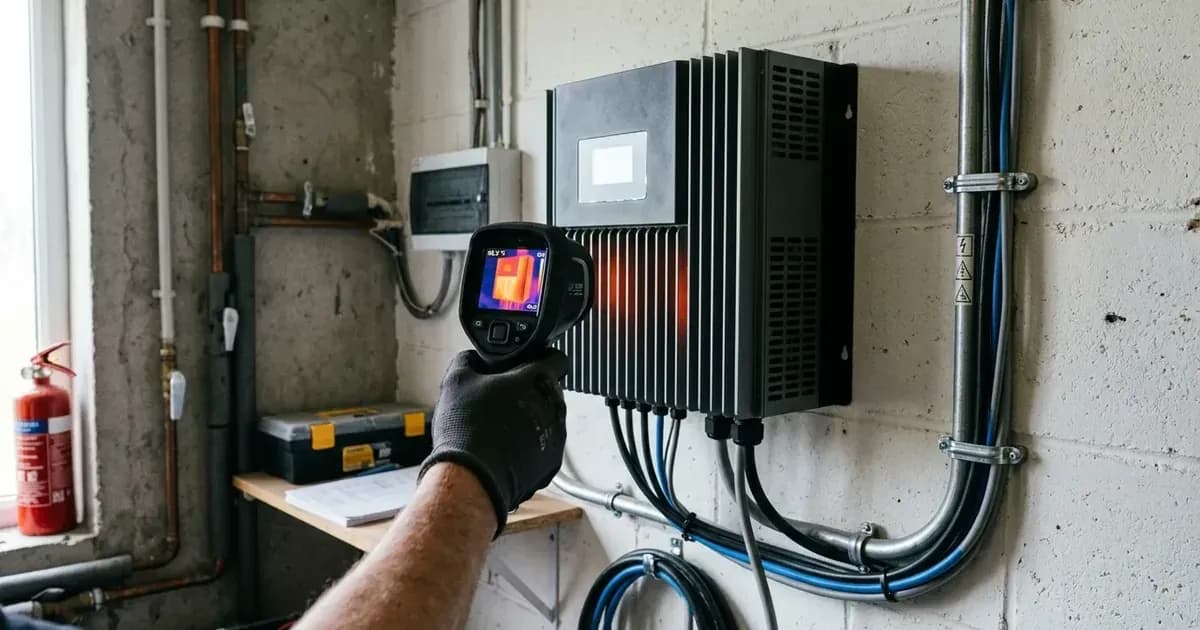
During peak summer generation in Ireland, solar inverters operating under high DC current loads generate substantial heat within their internal power electronics. When internal thermistors detect excessive thermal stress, the unit engages automatic power throttling (derating) to prevent semiconductor breakdown. If temperatures continue climbing, the inverter trips on alarm code 1032 (OV-TEM) and halts all generation.
The OV-TEM alarm is displayed when the inverter detects high ambient temperature (greater than 60° C/140° F). In Ireland, domestic installations must comply with I S 10101 have a rated efficiency of 95 percent and meet the requirements of EN 62109 comply with EN50549. Understanding why an inverter overheats in the Irish climate—particularly in poorly ventilated attics or restricted enclosures—is essential to restoring generation and preventing premature hardware failure.
1. Thermal Shutdown Mechanics: The 60°C Threshold
Modern string and hybrid inverters rely on natural convection through large rear aluminum heatsinks or thermostatically controlled external cooling fans to dissipate thermal losses:
- Thermal Trip Threshold: When operating conditions drive ambient temperatures inside or immediately around the chassis above 60°C, the inverter processor executes an emergency safety shutdown to protect delicate insulated-gate bipolar transistors (IGBTs) and DC bus capacitors.
- Automatic Cooldown Period: If the temperature is above 60°C then the inverter will need to cool down before this alarm will go away. Generation will not resume until the internal thermistors register that ambient chassis temperatures have dropped safely below the trigger threshold.
[!WARNING]Inverter heatsinks and metal chassis surfaces can reach extreme temperatures during peak operation, creating severe contact burn hazards. Always disconnect AC and DC isolators and allow the inverter to cool down completely before touching heatsink fins, fans, or terminal covers.
2. Environmental Factors & Physical Obstructions
While the Irish maritime climate is generally temperate, localized microclimates around the inverter frequently cause overheating:
- Solar Radiation Exposure: Is the inverter in direct sunshine? If so, it probably cannot dissipate heat quickly enough. Inverters installed on external south-facing or west-facing walls without protective solar shading absorb radiant heat, driving chassis temperatures past 60°C even when outside ambient air is temperate.
- Heatsink Obstructions: Inspect the installation: check the fan and heatsink for obstructions. Over months of operation, dust, cobwebs, airborne lint, or nesting insects can accumulate between the vertical aluminum cooling fins, choking natural convective airflow.
- Cooling Fan Inspection: On larger high-power models equipped with forced-air cooling, verify that the external fan spins freely and is not seized by dirt or foreign debris. Clean the heatsink fins using a soft brush or compressed air canister.
3. Sensor Calibration & Diagnostic Verification
In some instances, a 1032 OV-TEM fault is triggered by a defective temperature thermistor rather than actual environmental overheating:
- Measure the ambient temperature near the inverter and compare it with the temperature displayed in the Advanced Information menu (in Running Status). Use an independent digital thermometer placed adjacent to the inverter casing.
- If the ambient air measures normal room temperature but the inverter display reports temperatures in excess of 60°C while cold, internal sensing circuitry is faulty.
- If the temperature displayed does not match the temperature measured, contact Solis Support to arrange warranty inspection or board replacement.
4. SEAI Installation Rules & Attic Ventilation Standards
Under the Sustainable Energy Authority of Ireland (SEAI) Domestic Solar PV Code of Practice, installers must follow strict spatial and fire safety rules to prevent overheating:
- Airing Cupboard Prohibition: Inverters must not be installed within a ‘hot press’ / airing cupboard due to the higher ambient temperatures and risk of ventilation paths being obstructed unintentionally . Safe Electric technical guidance enforces this same rule under Clause 555.6, noting that enclosed cupboards create thermal stress and electrical fire risks.
- Substrate Fire Barrier: Where string inverters are not installed on a fire resistance surface (such as in attic spaces), they must be installed on a fire-resistant substrate (Class 0) which extends to a minimum of 150mm beyond the edge of the inverter.
- Ventilation Clearance: Separation distance to allow ventilation must be to manufacturer’s recommendations . Installers must maintain adequate open, unblocked clearance above, below, and beside the inverter to facilitate chimney-effect convective airflow per manufacturer recommendations.
- Attic Walkway Mandate: String Inverters must be installed on a flat vertical, fire-resistant (concrete/masonry) surface, according to manufacturer’s recommendations, with adequate surrounding space to allow for ventilation, and in an accessible location with a permanent boarded walkway if in an uninhabited roof space.
5. Safe Electric Regulatory Guidance & Airing Cupboard Hazards
Safe Electric guidance highlights the severe fire hazards associated with installing power conversion equipment in restricted domestic spaces:
- Airing Cupboard Safety Notice: These switches must not be installed in airing cupboards due to the significant fire hazard they pose, especially when covered by garments or stored near flammable materials. Manufacturers’ guidance usually states that these devices require adequate ventilation and must be installed in breathable environments, as many include internal fans or heat-sensitive components that rely on airflow to prevent overheating.
- Thermal Ignition Risks: When these switches are enclosed in tight spaces or obstructed by clothing, the lack of ventilation can lead to thermal stress, electrical failure, or even ignition.
- Relocation Protocol: If an inverter or solar diverter was previously installed inside an Irish hot press or unventilated airing cupboard, the homeowner should engage a Registered Electrical Contractor (REC) to relocate the unit to a well-ventilated garage, utility room, or properly boarded attic space with passive ridge vents.
Frequently asked questions
At what internal temperature does a Solis inverter trigger an over-temperature trip?
A 1032 OV-TEM alarm triggers when internal heat sensors detect temperatures exceeding 60°C (140°F), shutting down generation until the unit cools.
Can a solar inverter be installed inside a domestic airing cupboard in Ireland?
No. Under SEAI Domestic Code of Practice and Safe Electric rules, inverters must never be installed in hot presses or airing cupboards due to severe fire and overheating hazards.
What fire safety substrate is required for string inverters in Irish attics?
Where inverters are not mounted on masonry walls, they must be mounted on a Class 0 fire-resistant backing board extending at least 150mm beyond the inverter casing.
References
- Solis Service Center - 1032 OV-TEM Troubleshooting SOP — accessed 17 September 2026
- SEAI Domestic Solar Photovoltaic Code of Practice — accessed 17 September 2026
- Safe Electric Ireland - Solar PV Technical Guidance — accessed 17 September 2026
Related guides
More from inverter errors & fixes.