Solar Inverter AC Breaker Tripping Troubleshooting (Ireland)
Updated 19 September 2026 · By SolarNevs Research Desk, Dealer surveys + verified sources · 3 sources · Method ↗
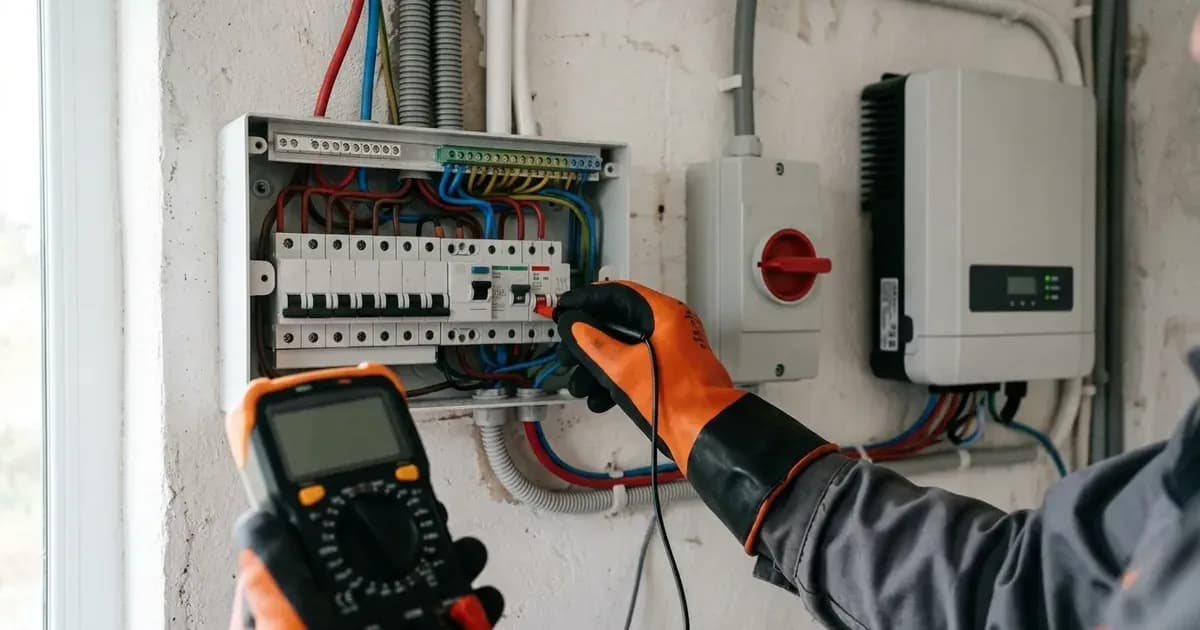
When the dedicated AC circuit breaker or residual current device (RCBO) serving a solar inverter trips in an Irish domestic consumer unit, generation halts completely. An AC Trip occurs when the AC circuit breaker trips, cutting off the connection between the inverter and the grid. This guide outlines the steps to diagnose and resolve AC trip issues effectively.
In Ireland, domestic solar PV circuits must comply with I S 10101 have a rated efficiency of 95 percent and meet the requirements of EN 62109 comply with EN50549. A tripping breaker indicates an active electrical anomaly: thermal overcurrent from an undersized breaker, short-circuit current, or high residual earth leakage currents tripping the RCD element. Resolving the trip requires identifying the operational timing of the trip, inspecting physical terminals, and confirming protective device ratings.
1. Operational Timing Triage: When Does the Trip Occur?
Determining the exact moment the breaker disengages narrows down the electrical root cause:
- Grid Connection / Inrush: Does it happen when connecting to the grid , during startup , or while generating power ? This can help narrow down the cause. A breaker that trips the instant the inverter finishes its 60-second connection countdown points to high inrush currents charging filter inductors, incorrect line-neutral polarity, or an earth fault on the AC cable.
- Startup & Early Morning Power Ramping: If the breaker trips during startup as solar irradiance begins energizing the array, capacitive earth leakage currents across damp module surfaces may be exceeding RCD trip thresholds.
- Peak Generation Hours: If the trip occurs during maximum noon generation on clear sunny days, thermal overload is the primary suspect. As inverter current output peaks, an undersized breaker heats up and trips thermally.
- Environmental Context: Does the AC trip occur randomly , at a specific time , or under specific conditions ? Tripping that coincides with rainfall indicates moisture ingress in external rotary isolators or outdoor conduit fittings.
[!WARNING]Distribution boards contain mains AC live busbars capable of causing fatal electric shocks and arc flash burns. Homeowners must never open distribution board covers or attempt to replace protective devices. All internal panel testing must be performed by a Safe Electric Registered Electrical Contractor (REC).
2. Breaker Sizing & Characteristic Selection
A major cause of persistent tripping on Irish installations is incorrect breaker sizing or improper device characteristics:
- Continuous Current Rating: Ensure the breaker’s rating is 1.2 times the maximum AC output current . Solar inverters operate at continuous full load for hours, unlike intermittent domestic appliances. Inverters operating continuously at maximum output require an appropriately upsized breaker per this multiplier to avoid nuisance thermal tripping.
- Verify Circuit Load: Confirm that the total current flowing through the breaker does not exceed its rated capacity. Ensure that no secondary domestic sub-circuits or heavy loads have been tapped into the dedicated solar radial feed.
- Built-in Protection Selection: Avoid breakers with built-in current protection that conflict with inverter internal safety controls. Use standard B-curve or C-curve miniature circuit breakers designed specifically for distributed generation.
- Hardware Aging: A faulty breaker can degrade over time. Replace it with a new one to rule out hardware issues. Repeated tripping events erode internal bi-metallic thermal strips, lowering the actual trip threshold below its nameplate rating.
3. Terminal Torque & Physical Wiring Inspection
Thermal cycling and vibration within domestic distribution boards can loosen screw clamp connections over time:
- Isolate the installation from the main incoming ESB cut-out switch.
- Pay special attention to the AC circuit breaker terminals and ensure all wiring is properly secured and free from damage. Loose terminal screws create localized electrical resistance, heating the breaker housing and triggering premature thermal tripping.
- Inspect the insulation along the cable entry point to ensure copper strands are not pinched or exposed to metal enclosure edges.
- Examine the external AC rotary isolator located adjacent to the inverter for thermal discoloration or signs of water ingress.
4. Safe Electric RCD Rules & Testing in Ireland
Under Irish electrical standard NSAI I.S. 10101 (National Rules for Electrical Installations) and Safe Electric guidance, protective devices must be verified under strict operating criteria:
- RCD Type Selection (Clause 712.532.101): Standard Type AC RCDs are strictly prohibited on solar PV circuits because high-frequency or smooth DC residual fault currents can blind their magnetic cores. Inverters must be protected by Type A or Type B RCDs depending on internal galvanic isolation.
- Dual Mode RCD Verification: Safe Electric rules dictate: It is important to verify the effectiveness of the RCDs in accordance with clause 6.4.3.8 when in both island mode and when grid-connected. The REC must test trip times at rated residual operating current to ensure disconnection occurs within statutory limits.
- Mandatory Isolation Signage: The designer should consider durable indelible signage to instruct the user how to achieve full disconnection of all sources of supply to the installation.
- Contractor Certification: While Safe Electric provides guidance on fixed wiring compliance, the ultimate responsibility lies with the REC to ensure full adherence to I.S. 10101 and safe operation under all conditions.
5. Escalation to Technical Support
If breaker sizing is confirmed, wiring is properly torqued, and nuisance tripping continues:
- Gather photographic evidence: Provide pictures of the device that is tripping (e.g., AC circuit breaker, RCD, or RCBO). Capture clear views of the rating plate, tripping curve, and terminal connections.
- Record inverter diagnostic logs from the LCD or monitoring app, noting AC voltage and grid current immediately preceding the trip.
- Submit the case to Solis technical support or your equipment supplier to determine if internal AC filter capacitor leakage requires chassis repair.
Frequently asked questions
Why does my solar inverter AC breaker trip immediately upon switching on?
Immediate tripping suggests a short circuit between live and neutral conductors, an earth fault along the AC run, or incorrect wiring terminations at the AC gland.
Why does the inverter breaker trip only during peak midday sunshine?
Midday tripping typically indicates thermal overload from an undersized MCB, high ambient distribution board temperatures, or residual DC leakage currents exceeding RCD limits.
What type of RCD is required for solar inverters under Safe Electric rules?
Under NSAI I.S. 10101:2020 rules, solar circuits require Type A or Type B RCD protection depending on manufacturer guidance to safely detect residual DC currents.
References
- Solis Service Center - AC Breaker Trips Diagnostic SOP — accessed 17 September 2026
- Safe Electric Ireland - Solar PV Technical Guidance — accessed 17 September 2026
- SEAI Domestic Solar Photovoltaic Code of Practice — accessed 17 September 2026
Related guides
More from inverter errors & fixes.