Solis Export Meter Troubleshooting in Ireland: RS485 & EPM Guide
Updated 19 September 2026 · By SolarNevs Research Desk, Dealer surveys + verified sources · 4 sources · Method ↗
Key Takeaways
- Dedicated technical protocols address communication issues between your inverter and meter to ensure accurate grid power telemetry.
- Structured diagnostic steps provide practical steps for diagnosing and resolving communication problems that may stem from cable issues meter faults or inverter malfunctions.
- Electricians can verify bus integrity by utilizing a multimeter to confirm proper RS485 communication signals across differential lines.
- If an external meter is absent or disconnected, disable the fail-safe mode in the internal EPM settings to prevent automatic generation curtailment.
- All fixed wiring and meter connections must satisfy Safe Electric standards under clause 555 6 of the National Clauses for Electrical Installations.
Why is my Solis inverter showing a meter communication error?
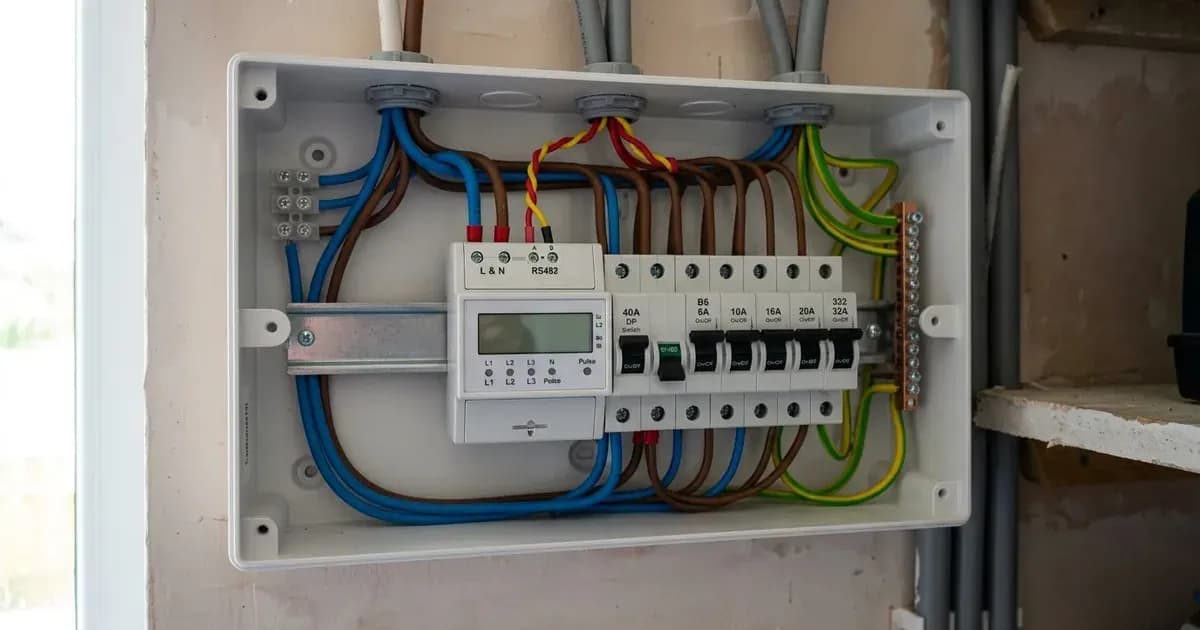
Residential solar installations in Ireland frequently pair a Solis hybrid inverter with an external smart meter (such as Eastron SDM or Acrel DTSD models). The meter measures real-time domestic electrical consumption and grid export, enabling the hybrid system to coordinate battery charging, support self-consumption, and calculate Clean Export Guarantee (CEG) revenue.
When communication fails between the meter and the inverter, the system loses visibility over household energy flows. As a safety precaution, the inverter will stop charging the battery from solar or may throttle generation entirely if an export limitation profile is active.
Ginlong Solis technical service documentation details structured methodologies for addressing communication issues between your inverter and meter, providing practical steps for diagnosing and resolving communication problems that may stem from cable issues meter faults or inverter malfunctions.
Physical RS485 Bus Testing & Signal Verification
The serial communication link between the smart meter and the inverter uses an RS485 Modbus RTU protocol over a twisted-pair cable. Official technical guidelines offer assistance if you've encountered difficulties with the connection between these two components in your solar setup.
Diagnostic Stage | Inspection Focus | Verification Requirement |
|---|---|---|
Inverter Meter Handshake | Communication link health | Resolves addressing communication issues between your inverter and meter |
Root Cause Diagnostic Flow | Systematic fault isolation | Practical steps for diagnosing and resolving communication problems that may stem from cable issues meter faults or inverter malfunctions |
Differential Voltage Test | RS485 bus electrical integrity | Utilizing a multimeter we will demonstrate how to verify proper rs 485 communication signals to ensure your system operates efficiently |
Connection Triage | Structured evaluation | Practical guidance if you've encountered difficulties with the connection between these two components in your solar setup |
EPM Failsafe Setting | Internal software limiter | Disable epm device: if no epm device is being used disable the fail-safe mode in the internal epm settings |
Differential Voltage Testing & Telemetry Restoration
When troubleshooting erratic meter data or complete comms failure, structured methodologies address whether you are facing intermittent connectivity issues or persistent errors.
- Cable Continuity and Polarity: Verify that data terminal A on the meter connects to terminal A on the inverter, and terminal B connects to terminal B. Inverted data lines prevent successful Modbus handshaking.
- Multimeter Signal Measurement: By utilizing a multimeter we will demonstrate how to verify proper rs 485 communication signals to ensure your system operates efficiently. A healthy differential bus demonstrates steady DC bias voltages between terminal lines.
- System Optimization: Following systematic testing steps will equip you with the necessary tools and knowledge to troubleshoot effectively and restore optimal performance to your system.
Internal Export Power Manager (EPM) Failsafe Configuration
In installations where a solar PV system was installed without a dedicated export meter, or where the meter has been temporarily disconnected for consumer unit upgrades, the inverter firmware must be configured accordingly.
If an inverter has its internal Export Power Manager enabled with fail-safe protection turned on, losing communication with the meter causes the unit to immediately throttle generation to zero export to prevent unauthorized backfeed.
Solis engineering guidelines state:
- Disable EPM device: if no EPM device is being used, disable the fail-safe mode in the internal EPM settings.
- Ensure that the model selection parameter within the internal EPM menu is switched to off, restoring normal full-power photovoltaic generation.
Safe Electric Standards & Irish Installation Compliance
Working inside the main distribution board or consumer unit to inspect smart meters in Ireland requires strict adherence to Safe Electric technical regulations.
Safe Electric & I.S. 10101 Safety Notice: The main incoming electrical panel in an Irish home contains unmetered service cables and mains busbars that remain energised even when main breakers are tripped. Never touch terminal blocks or alter RS485 wiring inside the consumer unit. All meter testing, CT orientation checks, and cabling must be carried out by a Safe Electric Registered Electrical Contractor (REC).
Under Safe Electric inspection rules and SEAI domestic microgeneration standards:
- Assessment of Existing Board: Before integrating smart meters into existing consumer units, it shall be determined that the rating and condition of existing equipment is adequate for the altered circumstances of the new works as per clause 134.1.9.
- Prosumer Installation Regulations: Fixed wiring and energy management controls must satisfy prosumer standards: part 8.82 of i.s. 10101 was introduced as an entirely new section as part of the 2024 amendment.
- Completion Certification: Following installation, it is the responsibility of the rec to provide a completion certificate (no 3) confirming that the electrical installation complies with is10101.
- National Installation Clauses: Energy storage and auxiliary meter installations must satisfy clause 555 6 of the National Clauses for Electrical Installations.
- Workmanship Standards: All fixed electrical wiring must comply with clause 134 1 7 of the national wiring rules.
- Isolation Devices: Isolating devices must be chosen and positioned in accordance with clause 537 1 2.
- Enclosure Ingress: Inverters must have an ingress rating of IP65 or greater to prevent dust and moisture penetration.
- Isolation Placard: A permanent warning placard stating "Inverter Isolate AC and DC before carrying out work" must be fixed on the inverter enclosure.
- AC Isolation: An AC isolator 2 pole switching live and neutral must be installed between the inverter and the consumer unit.
By verifying RS485 twisted-pair polarity, checking bus voltages with a multimeter, configuring internal EPM fail-safe settings correctly, and adhering to Safe Electric standards, homeowners and installers can ensure dependable meter communication and precise solar generation tracking across Ireland.
Frequently asked questions
Why is my Solis inverter not communicating with its export meter in Ireland?
Communication failures typically arise from reversed RS485 data wiring, incorrect baud rate or address configuration on the meter, or physical port faults on the inverter.
How can an electrician verify the RS485 communication signal?
Utilizing a multimeter, an electrician can measure differential bus voltages across communication lines to verify proper RS485 communication signals and confirm data transmission.
What should I do if my inverter throttles power due to EPM fail-safe mode?
If no external export power meter device is being used on the installation, disable the fail-safe mode in the internal EPM settings to restore normal solar generation.
What Irish wiring rules govern auxiliary energy meter installations?
Energy storage and meter wiring must comply with clause 555 6 of the National Clauses for Electrical Installations, general workmanship standards under clause 134 1 7, and isolation device rules under clause 537 1 2.
References
- Solis Service Portal - Solis Hybrid Inverter Meter Troubleshooting — accessed 28 August 2026
- Solis Service Portal - Low Power Generation — accessed 28 August 2026
- Safe Electric Ireland - Relevant Clauses for Solar PV Systems — accessed 28 August 2026
- SEAI - Domestic Solar PV Code of Practice for Installers — accessed 28 August 2026
Related guides
More from inverter errors & fixes.