Hoymiles DTU Gateway and Zero Export Configuration Guide
Updated 6 September 2026 · By SolarNevs Research Desk, Dealer surveys + verified sources · 2 sources · Method ↗
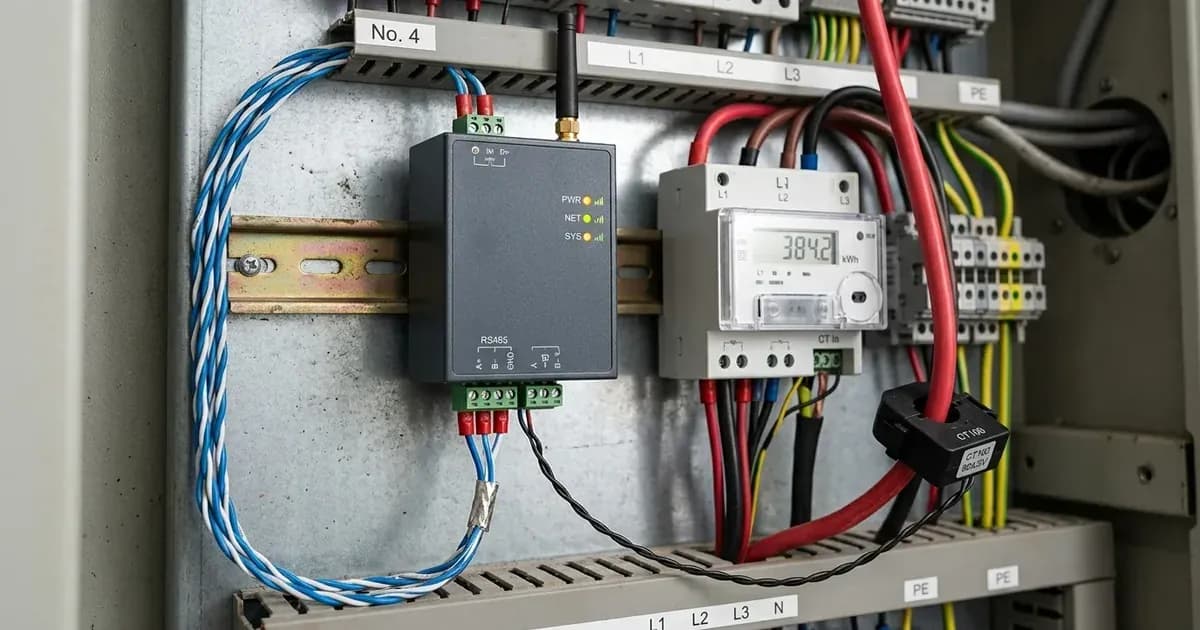
Key Takeaways
- Hoymiles DTU-Pro, DTU-Pro-S, and DTU-Lite gateways serve as central telemetry hubs for microinverter systems.
- Zero Export functionality dynamically throttles microinverter generation to prevent grid export.
- RS485 smart meters, such as Chint DTSU666 or Eastron SDM630, are essential for accurate energy measurement.
- Safe installation of CT clamps requires complete AC circuit isolation and correct directional placement.
How to Configure Hoymiles Zero Export for Your Solar System
Configuring a Hoymiles DTU gateway for zero export ensures your solar microinverters generate power primarily for your household's consumption, preventing unwanted energy export to the grid. This guide focuses on the technical steps and safety protocols for setting up dynamic power limitation using a DTU-Pro or DTU-Lite gateway and a compatible smart energy meter.
The process involves correctly wiring an RS485 smart meter, installing Current Transformer (CT) clamps, and enabling the zero export function within the DTU management portal. This setup is crucial for compliance with local grid regulations and optimising self-consumption of your generated solar energy.
Understanding the Hoymiles DTU Gateway and Zero Export Mechanism
The Hoymiles DTU (Data Transfer Unit) acts as the communication bridge between your microinverters and the Hoymiles monitoring platform. The "Hoymiles DTU-Pro collects real-time generation data from all connected microinverters via Sub-1G wireless." This wireless communication allows the DTU to receive performance data from each microinverter.
For zero export functionality, the DTU integrates with a smart energy meter. This meter measures the energy flow at your property's grid connection point. The DTU uses this information to "dynamically throttle microinverter generation" when energy export is detected. This ensures that the solar system's output matches the household's demand, preventing surplus energy from flowing back to the grid. The system is "Compatible with standard single-phase and three-phase electrical distribution systems globally."
Step-by-Step: Wiring Your Smart Meter and CT Clamps
Accurate measurement of energy flow is critical for effective zero export. This requires careful installation of the smart meter and its associated CT clamps.
Component | Configuration Standard / Action | Safety & Detail |
|---|---|---|
DTU Gateway | "Hoymiles DTU-Pro collects real-time generation data from all connected microinverters via Sub-1G wireless." | Ensure DTU is powered and within range of all microinverters for stable communication. |
Smart Meter Connection | "Connect RS485 differential communication wires A and B from the smart meter to the Meter port on the inverter." | Use shielded twisted-pair cabling for RS485 to minimise interference. Verify correct baud rate settings. |
CT Clamp Placement | "Install Current Transformer clamps with arrows pointing towards the household loads away from the grid incomer." | Incorrect orientation will result in inaccurate readings and improper zero export control. |
Zero Export Activation | "Enable Zero Export in the DTU management portal to dynamically throttle microinverter generation." | Access the DTU's web interface or mobile app to activate this feature after physical installation. |
Cabling Quality | "Maintain shielded twisted-pair cabling and verify proper RS485 communication baud rate settings." | High-quality cabling prevents data loss and ensures reliable communication between the meter and DTU. |
Safety Warning: "Ensure complete AC circuit isolation and lock-out before installing CT clamps on live busbars." Always de-energise the main electrical supply and confirm it is safe before working on any part of your electrical system. Use appropriate personal protective equipment (PPE) and insulated tools. Working on live electrical components can cause severe injury or death.
The DTU also requires proper earthing. "Bond inverter chassis ground and battery metal enclosure to the main installation earthing terminal." This ensures electrical safety and compliance.
Ensuring Safe Installation and Compliance
Beyond the functional setup, adherence to safety and electrical standards is paramount. The Hoymiles system features "Certified Anti-Islanding Protection," which is a critical safety mechanism that disconnects the microinverters from the grid if the grid power fails, protecting utility workers.
When installing any components, particularly CT clamps and smart meters, always prioritise safety. "Ensure complete AC circuit isolation and lock-out before installing CT clamps on live busbars." This means turning off the main circuit breaker and securing it to prevent accidental re-energisation.
The physical installation of wiring, especially RS485 communication lines, should use "shielded twisted-pair cabling." This type of cabling helps to prevent electromagnetic interference, ensuring reliable data transmission between the smart meter and the DTU gateway. Proper bonding of the system's metallic enclosures to the "main installation earthing terminal" is also a fundamental safety requirement.
What You Can Monitor, and What Requires Professional Intervention
As a homeowner, you can typically monitor your system's performance through the Hoymiles monitoring platform. This includes viewing real-time generation data, historical performance, and confirming that the zero export function is active. The DTU-Pro offers "Real-Time Cloud Telemetry," allowing you to access this data remotely.
However, certain tasks require the expertise of an accredited installer or qualified electrician. These include:
- Initial installation and wiring of the smart meter and CT clamps: This involves working with live electrical circuits and requires specialised knowledge to ensure safety and compliance.
- Troubleshooting RS485 communication issues: While you can check basic connections, diagnosing and resolving complex communication errors (e.g., incorrect baud rates, wiring faults) often requires diagnostic tools and experience.
- Adjusting advanced DTU settings: Beyond enabling zero export, other settings may be present that should only be modified by a professional to avoid compromising system performance or safety.
- Any work involving opening the DTU or microinverter enclosures: These are sealed units, and opening them can void warranties and expose you to hazardous components.
Always consult your installer or a qualified professional for any tasks beyond routine monitoring or basic configuration changes.
What the Published Sources Do Not Tell You
While the Hoymiles documentation provides comprehensive guidance, certain specifics may require additional consultation or vary by installation.
Official technical documentation indicates that "supported smart meters include Chint DTSU666 / DDSU666 and Eastron SDM630 models." However, detailed wiring diagrams or specific configuration steps for each of these meter models are typically found in the meter's own manual, not the DTU documentation. Installers must refer to the specific smart meter's instructions for precise wiring and setup, including any unique RS485 baud rate settings.
Furthermore, while the system is designed for "Global Electrical Network Support" and "Universal Residential and Commercial Scope," specific local grid operator requirements in Great Britain, beyond general anti-islanding standards, may influence installation practices or require specific approvals. These nuances are often not detailed in generic product documentation and require local installer knowledge.
Finally, the precise behaviour of the "dynamic Zero Export power throttling algorithms" can be influenced by factors such as the speed of communication between the meter and DTU, and the responsiveness of the microinverters. While the system aims for zero export, minor fluctuations or brief export events can occur under rapidly changing load conditions.
Add a battery at a surveyed price
Installers quote supply and fitting of the battery on this page for your existing or new system.
How this pays for the site: installers pay SolarNevs a fixed introduction fee when we pass them a genuine enquiry. They cannot pay to appear higher, and our surveyed prices are published before any introduction. You can also take our dated price tables straight to any installer.
Frequently asked questions
What is the purpose of a Hoymiles DTU gateway in a solar system?
The Hoymiles DTU-Pro acts as a central telemetry hub, collecting real-time generation data from all connected microinverters via Sub-1G wireless communication. It enables monitoring and control functions, including dynamic zero export.
How does Hoymiles achieve zero export functionality?
Zero export is achieved by enabling the feature in the DTU management portal, which dynamically throttles microinverter generation. This process relies on data from a connected RS485 smart meter to prevent energy export to the grid.
Which smart meters are compatible with Hoymiles zero export systems?
Supported smart meters for Hoymiles zero-export configurations include Chint DTSU666 / DDSU666 and Eastron SDM630 models. These meters communicate with the DTU gateway via RS485.
What are the safety considerations for installing CT clamps?
Before installing CT clamps on live busbars, ensure complete AC circuit isolation and lock-out. Always use insulated tools and follow proper electrical safety protocols to prevent electric shock or short circuits.
How should CT clamps be oriented for accurate zero export measurement?
Current Transformer (CT) clamps must be installed with their arrows pointing towards the household loads and away from the grid incomer. Incorrect orientation will lead to inaccurate measurements and improper zero export operation.
References
- Hoymiles DTU-Pro-S Gateway (official product page) — accessed 27 August 2026
- Hoymiles DTU-Pro-S Gateway (product and downloads page) — accessed 27 August 2026
Related guides
More from what to buy — and how not to get cheated.