SMA Home Storage 3.28kWh Modular Battery Commissioning Guide
Updated 6 September 2026 · By SolarNevs Research Desk, Dealer surveys + verified sources · 3 sources · Method ↗
Key Takeaways
- Specific commissioning steps for SMA Home Storage 3.28kWh batteries and the SMA 360 App are not available in documented sources.
- General safety for high-voltage battery systems and grid-tied installations is paramount to prevent hazards like back-feeding.
- Proper ventilation and fire protection are mandatory for battery installations.
- Installation and commissioning of grid-tied battery systems should always be performed by a competent, legally registered professional.
Understanding SMA Home Storage 3.28kWh Modular Battery Commissioning
Specific, detailed commissioning instructions for the SMA Home Storage 3.28kWh modular high-voltage battery and its integration via the SMA 360 App are not available in the provided documentation. This guide therefore focuses on the general safety and installation principles applicable to such systems, rather than product-specific procedures.
The Importance of Safe Grid-Tied Battery System Installation
The integration of battery storage, particularly high-voltage modular systems, into a grid-tied solar installation requires adherence to stringent safety protocols. Improperly installed Small Scale Embedded Generation (SSEG) systems, including those with battery storage, can pose significant risks. These risks include the potential to "back-feed electricity into lines during faults," which "may endanger electrical workers doing maintenance" and "can damage household appliances and Eskom equipment." Furthermore, such systems "may disturb voltage and power quality for your neighbourhood."
A critical safety feature for any grid-tied system is the inverter's ability to safely disconnect from the grid during outages. "A registered and compliant system makes sure the inverter shuts off automatically during outages, preventing dangerous back‑feed onto the grid." This automatic shutdown is essential for protecting both utility workers and the public.
General Battery Installation Safety and Requirements
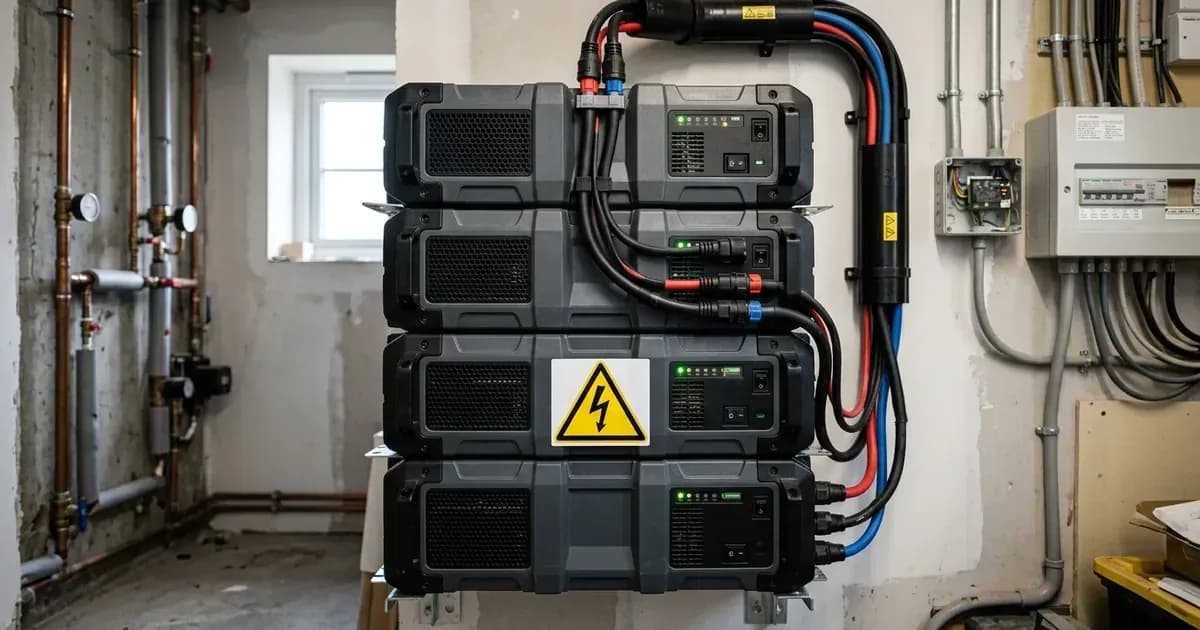
While specific details for the SMA Home Storage 3.28kWh are not available, general requirements for battery installation apply to all high-voltage modular systems. Batteries must be "installed safely, with good ventilation and fire protection where required." This includes following the supplier’s instructions for safe placement, which typically involves considerations for ambient temperature, humidity, and proximity to flammable materials.
The physical installation of battery modules, especially in a modular, high-voltage stack, involves connecting high-current terminals. When tightening or disconnecting terminals, it is crucial to "kill power first" by isolating all energy sources (PV, battery, AC grid) and to use "insulated tool" to prevent accidental short circuits. A "spanner across a bank shorts hundreds of amps," leading to severe hazards.
The Role of a Competent Installer
Due to the inherent risks and technical complexities, the installation and commissioning of grid-tied solar and battery systems are not DIY tasks. "Your installer must be a competent and legally registered person." The entire system "must comply with national standards such as the Grid Code, NRS specifications, SANS wiring codes and the Occupational Health and Safety Act." Additionally, "equipment like inverters must have proper test certificates."
System Requirement | Hazard or Risk Prevented | Compliance / Safety Standard |
|---|---|---|
SSEG Grid Registration | Unauthorised grid connection and disconnect penalties | Electricity Regulation Act & municipal distributor rules |
Automatic Inverter Disconnection | Back-feeding grid lines during outages (endangering utility workers) | Grid Code & NRS anti-islanding specifications |
Certified Competent Installer | Equipment damage, fire risk, and power quality degradation | SANS wiring codes & Occupational Health and Safety Act |
High-Current Terminal Isolation | Hundreds of amps short-circuit across battery bank | Mandatory electrical isolation and insulated tools |
Ventilated Installation Space | Heat build-up and fire hazard around high-voltage modules | Manufacturer placement and fire protection requirements |
"By law (Electricity Regulation Act), all grid‑tied SSEG systems must be registered in addition to meeting the technical requirements of the distributor (Eskom or a municipality)." This legal requirement ensures that systems "comply with safety standards, are connected at an an approved point, and appear in the electricity distributor’s register." "Unauthorised grid‑tie connections may be disconnected."
What the published sources do not tell you
The provided documentation, consisting of general utility and regulatory information, does not contain specific product details for the SMA Home Storage 3.28kWh modular battery or its commissioning process. Critical information that is unavailable includes:
- SMA Brand Overview: Details on who manufactures SMA Home Storage products, their platform lineage, or specific official SMA domains beyond generic manual portals.
- Product Specifications: Detailed specifications for the SMA Home Storage 3.28kWh battery, such as exact voltage ranges, power ratings, dimensions, weight, and operating temperatures.
- Modular Stacking: Specific instructions or diagrams for the physical stacking and interconnection of the high-voltage battery modules.
- BMS CAN Wiring: Precise instructions, pinouts, or diagrams for the Battery Management System (BMS) CAN communication wiring, which is essential for the battery to communicate with the inverter or other system components.
- SMA 360 App Commissioning: A step-by-step guide, screenshots, menu options, or specific settings within the SMA 360 App that are relevant to the battery's setup, configuration, or troubleshooting.
- Error/Fault Codes: Any specific error or fault codes related to the SMA Home Storage battery or its commissioning, along with their meanings and resolution steps.
- Fault Modes: Specific fault modes or symptoms related to the SMA Home Storage battery, their causes, and diagnostic procedures.
- Settings/Pairing Table: Specific settings, values, and communication protocols required for pairing the SMA Home Storage battery with compatible inverters or other devices.
- Setup Facts: Specific app names (beyond the mentioned SMA 360 App), port names, or detailed steps for WiFi/app/logger setup as documented in SMA manuals.
To adequately commission an SMA Home Storage 3.28kWh system, specific product manuals, datasheets, and application notes from SMA Solar Technology AG would be required.
Add a battery at a surveyed price
Installers quote supply and fitting of the battery on this page for your existing or new system.
How this pays for the site: installers pay SolarNevs a fixed introduction fee when we pass them a genuine enquiry. They cannot pay to appear higher, and our surveyed prices are published before any introduction. You can also take our dated price tables straight to any installer.
Frequently asked questions
Why is proper installation of grid-tied solar and battery systems important?
Improperly installed Small Scale Embedded Generation (SSEG) systems can cause risks, including back-feeding electricity into lines during faults, endangering electrical workers, damaging equipment, and disturbing voltage and power quality.
What are the general safety requirements for battery installation?
Batteries must be installed safely, following the supplier’s instructions for placement, with good ventilation and fire protection where required.
What are the risks of back-feeding electricity into the grid?
Systems that back-feed electricity into lines during faults may endanger electrical workers doing maintenance and can damage household appliances and utility equipment.
What is the role of an inverter in grid-tied safety?
A registered and compliant system ensures the inverter shuts off automatically during outages, preventing dangerous back-feed onto the grid.
Who should install a grid-tied solar and battery system?
The installer must be a competent and legally registered person, and the system must comply with national standards such as the Grid Code, NRS specifications, SANS wiring codes and the Occupational Health and Safety Act.
References
- SA Power Networks — accessed 29 August 2026
- SA Power Networks (Solar Curtailment) — accessed 29 August 2026
- Ausgrid — accessed 29 August 2026
Related guides
More from what to buy — and how not to get cheated.