GivEnergy Giv Bat High Voltage Lithium Storage Guide
Updated 15 September 2026 · By SolarNevs Research Desk, Dealer surveys + verified sources · 4 sources · Method ↗
Key Takeaways
- GivEnergy Giv-Bat battery modules require installation strictly by manufacturer instructions.
- High-voltage DC cables demand correct polarity matching and torquing.
- Battery Management Systems (BMS) must use closed-loop CAN communication.
- All high-voltage DC and grid interconnection work requires certified, licensed personnel.
Understanding GivEnergy Giv-Bat High-Voltage Battery Systems
GivEnergy Giv-Bat high-voltage lithium battery systems are designed for energy storage in residential and commercial applications. These modular systems allow for flexible capacity expansion by stacking multiple battery units. Proper installation is critical for safety, performance, and compliance with Great British electrical standards.
The core of a high-voltage battery system is its Battery Management System (BMS). The BMS monitors and controls the battery cells, ensuring safe operation and optimising performance. For GivEnergy Giv-Bat systems, the BMS must communicate with compatible hybrid inverters using a closed-loop CAN (Controller Area Network) protocol. This enables the inverter to precisely manage charging and discharging cycles, integrate with smart tariffs, and provide system diagnostics.
What is actually going on: The architecture of a modular high-voltage battery
A modular high-voltage battery system, such as the GivEnergy Giv-Bat, consists of individual battery modules connected in series to achieve a higher overall voltage. This high voltage allows for more efficient energy transfer and can reduce current requirements for a given power output. Each module contains lithium-ion cells and internal monitoring.
The system's overall health and performance are managed by a central Battery Management System (BMS). This BMS is responsible for cell balancing, overcharge and over-discharge protection, temperature management, and communication with the inverter. For seamless operation, "Battery management systems must communicate via closed loop CAN." This ensures that the inverter receives real-time data from the battery and can send commands for optimal energy flow.
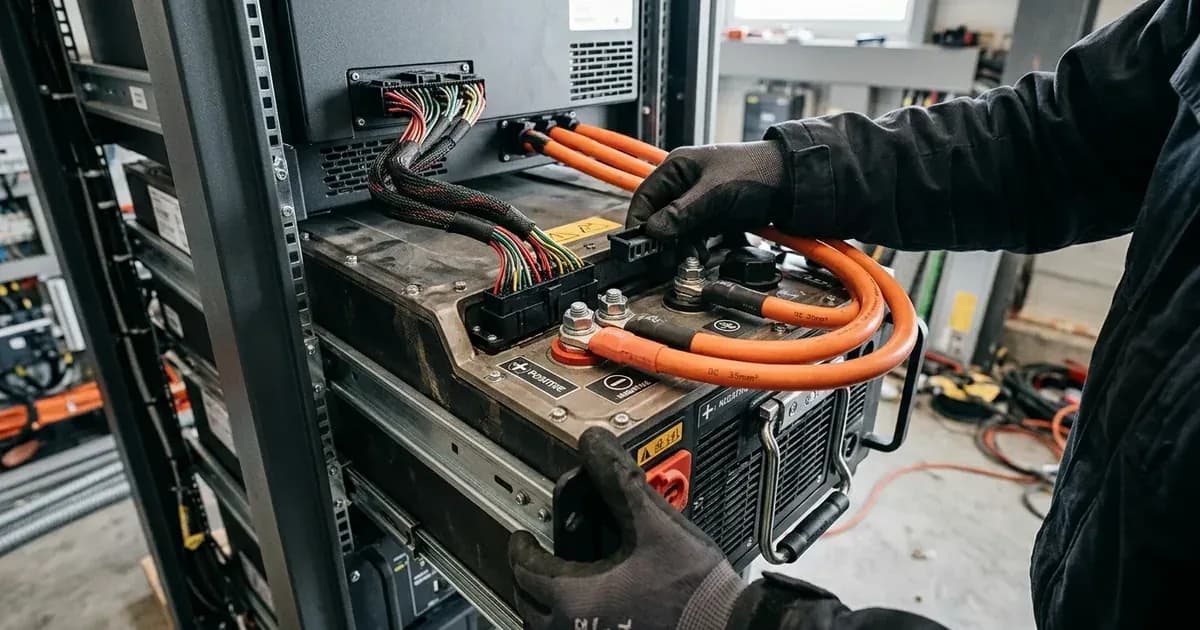
Connecting these modules involves high-voltage DC cabling. These cables carry significant electrical energy, and their installation requires precision. "DC high voltage cables must be correctly polarity matched and torqued." Incorrect polarity can cause immediate and severe damage to the battery and inverter, while improper torquing can lead to loose connections, arcing, and fire hazards.
Installation Requirements and Safety Protocols
Installing a GivEnergy Giv-Bat high-voltage battery system is not a DIY task. Due to the inherent risks associated with high-voltage DC electricity and grid interconnection, specific qualifications are mandatory. "High-voltage DC, AC grid interconnection, and switchgear modifications must be performed by certified, licensed personnel." This ensures that the installation adheres to all relevant safety standards and building regulations in Great Britain.
The foundation of a safe and compliant installation is adherence to the manufacturer's guidelines. "Battery storage modules must be installed per manufacturer instructions." These instructions detail everything from physical mounting and ventilation requirements to specific wiring sequences and commissioning procedures. Deviating from these instructions can void warranties, compromise safety, and lead to system malfunctions.
Key Installation Checks
Requirement | What it means | What to do |
|---|---|---|
Manufacturer Instructions | All components must be installed as specified by GivEnergy. | Refer to the official GivEnergy installation manual for each specific Giv-Bat model. |
DC Cable Polarity | Positive and negative DC cables must be connected to the correct terminals. | Visually verify cable colours and markings against terminal labels before connection. |
DC Cable Torquing | Cable connections must be tightened to the manufacturer's specified torque settings. | Use a calibrated torque wrench to ensure secure, low-resistance connections. |
BMS Communication | The battery's BMS must establish a closed-loop CAN connection with the inverter. | Verify CANbus cable connection and check inverter/BMS status indicators for communication. |
Certified Personnel | All high-voltage and grid-connected work must be done by qualified electricians. | Ensure your installer holds relevant certifications for high-voltage DC and grid-tied systems. |
What you can check yourself, and what you cannot
As a homeowner, your involvement in the installation and maintenance of a GivEnergy Giv-Bat high-voltage system is primarily observational and limited to basic checks.
What you can check yourself:
- Visual inspection: Ensure the battery modules are physically secure, free from visible damage, and that ventilation openings are clear.
- System status indicators: Observe any LED lights or display screens on the battery or inverter that indicate normal operation or fault conditions. Refer to your user manual for the meaning of these indicators.
- Portal monitoring: Use the GivEnergy cloud portal to monitor system performance, energy flow, and battery state of charge. This allows you to track your energy usage and generation.
What you cannot check yourself:
- Internal wiring or connections: Opening the battery modules or inverter enclosure is strictly prohibited for unauthorised personnel. This exposes you to dangerous high voltages and voids warranties.
- DC cable connections: While you can visually check for obvious damage, you must not attempt to tighten or disconnect any high-voltage DC cables. "DC high voltage cables must be correctly polarity matched and torqued," and this work requires specialist tools and training.
- BMS communication troubleshooting: If the BMS is not communicating, this indicates a fault that requires a certified technician. "Battery management systems must communicate via closed loop CAN," and diagnosing issues with this communication protocol is complex.
- Any high-voltage DC or AC grid work: "High-voltage DC, AC grid interconnection, and switchgear modifications must be performed by certified, licensed personnel." Attempting these tasks yourself is extremely dangerous and illegal. Always isolate PV + battery + AC breakers, wait the manual's capacitor-discharge time, and understand that opening the unit is authorised-service work.
What the published sources do not tell you
The available public information, such as certified quality registers, provides essential high-level requirements for GivEnergy Giv-Bat systems. However, it does not detail the specific technical specifications of the battery modules themselves, such as their nominal voltage, capacity, maximum charge/discharge rates, or the exact number of modules that can be stacked. These specific product details are typically found in manufacturer datasheets and installation manuals, which are often provided directly to certified installers.
Furthermore, while the need for closed-loop CAN communication is stated, the specific CANbus pinout, baud rates, or detailed communication protocols are not publicly disclosed. These are proprietary details essential for the BMS to function correctly with GivEnergy inverters. Similarly, precise torque values for DC cable connections, specific cable gauges, or detailed wiring diagrams for various system configurations are not available in general certification documents. These specifics are part of the manufacturer's installation instructions, which "Battery storage modules must be installed per manufacturer instructions."
Add a battery at a surveyed price
Installers quote supply and fitting of the battery on this page for your existing or new system.
How this pays for the site: installers pay SolarNevs a fixed introduction fee when we pass them a genuine enquiry. They cannot pay to appear higher, and our surveyed prices are published before any introduction. You can also take our dated price tables straight to any installer.
Frequently asked questions
What are the primary technical requirements for givenergy giv bat high voltage lithium storage guide?
Key requirements include compliance with local grid codes, correct equipment certification, and proper electrical isolation.
Who is authorized to install and inspect givenergy giv bat high voltage lithium storage guide?
All high-voltage DC, AC grid tie-in, and switchboard modifications must be performed by a qualified, accredited electrical professional.
How is export power limited in givenergy giv bat high voltage lithium storage guide?
Export limiting is achieved using certified bidirectional smart meters or power sensors providing dynamic feedback to the inverter system.
References
- GivEnergy High Voltage Stackable Batteries (GIV-BAT-10.2/13.6/17.0/20.4-HV) product page and specifications — accessed 6 September 2026
- GivEnergy High Voltage Stackable Batteries datasheet (support knowledge base) — accessed 6 September 2026
- GivEnergy Hybrid Inverter 8 kW and 10 kW (Gen 3) installation manual, HV battery interface, CAN bus BMS port and approved-installer requirement — accessed 6 September 2026
- NEPRA (Prosumer) Regulations 2026, SRO 251(I)/2026, distributed generation interconnection, protection and licensee inspection requirements (PDF) — accessed 6 September 2026
Related guides
More from what to buy — and how not to get cheated.