SolaX Power X-Hybrid Inverter and Triple Power Battery Setup Guide
Updated 7 September 2026 · By SolarNevs Research Desk, Dealer surveys + verified sources · 2 sources · Method ↗
Key Takeaways
- SolaX X-Hybrid inverters are designed with integrated high-voltage DC battery interfaces for Triple Power storage.
- Triple Power batteries connect in series, with a master unit communicating via a dedicated RJ45 CAN port.
- The SolaX Cloud app is used for system setup, battery charge limits, and remote monitoring.
- In SolaX X3-Hybrid G4 systems, EPS backup power switches over in under 14 milliseconds.
Understanding the SolaX X-Hybrid and Triple Power System
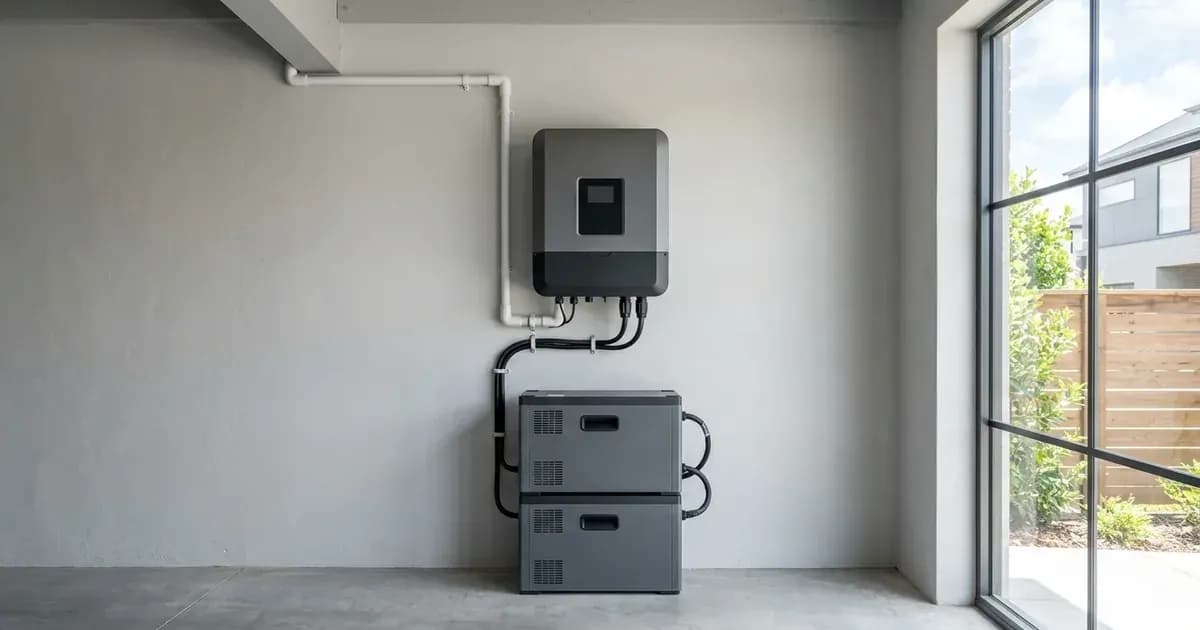
The SolaX X-Hybrid inverter range, including the X1-Hybrid (Single-Phase) and X3-Hybrid G4 (Three-Phase) models, is engineered to work seamlessly with SolaX Triple Power T-BAT H 5.8 high-voltage batteries. This integrated system allows for efficient solar energy storage and utilisation, supporting both grid-parallel and off-grid operations. The design focuses on a high-voltage DC architecture, which is common in modern battery storage systems for improved efficiency and flexibility.
System Component | Electrical Architecture | Operational Role | Key Specification / Feature |
|---|---|---|---|
SolaX X1-Hybrid | Single-Phase High-Voltage | Residential solar & storage integration | Grid-parallel and off-grid high-voltage DC management |
SolaX X3-Hybrid G4 | Three-Phase High-Voltage | Residential & commercial 3-phase storage | <14 ms automatic EPS backup power switchover |
Triple Power T-BAT H 5.8 | Modular High-Voltage Storage | Scalable series battery bank | Master and slave units wired in series to set DC voltage |
BMS Communication Link | Dedicated RJ45 Port | Battery telemetry & charge control | Closed-loop CAN-bus data exchange between master BMS and inverter |
EPS Backup Output | Dedicated AC Backup Terminal | Essential circuit emergency supply | Seamless off-grid power for critical and sensitive loads |
SolaX X-Hybrid inverters feature integrated high-voltage DC battery interfaces paired with Triple Power storage. This means the inverter is specifically designed to manage the high DC voltages produced by the battery stack, optimising energy flow between solar panels, the battery, and the electrical grid or connected loads. The system is compatible with standard single-phase and three-phase electrical distribution systems globally, making it suitable for a wide range of residential and commercial applications.
How SolaX High-Voltage Battery Systems Work
At the core of the SolaX X-Hybrid system is the integration of the inverter with high-voltage DC batteries. Unlike lower voltage battery systems, high-voltage setups can offer greater efficiency due to lower current requirements for the same power output, reducing cable losses.
The Triple Power modular battery system is designed for scalability. To achieve the necessary system operating DC voltage, master and slave Triple Power batteries connect in series. This modular approach allows for flexible system sizing based on energy storage needs. The master battery unit plays a crucial role in managing the battery stack and communicating with the inverter.
Communication between the battery system and the inverter is vital for safe and efficient operation. The master battery's Battery Management System (BMS) uses a CAN communication cable, typically an RJ45 connector, to link to a dedicated BMS port on the inverter. This connection allows the inverter to monitor battery status, manage charging and discharging, and implement protective measures.
For situations where grid power is unavailable, the SolaX X-Hybrid inverters include a dedicated EPS (Emergency Power Supply) backup output. Essential circuits connect to this output, enabling automated off-grid power during outages. This feature ensures that critical loads continue to receive power. In SolaX X3-Hybrid G4 systems, this backup power switchover occurs in under 14 milliseconds, which is fast enough to prevent interruptions for most sensitive electronic equipment, such as IT infrastructure.
Initial Setup and Wiring Considerations
Setting up a SolaX X-Hybrid and Triple Power battery system involves several key steps, focusing on electrical connections, communication, and safety. This process should always be carried out by a qualified and accredited installer to ensure compliance with local regulations and safety standards.
Battery Wiring and Communication
- Series Connection: Triple Power batteries are connected in series. This means linking the positive terminal of one battery to the negative terminal of the next, building up the overall DC voltage for the system. One battery unit will be designated as the 'master' for communication purposes.
- BMS Communication: The master battery's BMS CAN communication cable must connect to the dedicated BMS port on the inverter. This is typically an RJ45 type cable, ensuring reliable data exchange between the battery and the inverter.
- DC Battery Disconnect: A DC battery isolator is a critical safety component. Before any maintenance or disconnection, switch off the DC battery isolator and wait at least 5 minutes for internal capacitors to discharge. This prevents electrical hazards from stored energy.
Inverter and Earthing
- Protective Earth Bonding: For safety, the inverter chassis ground and the battery metal enclosure must be bonded to the main installation earthing terminal. This provides a protective path for fault currents.
- EPS Backup Connection: Essential circuits that require uninterrupted power during outages should connect to the dedicated EPS backup output on the inverter. This ensures these loads are automatically powered by the battery in the event of a grid failure.
Commissioning with SolaX Cloud
Once the physical installation and wiring are complete, the system needs to be commissioned. The SolaX Cloud app is the primary tool for this process, offering a user-friendly interface for configuration and monitoring.
Steps for Commissioning
- Initial Configuration: System setup, including parameters like battery charge limits, operating modes, and grid interaction settings, are configured via the SolaX Cloud app. The inverter's display can also be used for some settings.
- Remote Monitoring: The SolaX Cloud app provides remote monitoring capabilities, allowing installers and system owners to track performance, energy flow, and battery status from anywhere.
- Firmware and Diagnostics: The system supports remote firmware and configuration management via the VRM cloud portal. This enables updates and diagnostics to be performed remotely, streamlining maintenance and support.
The SolaX X-Hybrid inverters also feature certified anti-islanding protection, complying with international microgeneration safety and grid protection standards. This ensures that the inverter safely disconnects from the grid during outages, preventing power from being fed back into a de-energised network, which could pose a risk to utility workers.
What you can check yourself, and what you cannot
As a homeowner, you can perform basic visual checks and monitor your SolaX system's performance through the SolaX Cloud app. You can review energy generation, consumption, and battery charge levels. You can also verify that the system is operating in your desired mode (e.g., self-consumption, force time use).
However, any physical intervention with the wiring, internal components of the inverter, or battery modules should only be performed by a qualified and accredited installer. This includes:
- Wiring Changes: Do not attempt to modify DC or AC wiring, including battery series connections or communication cables.
- Inverter Settings: While the SolaX Cloud app allows for some user-level adjustments, critical grid-protection settings and advanced configurations are typically locked or require specific installer access. Incorrectly altering these settings can breach your connection agreement with your Distribution Network Operator (grid operator) and compromise safety.
- Internal Access: Never open the inverter or battery enclosures. These contain high-voltage components and stored energy that can be extremely dangerous. If you suspect an issue requiring internal inspection, contact your installer.
- DC Battery Disconnect: While you can switch off the DC battery isolator for safety, ensure you understand the procedure and wait the specified 5 minutes for discharge before any further action. Do not attempt to disconnect battery cables yourself.
Always consult your installer or the SolaX technical support for any issues beyond basic monitoring.
What the published sources do not tell you
The provided official documentation outlines the core functionalities and safety features of the SolaX X-Hybrid and Triple Power battery system. However, specific technical details such as exact voltage ranges for the battery stack, maximum charge/discharge currents, or detailed wiring diagrams are not publicly available in this summary. These specifics are typically found in the full installation manuals provided to accredited installers.
Detailed instructions for configuring specific operating modes (e.g., time-of-use tariffs, export limits) within the SolaX Cloud app are also not covered. While official scheme guidelines confirms that "System setup, battery charge limits, and remote monitoring are configured via the SolaX Cloud app," the precise steps and options for these configurations are part of the installer's commissioning process.
Furthermore, while the system is stated to be "Compatible with standard single-phase and three-phase electrical distribution systems globally," specific local grid connection requirements, such as G98 or G99 compliance in the UK, are not detailed. Installers must ensure the system's configuration meets these local network operator requirements before commissioning. Official scheme guidelines mentions "Complies with international microgeneration safety and grid protection standards," which is a general statement, but specific local compliance details are crucial for installation.
Official scheme guidelines also does not provide information on the expected lifespan of the batteries, warranty terms, or specific environmental operating conditions (e.g., temperature ranges) beyond the general "residential and commercial scope." These details are typically found in product datasheets and warranty documents.
Still showing the fault? Book a technician
If the steps above did not clear it, tell us the inverter or battery and the exact code. We pass it to a technician who covers your city; visit charges are quoted before they come.
How this pays for the site: the technician or verifier pays SolarNevs a fixed introduction fee. Nobody pays to be recommended, and you are free to use our free guides instead.
Frequently asked questions
What SolaX inverters are compatible with Triple Power batteries?
SolaX X-Hybrid inverters feature integrated high-voltage DC battery interfaces designed to pair with Triple Power storage systems.
How are Triple Power batteries connected in a SolaX system?
Triple Power batteries are connected in series, with master and slave units, to achieve the required system operating DC voltage.
How is battery communication established with the SolaX inverter?
The master battery's BMS CAN communication cable connects to a dedicated BMS port on the SolaX inverter, typically using an RJ45 connector.
What is the switchover time for EPS backup power in SolaX X3-Hybrid G4 systems?
In SolaX X3-Hybrid G4 systems, EPS backup power switchover occurs in under 14 milliseconds, ensuring uninterrupted operation for sensitive equipment.
How is a SolaX X-Hybrid system commissioned?
System setup, including battery charge limits and remote monitoring, is configured via the SolaX Cloud app or the inverter's display.
References
- SolaX X3-Hybrid G4 Series User Manual — accessed 27 August 2026
- SolaXCloud V6 App Operation Manual — accessed 27 August 2026
Related guides
More from inverter errors & fixes.