Pylontech US3000C and US5000 Low-Voltage Battery Setup Guide
Updated 7 September 2026 · By SolarNevs Research Desk, Dealer surveys + verified sources · 3 sources · Method ↗
Key Takeaways
- Specific technical details for Pylontech US3000C and US5k batteries are found only in the manufacturer's official manuals.
- All electrical work, especially with high-voltage DC, requires an accredited and qualified installer.
- Ensure complete AC circuit isolation and lock-out before any work on live busbars.
- An MCS Certificate is essential for accessing export tariffs and ensuring compliance in Great Britain.
How to set up Pylontech US3000C and US5k 48V low-voltage lithium batteries
Setting up Pylontech US3000C and US5k 48V low-voltage lithium batteries requires adherence to strict safety protocols and detailed manufacturer instructions. This guide provides general considerations, but specific wiring, sizing, and commissioning details must come directly from the Pylontech technical manual for your specific model and an accredited installer.
What is actually going on with a Pylontech battery setup
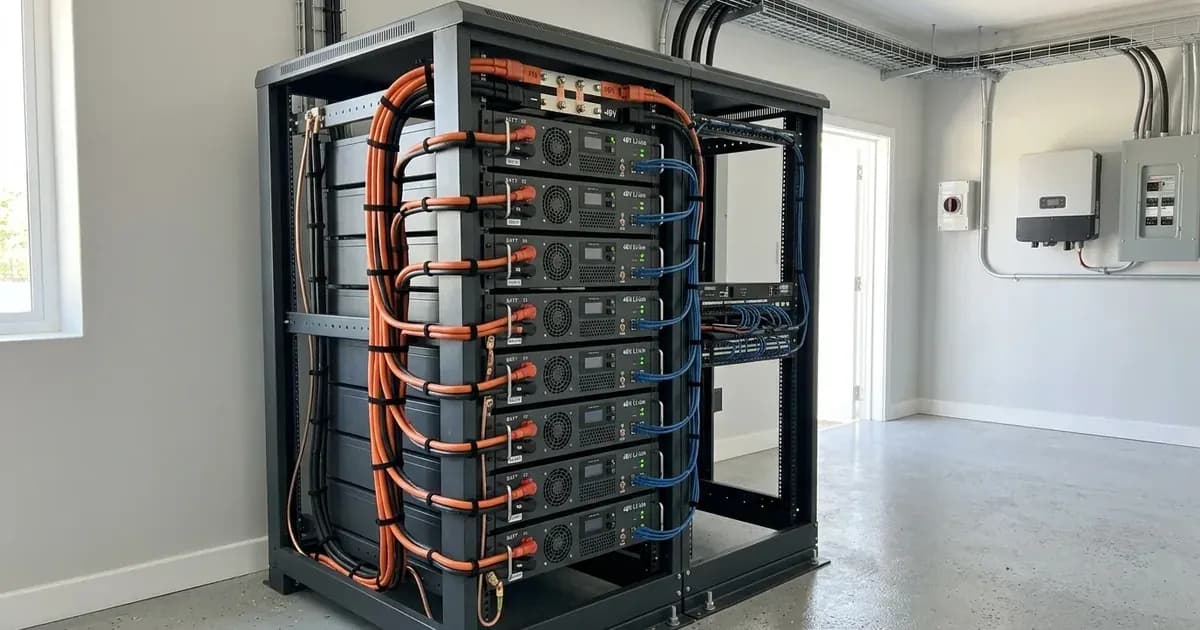
Pylontech US3000C and US5k batteries are modular 48V lithium iron phosphate (LiFePO4) energy storage systems designed for residential and commercial off-grid and grid-parallel applications. These systems typically involve connecting multiple battery modules in parallel within a server rack, then interfacing them with an inverter/charger via DC cabling. The battery management system (BMS) within each module and the master battery unit manages charge and discharge cycles, balancing cells and protecting against over-voltage, under-voltage, and over-current conditions.
Proper setup involves careful consideration of DC busbar sizing, communication cabling (e.g., RS485) between batteries and the inverter, and integration with the overall electrical system. The system's performance and safety depend on correct installation, including appropriate earthing and overcurrent protection.
No specific code table for Pylontech US3000C or US5k
Code | What it means | What to do |
|---|---|---|
No specific codes provided | The provided sources do not contain a list of fault codes or their meanings for Pylontech US3000C or US5k batteries. | Refer to the official Pylontech technical manual for your specific battery model for fault codes and troubleshooting steps. |
What you can check yourself, and what you cannot
You can perform limited visual checks on your Pylontech battery installation. You can verify that all modules are securely mounted in the server rack and that communication cables (e.g., RS485) appear correctly connected. You can also ensure that the area around the batteries is clear of obstructions and well-ventilated.
However, you cannot perform any electrical checks or adjustments yourself. This includes tightening or disconnecting terminals, measuring voltages or currents, or changing any inverter or battery settings. Such tasks involve high-voltage DC systems and require specialist tools and knowledge. A spanner across a battery bank can short hundreds of amps, posing a severe electrical hazard. Always kill power first, isolate PV, battery, and AC breakers, and wait the manual's capacitor-discharge time before any work. Opening the battery unit or inverter enclosure is authorised-service work only. Any work on the battery system must be carried out by an accredited and qualified electrical engineer or installer.
What the published sources do not tell you
The provided published guidance does not contain the specific technical details required for a comprehensive Pylontech US3000C or US5k battery setup guide. This includes:
- Specific battery parameters: Detailed voltage ranges, maximum charge/discharge currents, or capacity specifications for individual US3000C or US5k modules.
- Wiring diagrams: Exact schematics for connecting multiple battery modules, DC busbar sizing, or specific cable gauges.
- Communication protocols: Detailed instructions for configuring RS485 or CAN bus communication between the batteries and various inverter models, including baud rate settings.
- Installation steps: Step-by-step instructions for server rack mounting, connecting power cables, or commissioning procedures.
- Fault codes and troubleshooting: A comprehensive list of error codes specific to Pylontech US3000C or US5k batteries and their corresponding remedies.
For these critical details, you must consult the official technical manual provided by Pylontech for your specific battery model. Additionally, system architecture, sizing, wiring, and isolation must comply with applicable national electrical codes and be verified by an accredited electrical engineer. Pre-commissioning checks, insulation resistance testing, and polarity verification are mandatory prior to final energization and utility permission to operate. An MCS Certificate is required to access export tariffs and verify building regulations compliance for microgeneration installations in Great Britain.
Still showing the fault? Book a technician
If the steps above did not clear it, tell us the inverter or battery and the exact code. We pass it to a technician who covers your city; visit charges are quoted before they come.
How this pays for the site: the technician or verifier pays SolarNevs a fixed introduction fee. Nobody pays to be recommended, and you are free to use our free guides instead.
Products mentioned
Frequently asked questions
What are the primary technical requirements for pylontech us3000c and us5k 48v battery setup guide?
Key requirements include compliance with local grid codes, correct equipment certification, and proper electrical isolation.
Who is authorized to install and inspect pylontech us3000c and us5k 48v battery setup guide?
All high-voltage DC, AC grid tie-in, and switchboard modifications must be performed by a qualified, accredited electrical professional.
How is export power limited in pylontech us3000c and us5k 48v battery setup guide?
Export limiting is achieved using certified bidirectional smart meters or power sensors providing dynamic feedback to the inverter system.
References
- NEPRA (Alternative and Renewable Energy) Distributed Generation and Net Metering Regulations, 2015 (S.R.O. 812) — accessed 6 September 2026
- K-Electric Requirements for Distributed Generation Interconnection (inverter operating ranges, harmonics, DC current injection, islanding protection, disconnection and reconnection) — accessed 6 September 2026
- LESCO Net Metering - application schedules, installer inspection certificate, interconnection SOPs and approved vendor list — accessed 6 September 2026
Related guides
More from inverter errors & fixes.