Solar Geyser Not Heating: Troubleshooting and Fixes
Updated 7 September 2026 · By SolarNevs Research Desk, Dealer surveys + verified sources · 2 sources · Method ↗
Key Takeaways
- Insufficient sunlight or an air lock are the most common reasons a solar geyser stops heating.
- Begin troubleshooting with a visual inspection of the solar collector and all visible piping.
- Always shut off power and water supply before attempting any repairs, especially when dealing with electrical components or pressurized systems.
- Stop DIY troubleshooting and call a professional if you encounter electrical issues, high-pressure system faults, or are unsure about any step.
Why is my solar geyser not heating?
A solar geyser that is not heating water effectively usually points to an issue with either the solar collector's ability to absorb heat, the transfer of that heat to the water, or the storage of the heated water. The most common causes include insufficient sunlight, air trapped in the system, or mineral buildup.
The first step is to observe your system under optimal conditions. Is the sun shining brightly on the collector? Are there any visible obstructions?
How to diagnose a solar geyser not heating
Diagnosing why your solar geyser is not heating involves a series of visual checks and simple tests. Proceed systematically to identify the root cause.
- Check for sufficient sunlight:
- Observation: Is the solar collector receiving direct, unobstructed sunlight for several hours during the day?
- Meaning: Shading from trees, buildings, or even accumulated dirt and dust on the collector surface can significantly reduce heating efficiency. Cloudy weather will also reduce performance.
- Action: Clean the collector surface if dirty. Trim any obstructing vegetation. Understand that performance will be lower on overcast days.
- Inspect the solar collector (evacuated tubes or flat plate):
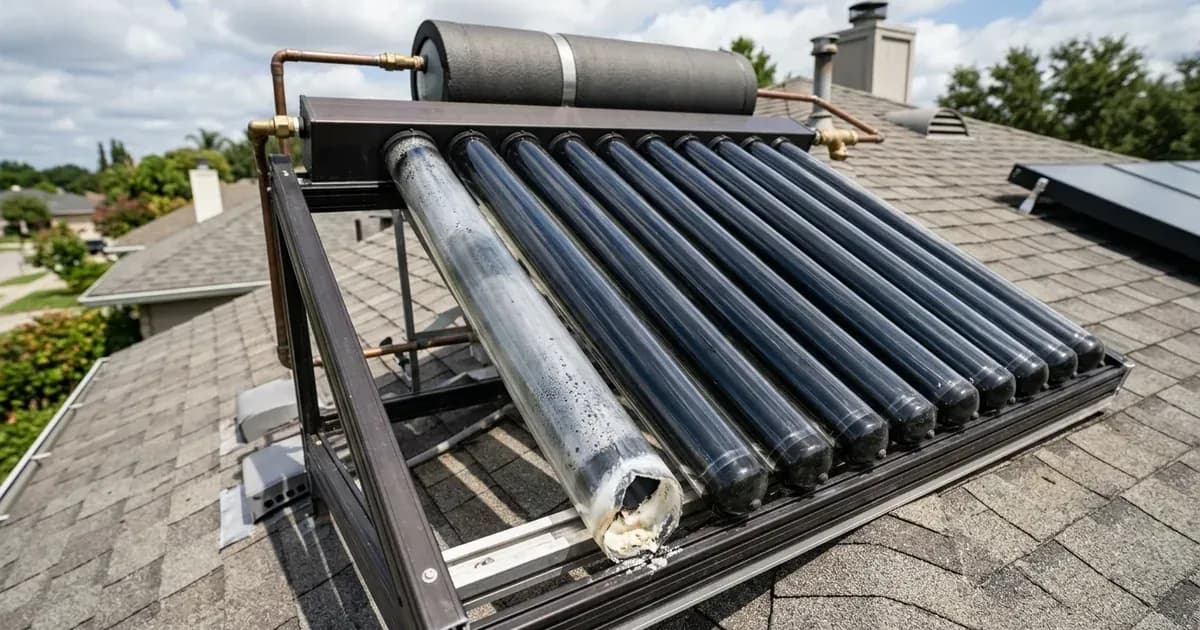
- Observation: For evacuated tube systems, check each tube for cracks, damage, or condensation inside. For flat plate collectors, look for cracks in the glass or damage to the absorber plate.
- Meaning: Damaged evacuated tubes lose their vacuum, drastically reducing their insulating properties and heat absorption. Damaged flat plate collectors can also lose efficiency.
- Action: Note any damaged tubes or plates. Replacement of damaged components is typically required.
- Check for air locks in the system:
- Observation: Listen for gurgling sounds in the pipes, especially when the circulation pump (if present in a closed-loop system) is running. Feel the pipes leading to and from the collector; if one is hot and the other cold, it suggests a lack of circulation.
- Meaning: Air trapped in the pipes can prevent water from circulating through the collector, stopping heat transfer to the geyser tank.
- Action: Consult your system's manual for instructions on how to bleed air from the system. This often involves opening bleed valves at the highest points of the system.
- Inspect water flow and pressure:
- Observation: Check if water is flowing into and out of the geyser tank. Ensure all valves are fully open.
- Meaning: Partially closed valves or blockages can restrict water flow, preventing proper heat exchange.
- Action: Ensure all isolation valves are open. If you suspect a blockage, further investigation or professional help may be needed.
- Examine the circulation pump (for closed-loop systems):
- Observation: If your system uses a pump to circulate fluid, check if it is running. Listen for its operation or feel for vibrations.
- Meaning: A faulty or seized pump will prevent the heat transfer fluid from moving between the collector and the tank, stopping the heating process.
- Action: Check the pump's power supply and any associated controls. If the pump is not operating, it may need repair or replacement.
- Check for leaks:
- Observation: Look for visible water leaks around the collector, pipes, or the geyser tank.
- Meaning: Leaks can reduce system pressure, lead to insufficient water in the system, and prevent proper circulation and heating.
- Action: Small leaks might be repairable, but significant leaks often require professional intervention.
Common causes and fixes for solar geyser heating issues
Symptom detail | Likely cause | Fix |
|---|---|---|
Water is lukewarm or cold on sunny days | Insufficient solar radiation reaching collector | Clean collector surface; remove shading obstructions (trees, new buildings). |
Gurgling sounds in pipes, uneven pipe temperatures | Air lock in the circulation system | Bleed air from the highest points of the system using bleed valves; consult system manual. |
Reduced hot water volume, slow heating | Mineral scaling (hard water deposits) in collector or tank | Descale the system. This often requires specialized chemicals and professional service, especially for closed-loop systems. |
Visible cracks or condensation inside evacuated tubes | Damaged evacuated tube(s) | Identify and replace damaged tubes. |
No water circulation in closed-loop system | Faulty circulation pump or power supply issue | Check pump power supply and controls; repair or replace pump if necessary. |
Water dripping from pipes or tank | Leaks in the system | Identify source of leak; tighten connections or replace faulty components. |
Water freezes in collector pipes | Inadequate freeze protection or extreme cold | Ensure system has proper antifreeze (for closed-loop) or drain-back functionality. For direct systems, ensure pipes are insulated. |
Solar geyser maintenance for optimal heating
Regular maintenance is crucial for the long-term efficiency and lifespan of your solar geyser. The Australian Business Council for Sustainable Energy (BCSE) provides general guidance on solar water heater maintenance.
- Annual visual inspection:
- Check the collector for dirt, dust, or shading. Clean the surface with water if necessary.
- Inspect all pipes, connections, and the tank for any signs of leaks or corrosion.
- For evacuated tube systems, check each tube for damage or internal condensation.
- Pressure and temperature relief valve check:
- Periodically test the pressure and temperature relief (PTR) valve as per your system's manual to ensure it is not seized. This is a safety device.
- Descaling (for hard water areas):
- If you live in an area with hard water, mineral deposits can build up in the collector and tank, reducing efficiency. Duda Solar Water Heating Systems, like many others, can be affected by scaling. Descaling may be required every few years, which is often a task for a professional.
- Antifreeze check (for closed-loop systems in cold climates):
- Ensure the heat transfer fluid (antifreeze mixture) is at the correct concentration and level to prevent freezing and corrosion.
Safety: Working with solar geyser systems
Solar geyser systems involve several hazards that require careful attention.
- Hot water and steam: Water in a solar geyser can reach very high temperatures, causing severe burns. Always isolate the hot water supply and allow the system to cool before working on it.
- High pressure: Solar geysers operate under mains water pressure. Opening pipes or components without depressurizing the system can lead to injury from sudden water release. Always shut off the main water supply and relieve pressure before opening any part of the system.
- Electrical components: If your system includes an electric booster or circulation pump, ensure the power supply is completely disconnected at the breaker before inspection or repair.
- Working at heights: Solar collectors are typically installed on rooftops. Use appropriate safety equipment, such as harnesses and stable ladders, when working at height.
- Eye protection: When dealing with plumbing or descaling chemicals, always wear appropriate eye protection to guard against splashes.
When to call a technician instead
While some troubleshooting and maintenance can be done by homeowners, certain issues require professional expertise.
- Electrical faults: Any issues related to the electric booster element, circulation pump wiring, or control systems should be handled by a qualified electrician.
- High-pressure system repairs: If you suspect a fault with the pressure relief valve, expansion tank, or any high-pressure component, do not attempt to repair it yourself. These systems can be dangerous if not handled correctly.
- Major leaks or tank damage: Significant leaks from the tank or collector may indicate a need for major repair or replacement, which is best assessed by a professional.
- System descaling: While general guidelines exist, the specific process for descaling a solar geyser system, especially closed-loop types, often requires specialized equipment and chemicals.
- Warranty concerns: Attempting DIY repairs on certain components may void your system's warranty. Always check your warranty terms before undertaking significant repairs. If you are unsure about any step or the safety implications, contact a certified solar technician.
Still showing the fault? Book a technician
If the steps above did not clear it, tell us the inverter or battery and the exact code. We pass it to a technician who covers your city; visit charges are quoted before they come.
How this pays for the site: the technician or verifier pays SolarNevs a fixed introduction fee. Nobody pays to be recommended, and you are free to use our free guides instead.
Frequently asked questions
Why is my solar geyser not producing hot water?
Common reasons for a solar geyser not producing hot water include insufficient sunlight, air trapped in the system (air lock), mineral scaling in the collector or tank, or issues with the circulation pump in closed-loop systems. Visual inspection of the collector and piping is a good first step.
How do I fix an air lock in my solar geyser system?
An air lock can prevent water circulation. To fix it, you typically need to bleed air from the highest points of the system. Consult your system's specific manual for the correct procedure, as this often involves opening bleed valves or loosening pipe connections carefully.
What causes poor performance in evacuated tube solar water heaters?
Poor performance in evacuated tube solar water heaters can be caused by broken or damaged vacuum tubes, which reduce the collector's efficiency. Insufficient sunlight or heavy scaling within the tubes or tank can also lead to reduced heating.
How often should I maintain my solar geyser?
Regular maintenance, often annually, is recommended for solar water heaters. This includes checking for leaks, inspecting collector tubes, cleaning the collector surface, and descaling the tank and pipes if you are in a hard water area. The Australian Business Council for Sustainable Energy provides general guidance on solar water heater maintenance.
When should I call a professional for my solar geyser?
You should call a professional technician if you suspect electrical faults, high-pressure system issues, or if you are uncomfortable performing any troubleshooting steps. Any work involving mains electricity or pressurized water systems carries significant safety risks.
References
- BCSE Solar Water Heater Guidance — accessed 23 August 2026
- Duda Solar Water Heating Systems Overview — accessed 23 August 2026
Related guides
More from inverter errors & fixes.