SolarEdge Three Phase Inverter With Synergy Technology Setup Guide
Updated 7 September 2026 · By SolarNevs Research Desk, Dealer surveys + verified sources · 2 sources · Method ↗
Key Takeaways
- SolarEdge Synergy inverters (50kW to 120kW) use a modular architecture with a central manager and decentralized secondary units.
- Interconnection of secondary units to the manager is via pre-assembled DC and communication cables.
- Commissioning and physical layout mapping are performed using the SetApp Mobile Commissioning tool via S-Miles Cloud.
- Always switch off the DC battery isolator and wait 5 minutes before working on the system to allow capacitors to discharge.
Setting Up Your SolarEdge Three-Phase Synergy Inverter
This guide outlines the setup and commissioning process for SolarEdge Three-Phase Inverters with Synergy Technology, covering models from 50kW to 120kW. These commercial inverters are designed for grid-parallel energy storage systems. The setup involves interconnecting modular components, configuring the system using a mobile application, and performing essential safety checks.
Understanding the Synergy Architecture
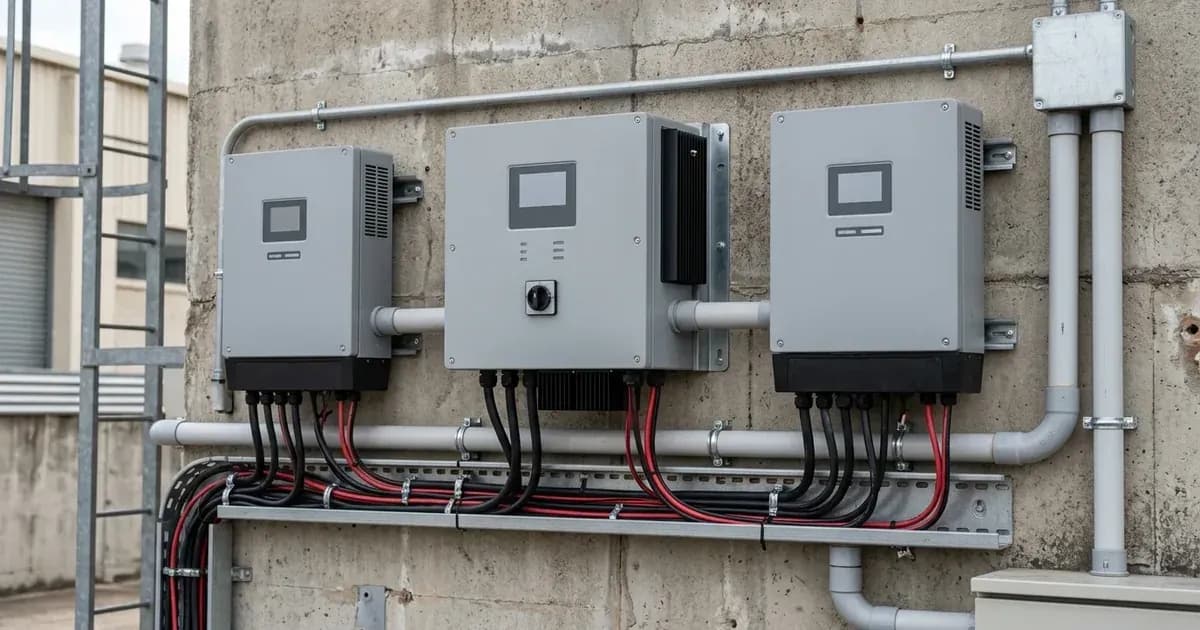
The SolarEdge Synergy inverter system employs a modular design. Commercial inverters split power conversion across decentralized secondary units, which are managed by a central manager. This architecture allows for flexible scaling and efficient power management for commercial and industrial installations.
The system is compatible with standard single-phase and three-phase electrical distribution systems. It also incorporates Built-In Thermal and DC Arc Fault Safety, which includes multi-layer battery safety features such as thermal isolation, aerogel pads, and internal fire extinguishers.
Interconnecting Synergy Components
The physical interconnection of the Synergy system is a critical first step.
- Mounting: Securely mount the Synergy Manager and all decentralized secondary units according to the manufacturer's guidelines. Ensure adequate ventilation and clearance.
- Cable Connections: In SolarEdge Synergy commercial setups, secondary units are connected via pre-assembled DC and communication cables to the central manager. These cables simplify the wiring process and ensure correct communication between components.
- Earthing: Bond the inverter chassis ground to the main installation earthing terminal. This is a protective measure to ensure electrical safety.
Pre-Commissioning with SetApp Mobile
Once the physical installation is complete, the system requires commissioning using the SolarEdge SetApp Mobile Commissioning tool.
- Download SetApp: Install the SetApp application on your mobile device.
- Connect to Inverter: Follow the app's instructions to connect your mobile device to the Synergy Manager.
- System Configuration: Commissioning, module physical layout mapping, and monitoring are configured via S-Miles Cloud using SetApp. This step involves defining the physical layout of the PV modules and optimizers, which is crucial for accurate monitoring and performance.
- Integrated Diagnostic Test: The Synergy Manager executes automated hardware pre-commissioning self-tests prior to grid connection. This diagnostic test verifies the integrity of the system components and connections, identifying potential issues before full operation.
Safety Checks and Procedures
Safety is paramount when working with high-voltage DC systems.
Safety Action | What it means | What to do |
|---|---|---|
Safe DC Disconnect | Internal capacitors store energy even after DC input is removed. | Switch off the DC battery isolator and wait at least 5 minutes for internal capacitors to discharge. |
Protective Earthing | Ensures protection against electrical shock. | Bond inverter chassis ground to the main installation earthing terminal. |
Arc Fault Safety | Mitigates risks from electrical arcs in the DC circuit. | The system incorporates Built-In Thermal and DC Arc Fault Safety. |
Always ensure power is isolated before performing any physical work on the inverter or associated wiring. The system is designed to comply with international microgeneration safety and grid protection standards.
Remote Monitoring and Management
After commissioning, the SolarEdge Synergy system supports remote cloud fleet monitoring. This feature allows for remote firmware and configuration management via the VRM cloud portal, enabling ongoing performance tracking and maintenance.
What you can check yourself, and what you cannot
You can perform visual inspections of cable connections, ensure all covers are securely fastened, and monitor system performance through the S-Miles Cloud portal. You can also initiate the pre-commissioning self-tests via SetApp.
However, any internal work on the inverter, such as replacing components or altering internal wiring, must be performed by an accredited installer. Opening the inverter enclosure or attempting to change grid-protection settings yourself can breach connection agreements and compromise safety.
What the published sources do not tell you
While official documentation confirms the modular architecture and the use of SetApp for commissioning, it does not detail specific step-by-step instructions for every screen or menu within the SetApp application. The exact sequence of screens and options can vary with software updates. Furthermore, specific grid connection requirements or export limits, which vary by Distribution Network Operator (grid operator) in Great Britain, are not included. official documentation also mentions "Tigo TS4-A-O optimizers" performing module-level MPPT, but does not elaborate on their specific integration steps within the SolarEdge system, nor does it provide details on how the "Built-In Thermal and DC Arc Fault Safety" specifically functions for the inverter, beyond general battery safety features.
Still showing the fault? Book a technician
If the steps above did not clear it, tell us the inverter or battery and the exact code. We pass it to a technician who covers your city; visit charges are quoted before they come.
How this pays for the site: the technician or verifier pays SolarNevs a fixed introduction fee. Nobody pays to be recommended, and you are free to use our free guides instead.
Frequently asked questions
What are the primary technical requirements for solaredge three phase inverter with synergy technology setup guide?
Key requirements include compliance with local grid codes, correct equipment certification, and proper electrical isolation.
Who is authorized to install and inspect solaredge three phase inverter with synergy technology setup guide?
All high-voltage DC, AC grid tie-in, and switchboard modifications must be performed by a qualified, accredited electrical professional.
How is export power limited in solaredge three phase inverter with synergy technology setup guide?
Export limiting is achieved using certified bidirectional smart meters or power sensors providing dynamic feedback to the inverter system.
References
- NEPRA (Prosumer) Regulations, 2026 - S.R.O. 251(I)/2026, covering interconnection of 3-phase 400V and 11kV distributed generation facilities up to 1 MW — accessed 6 September 2026
- K-Electric Requirements for Distributed Generation Interconnection - inverter standards (IEEE 1547, UL 1741), voltage and frequency trip settings, and anti-islanding disconnection — accessed 6 September 2026
Related guides
More from inverter errors & fixes.