Tingling Current in Appliances After Solar Earthing: Diagnosis and Fixes
Updated 6 September 2026 · By SolarNevs Research Desk, Dealer surveys + verified sources · 7 sources · Method ↗
Key Takeaways
- A tingling sensation from appliances indicates a leakage current, which is a significant electrical safety hazard.
- Always disconnect all AC, DC, and battery power sources before attempting any inspection or troubleshooting.
- Do not attempt to open the inverter or perform complex electrical diagnostics yourself, as this can lead to severe injury or void your warranty.
- If the issue persists after basic visual checks, immediately contact a qualified electrician or your solar installer.
Why are my appliances giving a tingling sensation after solar installation?
A tingling sensation from appliances after solar installation is a serious indication of an electrical fault, typically a leakage current to ground. This means electricity is flowing through unintended paths, often due to compromised insulation or improper earthing. Inverters are designed with safety features to detect such faults, but a persistent tingling means the protective measures might be bypassed or the fault is significant.
Diagnosis
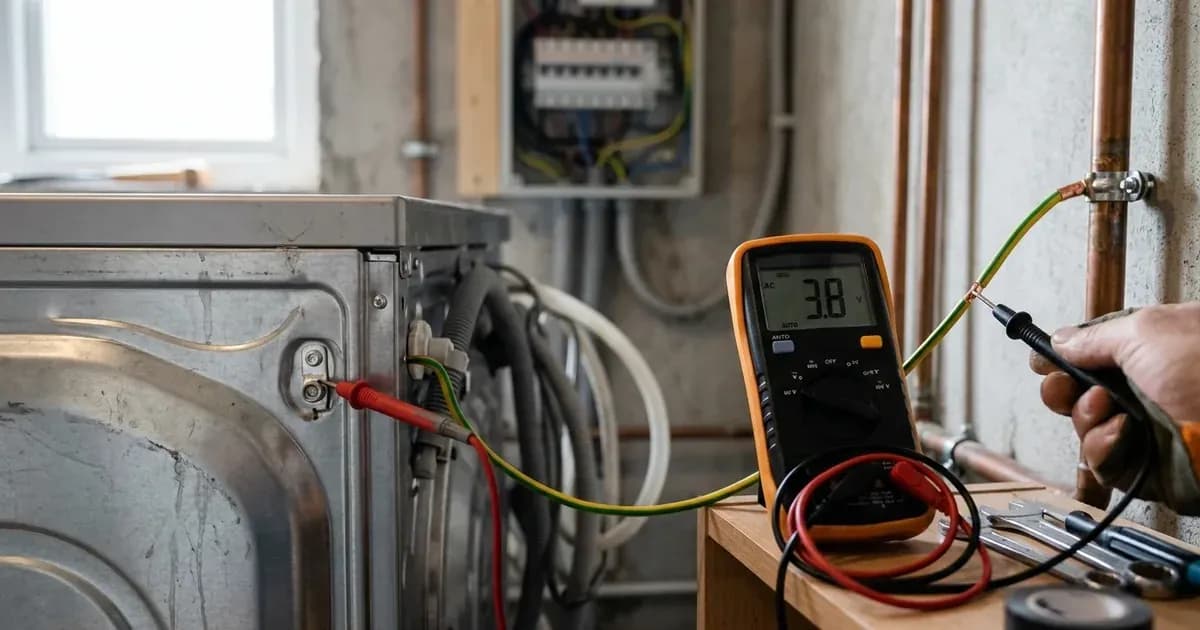
Diagnosing the source of a tingling current requires a systematic approach, prioritizing safety above all else. You will need a multimeter for some checks.
- Prioritize Safety: Disconnect All Power
- Action: Before touching any wiring or components, turn off the main AC breaker to your home, the AC isolator for the solar inverter, the DC switch for the PV array, and the DC switch for the battery bank.
- Observation: Ensure all inverter displays are off. Wait at least 5 minutes for internal capacitors to discharge. For example, the GoodWe ET manual states, "wait at least 5mins after disconnecting the inverter from the utility grid and from the PV panel before touching any inner live parts." The Fox ESS H1(G2) manual also warns, "There is residual voltage in the inverter which needs 5 min to discharge."
- Meaning: This step eliminates the risk of electric shock from live circuits. "Turning off the unit will not reduce this risk" as stated in manuals for Axpert VM III, Deye SG03LP1, and Growatt SPF 5000 ES.
- Visual Inspection of Earthing Connections
- Action: Carefully inspect the main earthing conductor from your electrical panel to the earth rod, and the earthing connections on your solar inverter. Look for loose wires, corrosion, or damage.
- Observation: The Huawei SUN2000-L1 manual states, "Ensure that the PE cable is securely connected. Otherwise, electric shocks may occur." The Deye SG03LP1 manual emphasizes, "Earth Connecon(mandatory) Ground cable shall be connected to ground plate on grid side this prevents electric shock. if the original protecve conductor fails."
- Meaning: A loose or corroded earthing connection can prevent fault currents from safely dissipating into the ground, causing them to seek alternative paths, such as through appliance casings.
- Check Appliance Plugs and Cords
- Action: Inspect the plugs and power cords of the appliances causing the tingling sensation. Look for frayed wires, exposed conductors, or damaged insulation.
- Observation: Any visible damage.
- Meaning: A damaged appliance cord can directly cause leakage current to its casing, independent of the solar system, but the solar system's earthing issues can exacerbate the problem.
- Isolate Solar System Components
- Action: With all power still off, disconnect the PV array from the inverter (if safe and accessible to do so without opening the inverter). Then, reconnect AC power to your home (but not to the inverter). Test appliances.
- Observation: If the tingling stops, the fault is likely in the PV array or the DC side of the inverter. If it continues, the fault is likely in your home's internal wiring or the AC side of the inverter.
- Meaning: This helps narrow down whether the issue originates from the DC (solar panels) or AC (house wiring/inverter output) side.
- Check for Inverter Fault Codes
- Action: If the inverter is safely powered on (AC only, if possible, or with PV/battery reconnected after initial checks), check its display for any fault codes or warnings.
- Observation: Many inverters have specific codes for leakage or insulation faults. For example, the Solis S5-EH1P lists "ILeak-PRO01 Leakage current failure 01 (30mA)" and "PV ISO-PRO01 PV negative ground fault." Huawei SUN2000-L1 shows "2051 Abnormal Residual Current" and "2062 Low Insulation Resistance." Deye SG03LP1 has "AC leakage current is transient over current" (F33) and "DC insulaon impedance failure" (F34).
- Meaning: These codes directly point to potential leakage current or insulation resistance issues within the solar system.
Cause/fix table section
Symptom detail | Likely cause | Fix |
|---|---|---|
Tingling sensation on appliance casing | Compromised earthing connection to the inverter or main panel | Ensure the PE protective conductor is securely connected. The GoodWe ET manual recommends a single-core outdoor copper cable with a conductor cross-sectional area S≥4mm2 for the PE cable. |
Tingling sensation, especially after rain or humidity | Insulation fault in PV modules or DC wiring | Visually inspect PV cables for damage. The Solis S5-EH1P suggests checking "whether the PV strings have insulation problems. Check whether the PV cable is damaged." for PV ISO-PRO faults. |
Inverter displays "Leakage Current" or "Residual Current" fault | Leakage current exceeding safe thresholds | Check PV side cable ground connection. Restart the system 2-3 times. For Deye SG03LP1, if "AC leakage current is transient over current" (Fault F33 description) persists, contact support. Fox ESS H1(G2) detects "Res Cur Fault" if residual current is high and advises checking for damaged insulation. |
Inverter displays "Insulation Failure" or "Low Insulation Resistance" | Reduced insulation resistance between PV array/DC wiring and ground | Check the connection of PV panels and inverter. For Huawei SUN2000-L1's "2062 Low Insulation Resistance," check the output impedance of the PV array to ground. If there is a short circuit or lack of insulation, rectify it. |
Tingling on appliances when solar is active, but not when grid-powered only | Improper neutral-to-earth bonding or internal inverter fault | Verify local regulations for E-N link. The GoodWe ET manual notes that "When the inverter is working in backup mode, neutral and PE on the backup side are connected via the internal relay." The Huawei SUN2000-L1 warns, "Do not connect the neutral wire to the enclosure as a PE cable. Otherwise, electric shocks may occur." |
Grounded PV modules connected to a non-isolated inverter | Current leakage from PV modules | For Axpert VM III, "grounded PV modules will cause current leakage to the inverter. When using CIGS modules, please be sure NO grounding." Ensure only compatible PV modules (single crystalline, poly crystalline with class A-rated, and CIGS modules) are used with non-isolated inverters, and avoid grounding CIGS modules. |
Electrical Safety and Grounding in Solar Systems
A tingling sensation from appliances is a direct indicator of an electrical safety breach, often related to the grounding (earthing) system. Proper grounding is fundamental to safety in any electrical installation, especially with solar power systems which involve high DC and AC voltages.
Many inverter manufacturers provide specific instructions for grounding. For instance, the Axpert VM III manual states, "GROUNDING INSTRUCTIONS -This inverter/charger should be connected to a permanent grounded wiring system. Be sure to comply with local requirements and regulation to install this inverter." Similarly, the Deye SG03LP1 manual emphasizes, "Grounding instrucons - this inverter should be connected to a permanent grounded wiring system. Be sure to comply with local requirements and regulaon to install this inverter."
Key aspects of earthing and leakage current management:
- Protective Earth (PE) Conductor: Inverters like the Axpert VM III and Growatt SPF 5000 ES explicitly instruct, "Be sure to connect PE protective conductor first." This ensures that in case of a fault, current has a safe path to ground.
- PV Array Grounding: Some inverters have specific requirements regarding PV module grounding. The Axpert VM III warns, "grounded PV modules will cause current leakage to the inverter. When using CIGS modules, please be sure NO grounding." The Solis S5-EH1P manual states, "Please don’t connect PV array positive (+) or negative (-) to ground, it could cause serious damage to the inverter." Conversely, the Huawei SUN2000-L1 states, "Since the output of the PV string connected to the SUN2000 cannot be grounded, ensure that the PV module output is well insulated to ground."
- Residual Current Devices (RCDs) / Residual Current Monitoring Units (RCMUs): These devices detect leakage currents to ground and trip to disconnect power, preventing electric shock.
- GoodWe ET inverters have a "built-in RCMU" that "will prevent the possibility of DC residual currents up to 6mA." They suggest an external RCD (type A) of ≥30mA.
- Fox ESS H1(G2) inverters incorporate a "certified internal RCD" with "2 trip thresholds... A low threshold is used to protect against rapid changes in leakage typical of direct contact by people... 30mA, and 300mA per unit for lower speed fire safety." They recommend a Type-A RCD between 100mA and 300mA externally, depending on local codes.
- Solis S5-EH1P models monitor for leakage current failures at 30mA, 60mA, and 150mA.
- Insulation Resistance Monitoring: Inverters continuously monitor the insulation resistance of the PV array and DC wiring. If this resistance drops too low (e.g., due to damaged cable insulation), the inverter will flag an "Isolation Failure Ground insulation impedance of PV string is too low" (GoodWe ET) or "2062 Low Insulation Resistance" (Huawei SUN2000-L1) fault and may shut down to prevent hazards.
Safety: The Hard Lines for Electrical Faults
Working with solar electrical systems carries significant risks due to high voltages and potential for high currents. A tingling sensation is a warning sign that must be taken seriously.
- Always Isolate Power: Before any inspection or work, disconnect all AC and DC power sources to the inverter and wait for capacitor discharge. The Huawei SUN2000-L1 manual states, "Residual voltage exists after the SUN2000 is powered off. It takes 5 minutes for the SUN2000 to discharge to the safe voltage."
- Never Work on Live Circuits: Do not connect or disconnect power cables with power on. The Huawei SUN2000-L1 warns, "Do not connect or disconnect power cables with power on. Transient contact between the core of the power cable and the conductor will generate electric arcs or sparks, which may cause fire or personal injury."
- Insulated Tools: Use only properly insulated tools for any electrical work.
- Qualified Personnel Only: Most inverter manufacturers explicitly state that only qualified or trained personnel should install, operate, and maintain the equipment. For example, the GoodWe ET manual states, "Any installation or operations on the inverter must be performed by qualified electricians in compliance with standards, wiring rules and the requirements of local grid authorities or companies (such as AS 4777 and AS/NZS 3000 in Australia)." The Fox ESS H1(G2) manual specifies, "This manual is for qualified electricians. The tasks described in this manual only can be performed by qualified electricians."
When to call a technician instead
While basic visual checks are permissible, any electrical fault causing a tingling sensation requires professional attention.
- Persistent Faults: If the tingling persists after you have performed basic visual checks and power cycling, or if your inverter displays any leakage or insulation fault codes, it is time to call a qualified solar technician or electrician.
- Internal Inverter Issues: Do not attempt to open the inverter casing. Manufacturers like Axpert VM III, Deye SG03LP1, and Growatt SPF 5000 ES explicitly state, "Do not disassemble the unit. Take it to a qualified service center when service or repair is required. Incorrect re-assembly may result in a risk of electric shock or fire."
- Warranty Concerns: Opening the inverter or performing unauthorized repairs can void your warranty. The GoodWe ET manual states, "Do not open the inverter cover or change any components without manufacturer's authorization. Otherwise, the warranty for the inverter will be invalid." Solis S5-EH1P also warns, "Warranty may be voided if the cover is removed without authorization."
- Complex Diagnostics: Diagnosing insulation resistance issues, internal RCD faults, or subtle grounding problems requires specialized equipment and expertise that a homeowner typically does not possess. For example, Huawei SUN2000-L1 provides an appendix for "Locating Insulation Resistance Faults" which involves detailed steps for fault location, indicating its complexity.
Still showing the fault? Book a technician
If the steps above did not clear it, tell us the inverter or battery and the exact code. We pass it to a technician who covers your city; visit charges are quoted before they come.
How this pays for the site: the technician or verifier pays SolarNevs a fixed introduction fee. Nobody pays to be recommended, and you are free to use our free guides instead.
Frequently asked questions
Why do I feel a tingling sensation from my appliances after solar installation?
A tingling sensation typically indicates a small leakage current to ground. This can happen if the solar system's earthing is compromised, or if there is an insulation fault in the PV array or wiring, leading to current flowing through unintended paths.
Is a tingling sensation from appliances dangerous?
Any unintended current flow can be dangerous. While a tingling sensation might be minor, it suggests a fault that could escalate to a more severe electric shock or fire hazard if not addressed. Inverters like the Fox ESS H1(G2) have internal RCDs with a 30mA trip threshold for personal protection, but even lower currents can cause discomfort.
What is the first step to check for tingling current?
The first step is to ensure your safety. Disconnect all AC power to the solar inverter and the house, then turn off DC power from the PV array and battery. Visually inspect all accessible wiring and earthing connections for damage or loose terminals.
Can I fix a tingling current issue myself?
Basic visual checks and power cycling can be performed by you. However, diagnosing and fixing insulation faults or complex earthing issues requires specialized knowledge and tools. Many inverter manufacturers, including GoodWe and Huawei, state that only qualified electricians or trained personnel should perform installation, maintenance, and repairs to avoid electric shock and maintain warranty.
What are common causes of leakage current in solar systems?
Common causes include damaged PV module insulation, faulty wiring, improper earthing connections, or issues within the inverter itself. Some inverters, like the Axpert VM III, warn against connecting PV modules with possible current leakage.
References
- Axpert VM III Manual — accessed 23 August 2026
- Deye SUN_3.6_6K_SG03LP1 Manual — accessed 23 August 2026
- Growatt SPF 5000 ES Manual — accessed 23 August 2026
- GoodWe ET User Manual — accessed 23 August 2026
- Solis S5-EH1P Manual — accessed 23 August 2026
- Huawei SUN2000-L1 User Manual — accessed 23 August 2026
- Fox ESS H1(G2) Manual — accessed 23 August 2026
Related guides
More from inverter errors & fixes.