UK Solar Panel & Heat Pump Cost & Grants: Combined Economics
Updated 18 September 2026 · By SolarNevs Research Desk, Dealer surveys + verified sources · 2 sources · Method ↗
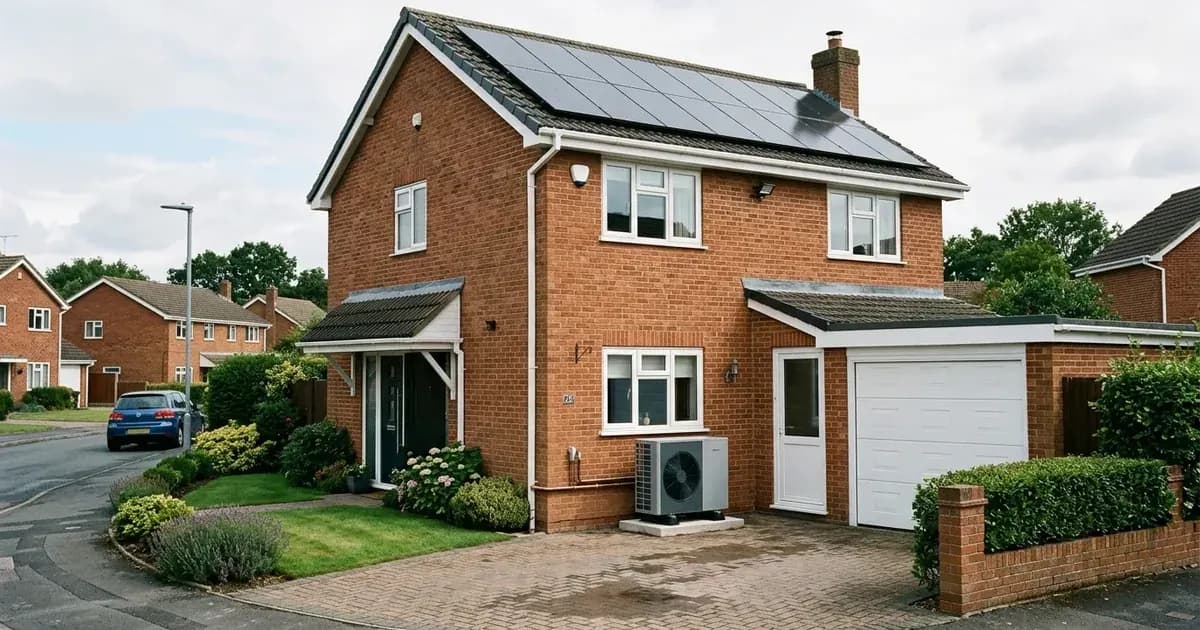
Decarbonising domestic space heating and electrical demand represents the primary route to long-term household energy independence in the UK. By pairing an air source heat pump with a rooftop solar photovoltaic (PV) array, homeowners generate clean power on-site to offset the electrical load of their heating system.
Understanding the true financial viability of this combined transition requires examining upfront capital equipment costs, statutory government grant funding, system architecture requirements, and operational bill savings.
Capital Equipment Costs and Grant Stacking
Investing in clean energy technologies involves two primary capital components: the thermal heating plant and the on-site generation array.
According to baseline data from the Energy Saving Trust, the typical cost of installing an air source heat pump is around £12,000. In parallel, an average home solar panel system costs around £7600 to install. Combined, the gross capital expenditure for an unassisted installation totals approximately £19,600.
However, significant statutory financial support exists to subsidise clean heating transitions. If you live in England and Wales, you can get £7,500 towards an air source heat pump with the Boiler Upgrade Scheme. Applying this £7,500 capital voucher reduces the net cost of the heat pump to approximately £4,500, bringing the combined net project investment down to around £12,100 for both heating and microgeneration.
Heat Pump Thermal Efficiency and System Architecture
Replacing a fossil fuel boiler with a heat pump provides immediate thermodynamic improvements. Modern air-to-water units extract ambient heat from outdoor air and compress it into usable central heating.
Crucially, heat pumps are more than three times more efficient than a gas or oil boiler, helping to lower your energy use. For every unit of electricity consumed, a certified heat pump generates over three units of thermal energy (Coefficient of Performance > 3.0).
Unlike a combi boiler that produces hot water instantly upon demand, a heat pump operates at lower flow temperatures and requires dedicated hot water storage. When budgeting space within the property, homeowners must accommodate a hot water cylinder. These units can usually fit inside any cupboard that measures at least 80cm x 80cm.
Homeowners can select between two primary engineering layouts:
- A monobloc system has all the components in a single outdoor unit. Pipes carry water to the central heating system and a hot water cylinder inside your home. Monobloc units are generally cheaper and faster to install because no refrigerant handling is needed inside.
- A split system separates the heat pump into indoor and outdoor units, offering enhanced thermal retention in cold weather.
Solar PV Sizing, Battery Storage & Planning Rules
To supply sufficient electricity for household baseload and seasonal heat pump operation, the rooftop photovoltaic array must be sized appropriately.
Industry standards establish that the average solar panel system is around 4.5 kilowatt peak (kWp). In practice, a 4.5kWp system typically covers between 20 to 30m 2 of roof surface area typically using around 12 panels. South-facing roofs yield optimal output, while east- and west-facing arrays deliver reliable morning and evening generation.
To bridge the temporal gap between daytime solar generation and evening heating demand, many households add residential battery storage. Domestic battery storage tends to cost around £5000 to £8000 depending on capacity and chemistry.
From a regulatory standpoint, planning hurdles are minimal. Most heat pump installations are considered ‘permitted developments’, meaning you don’t need planning permission, provided the external unit complies with standard boundary clearance and noise criteria. Rooftop solar PV on domestic properties enjoys equivalent permitted development rights.
Procurement Standards, Multi-Technology Synergy & Returns
Ensuring high technical standards and securing grant funding requires certified installation practices. Homeowners must get quotes from certified installers who are both accredited through the Microgeneration Certification Scheme (MCS). We recommend getting quotes from at least three different installers to evaluate competing proposals.
The true economic return of pairing microgeneration with electrified heating emerges through smart tariff management. Rigorous research indicates that combining heat pumps, solar panels and batteries with time-of-use tariffs can achieve substantial bill savings. By shifting heat pump cycles and battery charging to off-peak periods, running costs fall below traditional gas heating.
During summer months when heating demand is absent, surplus daytime solar output generates secondary revenue. Typically you will get around 12p for every unit that you do not use yourself through the smart export guarantee.
Beyond bill mitigation, the environmental impact is substantial. A typical home solar panel system could save around one tonne of carbon per year depending on where you live in the UK, equivalent to driving 3600 miles or from London to Bristol 30 times. Paired with a zero-carbon heat pump, domestic emissions are reduced by more than 70%.
Frequently asked questions
How much does a combined solar panel and heat pump installation cost in the UK?
A standard air source heat pump costs around £12,000 and a 4.5 kWp solar array costs around £7,600 (£19,600 gross). With the £7,500 Boiler Upgrade Scheme grant, the net capital outlay is approximately £12,100.
Can I use the Boiler Upgrade Scheme grant for solar panels?
No, the Boiler Upgrade Scheme provides up to £7,500 specifically for heat pumps in England and Wales. Solar panels must be funded separately or through local grant programmes.
Do heat pumps require planning permission when installed with solar panels?
Most domestic air source heat pumps and rooftop solar installations are classified as permitted developments, meaning they do not normally require formal planning permission.
References
- Energy Saving Trust Air Source Heat Pumps Guide — accessed 29 August 2026
- Energy Saving Trust Solar Panels Guide — accessed 29 August 2026
Related guides
More from schemes, subsidies & financing.