Dte Energy And Consumers Energy Solar Interconnection Guide Michigan
Updated 17 September 2026 · By SolarNevs Research Desk, Dealer surveys + verified sources · 1 source · Method ↗
Key Takeaways
- Solar systems up to 20kW in Michigan fall under Category 1 simplified review.
- All inverters must meet UL 1741-SB standards for grid interconnection.
- Rooftop PV installations require rapid shutdown functionality for safety.
- Formal written Permission to Operate (PTO) from the utility is mandatory before energising your system.
What are the interconnection requirements for solar in Michigan with DTE Energy and Consumers Energy?
For homeowners in Michigan looking to connect a solar photovoltaic (PV) system to the grid through DTE Energy or Consumers Energy, the process is governed by the Michigan Public Service Commission (MPSC) under specific interconnection and net metering standards. These rules ensure safe and reliable operation for both the homeowner and the wider electricity network.
What is actually going on
When you install a solar PV system, it needs to be safely and correctly connected to the local electricity grid. This connection allows your home to draw power from the grid when your solar panels are not producing enough, and to send excess power back to the grid when your panels are generating more than you need. The utility companies, DTE Energy and Consumers Energy, manage this connection process to maintain grid stability and safety. The MPSC sets the overarching technical standards and rules that both utilities and solar owners must follow. These rules cover everything from the size of the system to the type of equipment used and the safety features required.
Key Interconnection Requirements
Connecting a solar system in Michigan involves adhering to several key technical and administrative requirements. These are designed to ensure compatibility with the grid and safety for utility workers and homeowners alike.
Parameter | What it means | What to do |
|---|---|---|
Category 1 Simplified Interconnection (Up to 20kW) | This classification applies to smaller, certified inverter-based systems. | Ensure your system's aggregate capacity does not exceed 20kW to qualify for simplified review. |
IEEE 1547-2018 / UL 1741-SB Inverter Standard | Inverters must have specific certifications for grid interaction. | Select inverters certified to UL 1741-SB standards, which support autonomous voltage and frequency regulation. |
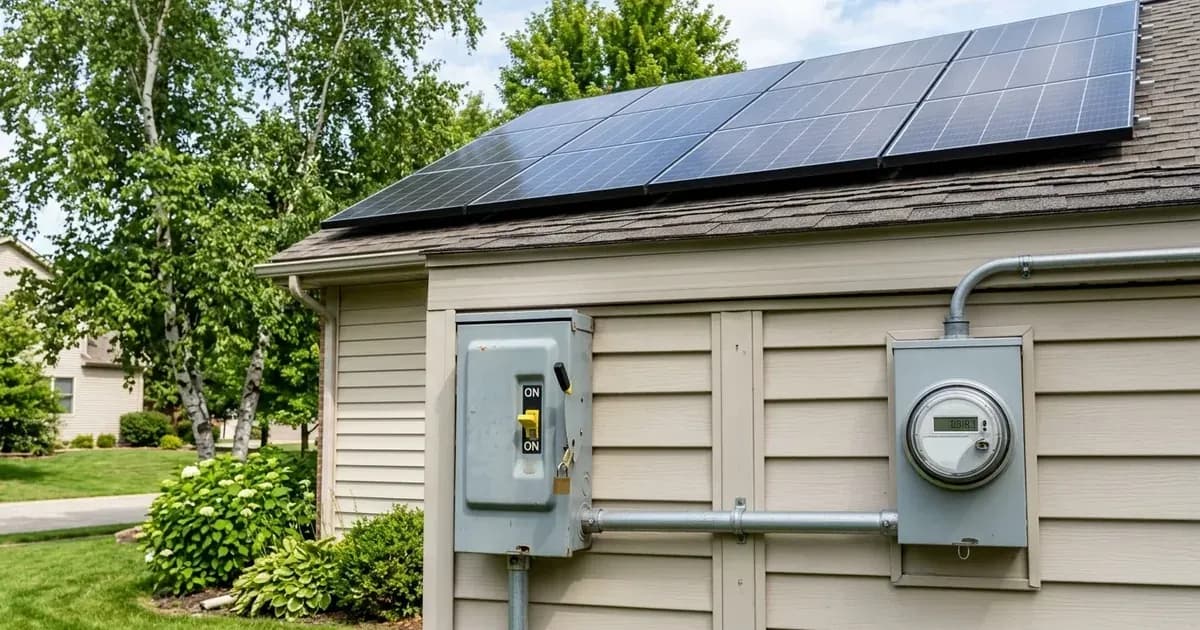
Rapid Shutdown Safety Compliance | Rooftop PV systems must have a mechanism to quickly de-energise the array. | Install a rapid shutdown system that complies with standard safety distances for rooftop PV. |
Certified Bidirectional Smart Revenue Meter | The utility needs to accurately measure both imported and exported electricity. | The utility installs a certified bidirectional smart revenue meter to record import and export power flows. |
Lockable Exterior AC Disconnect Switch | A manual switch is required for safety and maintenance. | For Tier 2 and larger installations, ensure an exterior, lockable, visible-break manual disconnect switch is installed adjacent to the meter. |
Anti-Islanding Inverter Protection | Inverters must automatically disconnect during grid outages. | Grid-tied inverters must automatically isolate within milliseconds during distribution grid outages to prevent "islanding." |
Safe Working Earthing and Bonding | All metallic components must be properly earthed for safety. | Verify earth continuity and bond all solar array frames to the main electrical installation earthing terminal. |
Safety and Compliance
Safety is paramount when connecting a solar system to the grid. The following steps and requirements are critical for ensuring the system operates safely and in compliance with Michigan regulations.
- Rapid Shutdown: Rooftop PV systems must incorporate rapid shutdown initiation complying with standard safety distances. This feature allows emergency responders to quickly de-energise the solar array, reducing electrical hazards during incidents.
- Anti-Islanding: Grid-tied inverters must automatically isolate within milliseconds during distribution grid outages. This prevents the solar system from continuing to power a section of the grid that is otherwise de-energised, which could endanger utility workers.
- Earthing and Bonding: Verify earth continuity and bond all solar array frames to the main electrical installation earthing terminal. Proper earthing protects against electrical shock and ensures fault currents are safely managed.
- Local Electrical Inspection Sign-Off: Final electrical inspection and AHJ (Authority Having Jurisdiction) sign-off are required prior to submission of the formal Permission to Operate (PTO) request. This ensures your installation meets local electrical codes and safety standards.
- Permission to Operate (PTO) Issuance: Customer generation must receive formal written Permission to Operate from the utility prior to grid energisation. Energising your system before receiving PTO is a breach of your interconnection agreement and can lead to penalties or disconnection.
Financial Considerations
Installing solar in Michigan can also offer financial benefits, notably through federal tax incentives.
- Section 25D Federal Tax Credit: Homeowners claiming qualifying residential solar and battery installations receive the 30% Section 25D credit on Form 5695. This credit significantly reduces the upfront cost of installing a solar system.
- Standalone Battery Storage Eligibility: Residential battery energy storage systems qualify for the federal 30% Section 25D tax credit with no solar requirement. This means you can claim the credit for a battery system even if you don't install solar panels at the same time.
What you can check yourself, and what you cannot
As a homeowner, you can perform visual checks and monitor your system's performance. You can verify that your rapid shutdown button is accessible and that your exterior AC disconnect switch is clearly labelled. You can also monitor your smart meter readings for import and export data once your system is operational.
However, any work involving the electrical wiring, inverter settings, or the physical connection to the grid must be performed by an accredited installer. Changing inverter settings, especially those related to grid protection, can breach your connection agreement and compromise grid safety. Opening the inverter enclosure or working on high-voltage DC wiring without proper training and safety equipment is extremely dangerous and should only be done by authorised service personnel. Always isolate PV, battery, and AC breakers, and wait the manual's capacitor-discharge time before any authorised internal work.
What the published sources do not tell you
While the Michigan Public Service Commission (MPSC) outlines the general framework, specific details can vary. official technical guidance indicates that DTE Energy and Consumers Energy process Category 1 interconnection applications within standard statutory screening timelines of 10 to 10 business days. However, this is a screening timeline, not a guarantee for the entire interconnection process. Detailed technical specifications for specific utility equipment, such as the exact model of bidirectional smart meter or specific requirements for the lockable exterior AC disconnect switch, are typically found in utility-specific interconnection handbooks or engineering standards, which are not publicly available in this general MPSC overview. Furthermore, while the federal tax credit is clear, specific state or local incentives, if any, are not detailed in this general guide.
Frequently asked questions
What are the primary technical requirements for dte energy and consumers energy solar interconnection guide michigan?
Key requirements include compliance with local grid codes, correct equipment certification, and proper electrical isolation.
Who is authorized to install and inspect dte energy and consumers energy solar interconnection guide michigan?
All high-voltage DC, AC grid tie-in, and switchboard modifications must be performed by a qualified, accredited electrical professional.
How is export power limited in dte energy and consumers energy solar interconnection guide michigan?
Export limiting is achieved using certified bidirectional smart meters or power sensors providing dynamic feedback to the inverter system.
References
Related guides
More from schemes, subsidies & financing.