Michigan Distributed Generation Dg Inflow Outflow Tariff Guide
Updated 17 September 2026 · By SolarNevs Research Desk, Dealer surveys + verified sources · 1 source · Method ↗
Key Takeaways
- Michigan's Inflow-Outflow tariff separates imported and exported electricity for billing.
- Exported power is credited at the utility's power supply rate, not full retail.
- Full distribution charges apply to all electricity imported from the grid.
- Both solar and standalone battery storage qualify for the 30% federal Section 25D tax credit.
Understanding Michigan's Inflow-Outflow Tariff for Solar
Billing / Grid Parameter | Tariff Rule & Specification | Operational & Financial Impact |
|---|---|---|
Grid Inflow (Imports) | Standard retail rate + delivery charges | Full distribution delivery charges apply to all imported kWh |
Grid Outflow (Exports) | Power supply component rate | Credits excess solar; rolls forward to offset future supply charges |
Revenue Metering | Utility bidirectional smart meter | Measures gross inflow and outflow independently |
Utility Disconnect | Lockable, visible-break manual switch | Required adjacent to meter for Tier 2 and larger installations |
Anti-Islanding Protection | Millisecond grid isolation | Inverter isolates generation during distribution grid outages |
Federal Tax Credit | 30% under Section 25D (Form 5695) | Applies to solar PV and standalone battery storage (3 kWh+) |
Grid Energisation | Written Permission to Operate (PTO) | Mandatory prior to energisation by DTE or Consumers Energy |
In Michigan, the Public Service Commission (MPSC) governs the Distributed Generation (DG) Program, which includes the Inflow-Outflow billing tariff. This tariff fundamentally changes how homeowners with solar panels are billed for their electricity. Under the Inflow-Outflow tariff, customer generation is measured separately from electricity imported from the distribution grid. This means the energy you draw from the utility and the energy you send back are accounted for independently.
How Distributed Generation Billing Works in Michigan
The Inflow-Outflow tariff establishes distinct rates for energy flowing into your property from the grid (inflow) and energy flowing out to the grid (outflow). This system ensures that you are compensated for your exported solar power, while still paying for the grid services you use.
Power Supply Outflow Credit
When your solar panels generate more electricity than your home consumes, the excess energy is exported to the grid. This outflow energy exported to the grid is credited at the utility's approved power supply component rate. This rate is typically lower than the full retail rate you pay for imported electricity, as it does not include distribution charges. Unused outflow generation credits roll forward to offset future power supply charges on subsequent bills, providing ongoing value for your exported energy.
Non-Bypassable Delivery Charges
A key aspect of the Inflow-Outflow tariff is that customer gross electricity inflow is billed at standard retail rates including full distribution delivery charges. This means that for every kilowatt-hour you pull from the grid, you will pay the full retail price, which covers not only the cost of the electricity itself but also the cost of maintaining the grid infrastructure. These distribution charges are considered "non-bypassable" because you rely on the utility's infrastructure to deliver power when your solar system is not producing enough.
Bidirectional Smart Metering
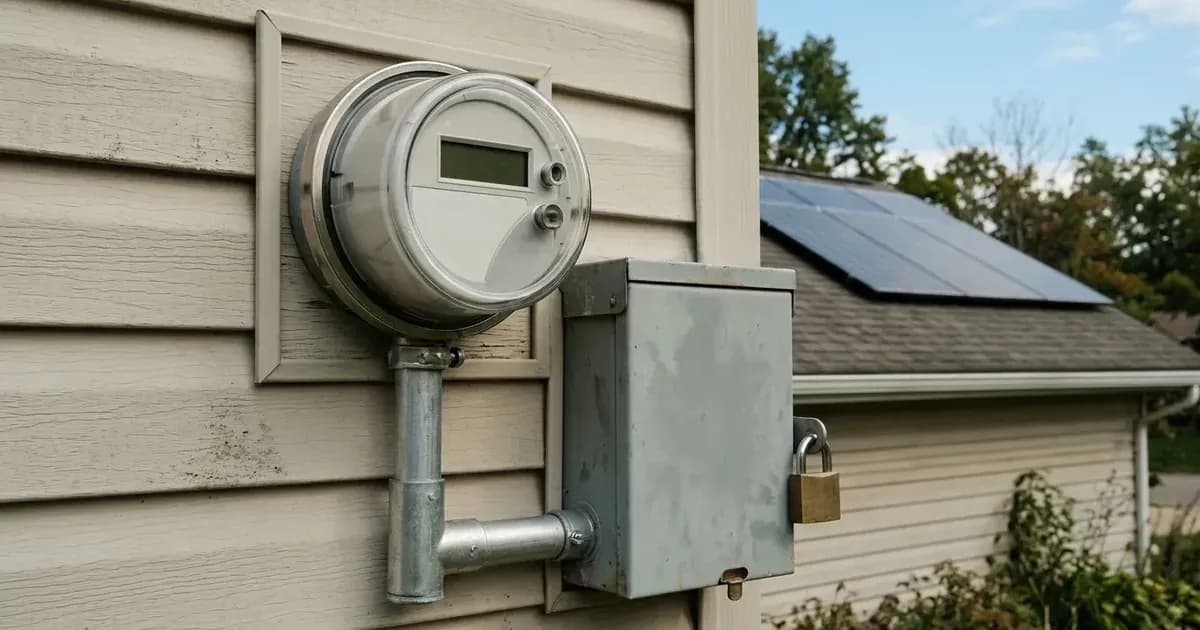
To accurately implement this billing structure, the utility installs a certified bidirectional smart revenue metre. This specialised metre is capable of recording both the electricity flowing from the grid into your home (inflow) and the electricity flowing from your home back to the grid (outflow). This precise measurement is essential for calculating your credits and charges under the Inflow-Outflow tariff.
Essential Equipment and Grid Connection Requirements
Connecting a distributed generation system to the Michigan grid involves specific equipment and procedural requirements to ensure safety and grid stability.
- Smart Bidirectional Revenue Metre: As noted, the utility installs a certified bidirectional smart revenue metre to record import and export power flows. This is a mandatory component for participation in the DG program.
- Lockable Exterior AC Disconnect Switch: For Tier 2 and larger installations, an exterior, lockable, visible-break manual disconnect switch adjacent to the metre is required. This allows utility personnel to safely isolate your system from the grid if needed.
- Anti-Islanding Inverter Protection: Grid-tied inverters must automatically isolate within milliseconds during distribution grid outages. This "anti-islanding" feature prevents your solar system from feeding power onto a de-energised grid section, which could endanger utility workers.
- Safe Working Earthing and Bonding: It is critical to verify earth continuity and bond all solar array frames to the main electrical installation earthing terminal. This ensures electrical safety and protects against fault currents.
- Permission to Operate (PTO) Mandate: Before your system can be energised and connected to the grid, customer generation must receive formal written Permission to Operate from DTE or Consumers Energy. This formal approval confirms that your installation meets all technical and safety standards.
Federal Tax Credits for Michigan Solar and Battery Systems
Beyond the billing structure, federal incentives can significantly reduce the cost of installing solar and battery storage in Michigan.
Section 25D Federal Tax Credit
Homeowners claiming qualifying residential solar and battery installations receive the 30% Section 25D credit on Form 5695. This federal tax credit applies to the cost of new, qualified clean energy property for your home. This includes solar electric property, solar water heating property, and certain battery storage technologies.
Standalone Battery Storage Eligibility
Notably, residential battery energy storage systems qualify for the federal 30% Section 25D tax credit with no solar requirement. This means you can install a battery storage system independently of a solar array and still be eligible for the tax credit, provided it meets the capacity requirements (at least 3 kilowatt-hours). This allows homeowners to invest in energy resilience and optimise energy use even without on-site generation.
What the Published Sources Do Not Tell You
While the formal rules outline the billing structure and requirements, some practical benefits are not explicitly detailed within the statutory language. For instance, the fact that residential battery storage allows homeowners to maximise on-site solar consumption to avoid paying full retail delivery charges on grid inflow is a significant advantage. By storing excess solar generation and using it later, you reduce the amount of electricity you need to import from the grid, thereby lowering your overall bill by minimising exposure to the full retail rate, including distribution charges. This strategic use of battery storage is a key economic driver for many Michigan homeowners.
Frequently asked questions
What are the primary technical requirements for michigan distributed generation dg inflow outflow tariff guide?
Key requirements include compliance with local grid codes, correct equipment certification, and proper electrical isolation.
Who is authorized to install and inspect michigan distributed generation dg inflow outflow tariff guide?
All high-voltage DC, AC grid tie-in, and switchboard modifications must be performed by a qualified, accredited electrical professional.
How is export power limited in michigan distributed generation dg inflow outflow tariff guide?
Export limiting is achieved using certified bidirectional smart meters or power sensors providing dynamic feedback to the inverter system.
References
Related guides
More from schemes, subsidies & financing.