Solar Panels on a Metal Roof: The Best Pairing in Residential Solar
Updated 18 September 2026 · By SolarNevs Research Desk, Dealer surveys + verified sources · 2 sources · Method ↗
Key Takeaways
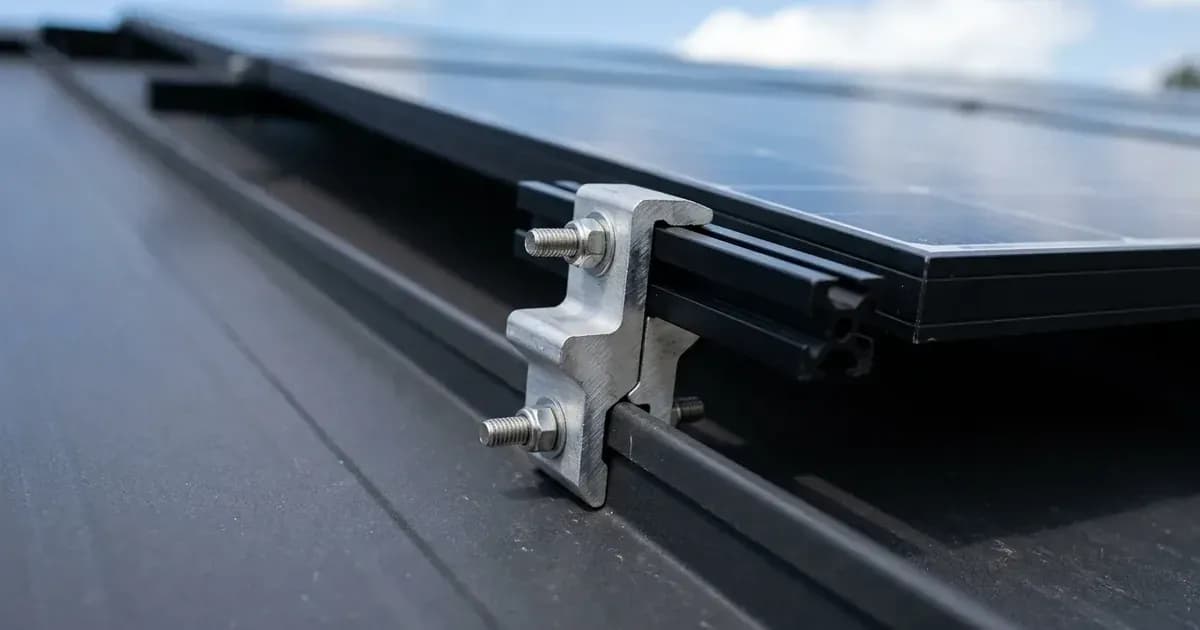
- Standing seam metal is the ideal solar roof: seam clamps grip mechanically with round-tip setscrews, so no holes are drilled and weather-tightness warranties generally survive.
- Not all metal roofs are equal — exposed-fastener and corrugated profiles mount differently, typically through existing fastener lines with sealed hardware.
- The real prize is lifespan matching: metal roofs commonly outlast a 25-year array, so you never pay to pull panels for a re-roof.
- Rail-less clamp systems that use the seam as the rail cut hardware and labor — one of the few places system cost genuinely falls with roof type.
Why standing seam changed the calculation
Every other roof type asks the same uncomfortable question: how many holes are we putting in this thing? Asphalt shingle mounting is a solved problem — lag bolts into rafters, flashing over the penetration — but it's still a set of deliberate holes in your building's weather barrier, executed correctly a few hundred times and trusted for decades.
Standing seam metal skips the question. The raised seam that joins each panel is a structural feature you can clamp to. Clamps tighten onto the seam with round-tip setscrews that press rather than pierce, forming a mechanical interlock without breaking the metal or its coating. Nothing penetrates, so nothing needs flashing, so the leak conversation that shadows every rooftop install simply doesn't start.
The knock-on effects are larger than they sound. Roof manufacturers' weather-tightness and coating warranties usually survive non-penetrating attachment — an important detail on a premium roof you paid a premium for. And because the seams run in rows at regular spacing, they function as the racking rails, letting rail-less systems attach modules almost directly to the roof: less aluminum, less freight, less labor.
Mount by profile, not by material
"Metal roof" covers several very different construction types, and the mounting story changes with each.
Roof profile | Attachment | Penetration |
|---|---|---|
Standing seam (vertical raised ribs) | Seam clamps, rail or rail-less | None — the ideal case |
Corrugated / ribbed, exposed fasteners | Brackets at existing fastener lines, sealed hardware | Reuses fastener holes, gasketed |
Metal shingle / stone-coated tile | Profile-specific mounts, often flashed | Varies — installer expertise matters |
Thin gauge over sparse purlins | Structural check first | Fastening substrate is the constraint |
Confirm the exact profile and gauge before quoting; attachment hardware is profile-specific and substitutions are not casual.
Two practical notes. Gauge and substrate matter more than the metal itself — an array's wind and snow loads pass through the attachment into structure, so a thin panel over widely spaced purlins is an engineering conversation, not a clamp choice. And thermal movement is real: metal roofs expand and contract, and quality attachment systems are designed to accommodate the roof's movement rather than fight it.
The lifespan argument that decides it
Here's the case that outlives every technical detail. A solar array is a 25-year-plus asset, degrading slowly and predictably. An asphalt roof under it is often a 20-to-30-year asset, which means many shingle owners face a mid-life event: pulling every panel, re-roofing, and reinstalling — a real and avoidable cost that arrives exactly when the array's warranty still has years to run.
A metal roof typically outlasts the array. Install once, and the panels come down when they're retired, not when the roof is. That single fact quietly improves lifetime economics more than most incentive line items do — and it's why the sequence matters so much: if you're re-roofing anyway and metal is on the table, doing it before solar rather than after converts an expensive future problem into a scheduling decision.
Everything else about metal-roof solar is normal. Orientation and tilt follow the same rules, production math is unchanged, maintenance stays trivial — and slick metal sheds snow readily, which helps in northern winters. The roof isn't a compromise to work around. On standing seam, it's the best mounting surface residential solar has.
Frequently asked questions
Can you put solar panels on a metal roof?
Yes — and standing seam metal is arguably the best solar roof there is. Clamps grip the raised seam mechanically, so nothing penetrates the panel, weather-tightness is undisturbed, and roof manufacturer warranties generally stay intact.
Do solar panels on a metal roof require drilling holes?
On standing seam, no. Seam clamps use round-tip setscrews that grip without piercing the metal. Corrugated and exposed-fastener profiles are different — those typically mount through existing fastener locations with sealed hardware.
Does mounting solar void a metal roof warranty?
Non-penetrating seam clamps are specifically designed to preserve coating and weather-tightness warranties. Any method that pierces the panel can affect them, so confirm with the roof manufacturer in writing before work begins.
Is a metal roof better than shingles for solar?
Usually yes on lifespan: a metal roof commonly outlasts a 25-year solar array, so you never face removing panels for a re-roof — the expensive mid-life event that shingle owners plan around.
References
- S-5! – Solar attachment for metal roofs (clamp technology) — accessed 5 August 2026
- US DOE – Solar Photovoltaic Technology Basics — accessed 5 August 2026
Related guides
More from schemes, subsidies & financing.