CAN Cows Graze Under Solar Panels? Agrivoltaics, Explained
Updated 17 September 2026 · By SolarNevs Research Desk, Dealer surveys + verified sources · 2 sources · Method ↗
Key Takeaways
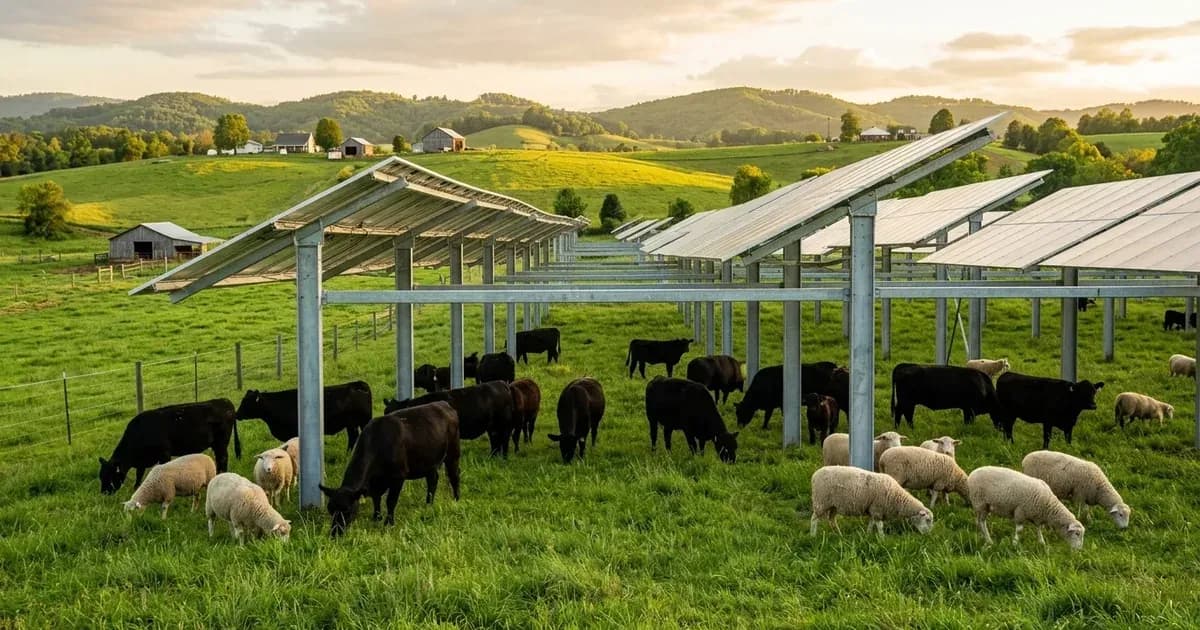
- Yes — solar grazing is a working industry, with sheep as the standard crew and cattle joining where arrays are built taller and tougher.
- Agrivoltaics means two harvests per acre: electricity above, forage, crops, or pollinator habitat below — DOE and NREL run the research programs.
- The panels often help the ground: partial shade cuts water loss and heat stress, and panel-microclimate studies keep surprising the skeptics.
- For landowners, grazing contracts turn array maintenance costs into agricultural income — the quiet win that scaled the practice.
The question behind the question
"Can cows go under solar panels" — a search box classic — is really asking whether solar farms and farming compete for land or share it. The emerging American answer is share: agrivoltaics, the dual use of land for generation and agriculture, has moved from research plots to standard practice on utility-scale sites, with DOE's solar office and NREL's InSPIRE project supplying the data. The literal cow answer: yes, where the steel is built for them — cattle mass and curiosity demand taller, sturdier racking than standard arrays use, so sheep became the industry's grazing standard while cattle-ready designs (higher clearance, protected wiring) spread from pilots outward.
Why sheep run the solar farm
The sheep-solar marriage works because each solves the other's cost line. Vegetation management is a solar site's endless expense — grass shading panels is the partial-shade problem at field scale — and a grazing flock mows it continuously, fuel-free, without the trimmer crews. The flock, meanwhile, gets fenced pasture with something rare in open rangeland: shade, which lambs and ewes use exactly as you'd guess through summer afternoons. Solar-grazing contracts formalize the swap — landowner or operator pays the shepherd, or trades forage for mowing — and a national association of solar graziers now exists because the niche got big enough to need one.
Cattle raise the engineering bar rather than the concept: standard racking sits low enough to rub, scratch, and chew. Raised-structure designs — the same elevation logic as bifacial ground mounts, taken further — host cattle pilots today, at a steel premium that pencils where pasture is the land's best use.
Crops, water, and the microclimate surprise
Under-panel use | The finding |
|---|---|
Sheep grazing | The standard — mutual cost-solving |
Cattle | Works under raised designs; steel premium |
Shade-tolerant crops (greens, berries, peppers) | Comparable or better yields in hot, dry climates per research plots |
Water outcomes | Partial shade cuts evaporation and plant heat stress |
Pollinator habitat | Low-cost pairing; seed mixes under and between rows |
Panel-side benefit | Vegetation cools the array's microclimate — heat costs output |
Per DOE/NREL agrivoltaics research; outcomes are crop- and climate-specific.
The recurring surprise in the research: partial shade is frequently a gift in hot, dry country — panels act as a crop's parasol, cutting water demand while the plants' transpiration mildly cools the panels above, whose silicon prefers cool. Nobody claims every acre improves; the claim the data supports is narrower and more useful — generation and agriculture are not zero-sum, and design geometry (row spacing, height, light-sharing) is what decides the split.
Why this matters beyond the pasture fence
Land-use conflict is utility solar's loudest opposition — the "panels versus farmland" framing at every county hearing — and agrivoltaics is the working rebuttal: the same acre paying twice. For the farm-adjacent landowner weighing a lease, grazing and habitat clauses are now standard asks; for the rest of us, it's the answer to give the next dinner-table skeptic. And for this site's usual reader, the household version of the principle already exists on a smaller frame: the solar carport — one structure, two jobs — is agrivoltaics for a driveway.
Frequently asked questions
Can cows graze under solar panels?
Yes, where the arrays are built for them — cattle need taller, sturdier mounting than standard farms use, so sheep dominate solar grazing today while cattle-ready designs spread.
What is agrivoltaics?
Using the same land for solar generation and agriculture simultaneously: grazing livestock between rows, growing shade-tolerant crops beneath elevated panels, or pairing pollinator habitat with arrays.
Why are sheep the solar-grazing standard?
They fit under standard racking, don't chew wiring or rub on posts the way cattle do, and mow vegetation that would otherwise shade panels — the site gets maintenance, the flock gets forage.
Do panels hurt or help the plants underneath?
Often help: partial shade cuts water loss and heat stress, and studies find some crops and forage do as well or better in panel microclimates — the design question is light-sharing geometry.
References
- US DOE – Solar Energy Technologies Office: agrivoltaics — accessed 5 August 2026
- NREL – Agrivoltaics research (InSPIRE) — accessed 5 August 2026
Related guides
More from schemes, subsidies & financing.