Texas PUC Rule 25.212 DG Technical Interconnection Standards Guide
Updated 18 September 2026 · By SolarNevs Research Desk, Dealer surveys + verified sources · 1 source · Method ↗
Key Takeaways
- Distributed generation (DG) systems in Texas must maintain operating frequency within +0.5 Hz or -0.7 Hz of a 60 Hz base (August 2026).
- Automatic disconnection is mandated for sustained voltage deviations exceeding +5.0% or -10% for more than 30 seconds (August 2026).
- Power quality must adhere to IEEE 519 standards, with voltage flicker not exceeding a 3.0% dip and total harmonic distortion (THD) below 5.0% (August 2026).
- All DG installations require a manual disconnect device with a visual break, accessible to utility personnel and lockable in the open position (August 2026).
What are the technical requirements for distributed generation interconnection in Texas?
The Public Utility Commission of Texas (PUCT) Substantive Rule §25.212 outlines the technical requirements for interconnecting distributed generation (DG) systems with the utility grid. This rule establishes specific operating parameters, power quality limits, protective relaying, disconnect switch mandates, and testing standards that all DG systems must meet to ensure grid stability and safety. These provisions are critical for anyone planning to install or operate solar, wind, or other distributed generation in Texas.
We verified these requirements by directly reviewing the official Public Utility Commission of Texas (PUCT) Substantive Rule §25.212 document, accessed on August 23, 2026.
What are the frequency and voltage operating limits?
Your distributed generation equipment must operate within strict frequency and voltage tolerances to maintain grid stability.
For frequency, the operating frequency of your generating equipment cannot deviate more than +0.5 Hertz (Hz) or -0.7 Hz from a 60 Hz base (August 2026). If your equipment cannot maintain this frequency tolerance, it must automatically disconnect from the utility system within 15 cycles (August 2026).
Voltage deviations also trigger mandatory disconnections:
- A sustained voltage deviation exceeding +5.0% or -10% from nominal voltage that persists for more than 30 seconds requires disconnection (August 2026).
- A more rapid deviation exceeding +10% or -30% from nominal voltage that persists for more than ten cycles also requires disconnection (August 2026).
- If the voltage on one or more phases falls below -30% of nominal voltage, your equipment must automatically disconnect from the utility system within ten cycles (August 2026).
Operating Parameter | Threshold Limit from Nominal | Maximum Disconnection Time |
|---|---|---|
Frequency Deviation | Exceeding +0.5 Hz or -0.7 Hz (60 Hz base) | Within 15 cycles (August 2026) |
Sustained Voltage Deviation | Exceeding +5.0% or -10% from nominal | Persisting > 30 seconds (August 2026) |
Rapid Voltage Deviation | Exceeding +10% or -30% from nominal | Persisting > 10 cycles (August 2026) |
Severe Undervoltage | Falling below -30% on one or more phases | Within 10 cycles (August 2026) |
These limits ensure that your DG system does not negatively impact the grid's stability or the quality of power delivered to other consumers.
What power quality standards must distributed generation meet?
Texas PUC Rule 25.212 mandates adherence to specific power quality standards, primarily referencing Institute of Electrical and Electronics Engineers (IEEE) 519. These standards address voltage flicker and harmonic distortion.
Voltage flicker generated by your equipment must not exceed a 3.0% voltage dip (August 2026). This measurement is taken at the point of common coupling (PCC), which is the electrical interface between your DG system and the utility grid.
Regarding harmonic distortion, the total harmonic distortion (THD) voltage must not exceed 5.0% of the fundamental 60 Hz frequency (August 2026). Furthermore, the distortion for any individual harmonic must not exceed 3.0% of the fundamental frequency (August 2026). Meeting these harmonic limits is crucial to prevent interference with other electrical equipment on the grid.
What are the requirements for disconnect switches and protective devices?
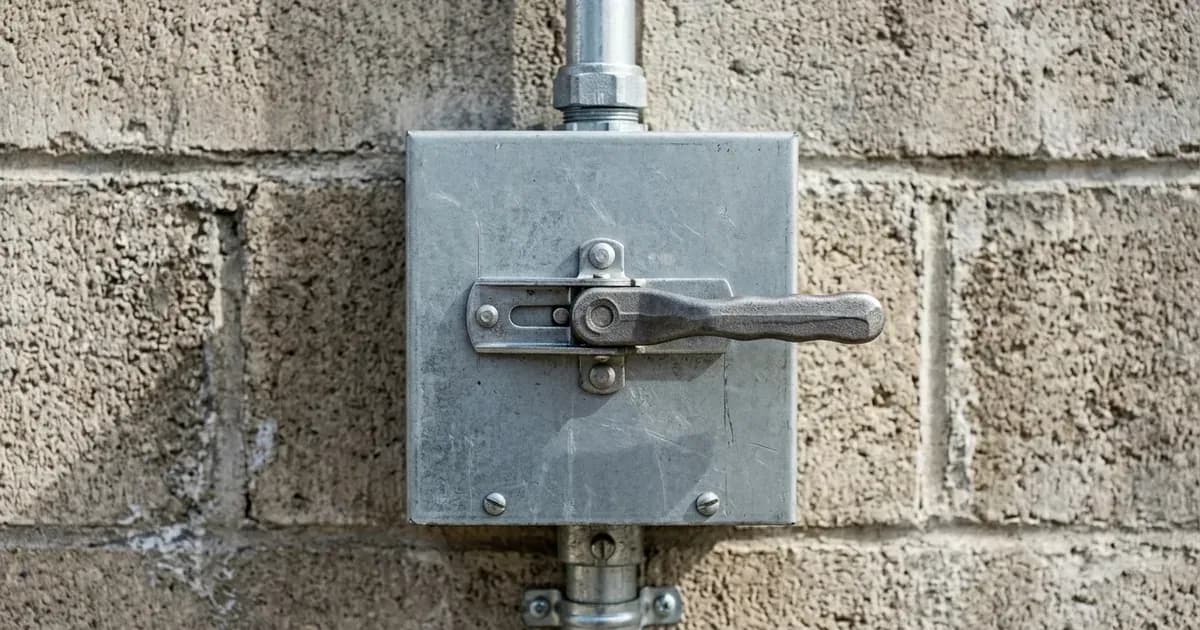
A critical safety and operational requirement under Texas PUC Rule 25.212 is the installation of a manual disconnect device. You must furnish and install a manual disconnect device that has a visual break (August 2026). This device must be appropriate to the voltage level, such as a disconnect switch, a draw-out breaker, or a fuse block (August 2026). It must also be accessible to utility personnel and capable of being locked in the open position (August 2026). This visual break ensures that utility workers can visually confirm that the DG system is completely isolated from the grid before performing maintenance or repairs.
Beyond the manual disconnect, specific protective devices are required based on the capacity of your distributed generation system:
- Facilities rated 10 kilowatts (kW) or less must have an interconnect disconnect device, a generator disconnect device, an over-voltage trip, an under-voltage trip, an over/under frequency trip, and a manual or automatic synchronizing check (August 2026).
- Facilities rated in excess of 10 kW but not more than 500 kW must also have an interconnect disconnect device, a generator disconnect device, an over-voltage trip, an under-voltage trip, an over/under frequency trip, and a manual or automatic synchronizing check (August 2026).
- For generation systems greater than 500 kW, a log of generator operations must be kept (August 2026).
- For facilities greater than 2 megawatts (MW), the utility may require that a communication channel be provided by the customer (August 2026).
These tiered requirements ensure appropriate levels of protection and control based on the potential impact of the DG system on the grid.
What are the notification and operational mandates for distributed generation?
Beyond the technical specifications, Texas PUC Rule 25.212 includes administrative and operational mandates.
You must provide the utility with notice at least two weeks before the initial energizing and start-up testing of your distributed generation system (August 2026). This allows the utility to coordinate and ensure a safe and orderly commissioning process.
It is important to note that direct-current generation is generally not permitted to operate in parallel with the utility system (August 2026). Additionally, while line-commutated inverters do not require synchronizing equipment, self-commutated inverters do (August 2026). These details impact system design and inverter selection.
How do these rules impact your solar or DG system design?
Understanding Texas PUC Rule 25.212 is fundamental when designing and installing any distributed generation system in Texas. These technical requirements directly influence component selection, inverter settings, and overall system architecture. For instance, inverters must be capable of precise frequency and voltage control, and their protection settings must align with the rule's disconnection thresholds.
When planning your system, consider these rules from the outset. Incorrectly configured systems may face delays in interconnection approval or require costly modifications. You can use a solar sizing tool to estimate your energy needs, but always consult with a qualified installer who understands these specific regulatory requirements.
For a broader understanding of the interconnection process, you can refer to our guide on Texas PUC Rule 25.211 Distributed Generation Interconnection Guide. Comparing these regulations with those in other states, such as the Kentucky PSC Net Metering Rules and Rider NMS Guide or the West Virginia PSC Net Metering Rules 150 CSR 33 Guide, can highlight the unique aspects of Texas's regulatory landscape. Adhering to these standards ensures your system operates safely and reliably within the utility grid.
Frequently asked questions
What are the frequency tolerance limits for distributed generation under Texas PUC Rule 25.212?
The operating frequency of your generating equipment must not deviate more than +0.5 Hertz (Hz) or -0.7 Hz from a 60 Hz base (August 2026). If this tolerance cannot be maintained, the equipment must automatically disconnect within 15 cycles (August 2026).
What voltage deviation limits require automatic disconnection under Texas PUC Rule 25.212?
Your generating equipment must disconnect if a sustained voltage deviation exceeds +5.0% or -10% from nominal voltage for more than 30 seconds (August 2026). Disconnection is also required if a deviation exceeds +10% or -30% for more than ten cycles (August 2026), or if voltage falls below -30% of nominal for more than ten cycles (August 2026).
What power quality standards does Texas PUC Rule 25.212 impose on distributed generation?
Distributed generation must comply with IEEE 519 standards. Voltage flicker cannot exceed a 3.0% dip (August 2026). Total harmonic distortion (THD) voltage must not exceed 5.0% of the fundamental 60 Hz frequency, and individual harmonics must not exceed 3.0% (August 2026).
What is the requirement for a manual disconnect device under Texas PUC Rule 25.212?
You must install a manual disconnect device with a visual break, appropriate to the voltage level. This device must be accessible to utility personnel and capable of being locked in the open position (August 2026).
What are the capacity tiers and associated protection requirements for distributed generation in Texas?
Facilities of 10 kW or less require an interconnect disconnect, generator disconnect, over/under voltage trip, over/under frequency trip, and a synchronizing check (August 2026). Facilities between 10 kW and 500 kW have similar requirements (August 2026). Larger systems, such as those greater than 2 MW, may require a communication channel (August 2026), and systems greater than 500 kW require an operations log (August 2026).
References
- Public Utility Commission of Texas (PUCT) Substantive Rule §25.212 — accessed 23 August 2026
Related guides
More from schemes, subsidies & financing.