Used EV Battery Health: How to Check Before You Buy
Updated 18 September 2026 · By SolarNevs Research Desk, Dealer surveys + verified sources · 2 sources · Method ↗
Key Takeaways
- Pack health is verifiable in an afternoon — which makes a used EV's biggest component less of a gamble than a used gas car's drivetrain.
- The four-layer check: built-in readout → full-charge range vs original EPA → OBD scan app → paid inspection for big-ticket buys.
- Judge health against the age curve (1–2% yearly is normal) — and judge range against your life, which is the number that actually matters.
- The transferable warranty (8yr/100k federal floor) rides with the car — a used EV usually arrives with years of pack coverage intact.
Layer one and two: what the car will tell you free
Start with the dashboard: many EVs expose a battery health or state-of-health readout in settings or service menus — minutes to find, worth photographing. Then run the classic field test: charge to full and read the estimated range against the model-year's original EPA figure (FuelEconomy.gov archives every one). A 2021 car rated 260 showing 232 at full is telling you "~89%" — consistent with the normal fade curve — while one showing 180 is starting a conversation the seller should finish. Caveats applied honestly: range estimators sway with recent driving and temperature (a cold-day reading reads low), so treat the comparison as a screen, not a verdict.
Layer three: the OBD dongle that reads the truth
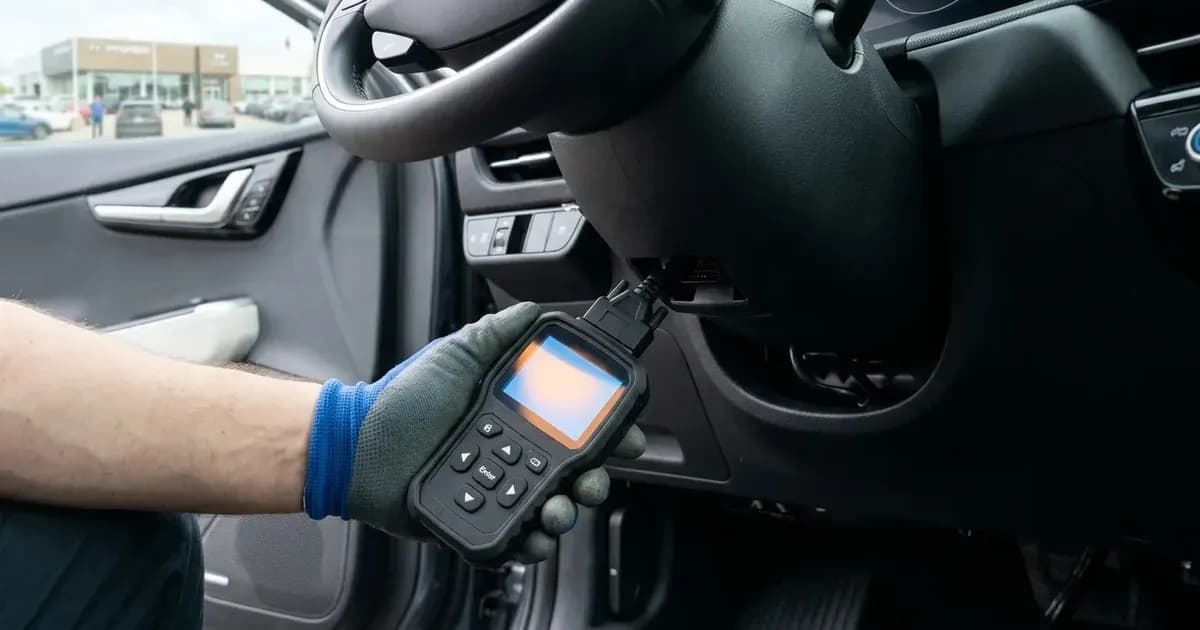
For a two-figure investment, a Bluetooth OBD adapter plus a model-appropriate app reads what the pack's management system actually knows: usable capacity, cell-voltage spread, sometimes charge-session history. This is the used-EV equivalent of a compression test — ten minutes in a parking lot, seller permission required and its refusal informative. What you're reading for: state of health versus the age curve, and cell balance (a wide voltage spread across cells flags trouble a headline percentage hides). Model-specific apps and forums document expected values; the maintenance mindset transfers directly.
Layer | Cost | What it catches |
|---|---|---|
Built-in readout | Free | Headline SoH |
Full-charge vs EPA | Free | Real-range sanity check |
OBD scan app | Trivial | Capacity, cell spread, sometimes history |
Paid EV inspection | Real but small vs price | Everything, documented, for expensive buys |
The screening ladder; climb as the purchase price justifies.
The warranty backstop and the verdict math
The quiet de-risker: battery warranties follow the car — the federal 8-year/100,000-mile floor means a five-year-old purchase typically carries three-plus years of coverage on its costliest component, with several makers guaranteeing a capacity floor (commonly ~70%) that converts excessive fade into a claim. Read the specific maker's terms; the difference between "defects only" and "capacity floor" warranties is the difference between insurance and reassurance.
Then buy on the number that matters: absolute range against your life. A pack at 85% of a 300-mile original still out-ranges most commutes several times over; the same percentage of an early 110-mile design may not survive your errands. Health percentage prices the car; remaining range qualifies it — and a checked, warrantied, depreciation-discounted used EV whose pack you've actually measured is, increasingly, the best-verified used-vehicle purchase in the market.
Frequently asked questions
How do you check a used EV's battery health?
Four layers: the car's own battery/state-of-health display where offered, a full-charge range reading compared to the original EPA rating, an OBD-dongle app reading pack data directly, and paid inspection services for expensive purchases.
What battery health percentage is acceptable in a used EV?
Judge against age: 90%+ is healthy for most 3–5 year cars given normal 1–2% yearly fade; meaningfully below the age-expected curve deserves explanation or a discount. Absolute range matters more than the percentage — does it fit your life?
Does the battery warranty transfer to a used buyer?
Federally required battery warranties (8yr/100k minimum) follow the car, not the owner — a 5-year-old EV carries 3+ years of pack coverage, which caps your downside on the most expensive component.
What's a red flag in a used EV's charging history?
None you can fully see — but rental/fleet fast-charge-heavy lives age packs faster, so a state-of-health reading below the age curve plus a DC-heavy history (some scan tools show charge counts) justifies real skepticism.
References
- US DOE AFDC – Batteries for electric vehicles — accessed 5 August 2026
- FuelEconomy.gov – Original EPA range ratings by model year — accessed 5 August 2026
Related guides
More from schemes, subsidies & financing.