Massachusetts Solar Canopy and Parking Lot Carport Guide
Updated 17 September 2026 · By SolarNevs Research Desk, Dealer surveys + verified sources · 2 sources · Method ↗
Key Takeaways
- Massachusetts offers a dedicated SMART Solar Canopy Location Adder for installations over parking lots or pedestrian walkways.
- Commercial solar carports in Massachusetts qualify for the federal 30% Investment Tax Credit under IRC Section 48.
- Structural designs must be engineered by a licensed professional to meet local snow and wind load requirements.
- Engineered concrete drilled piers are required for foundations, extending below the local frost line.
Understanding Solar Canopies and Carports in Massachusetts
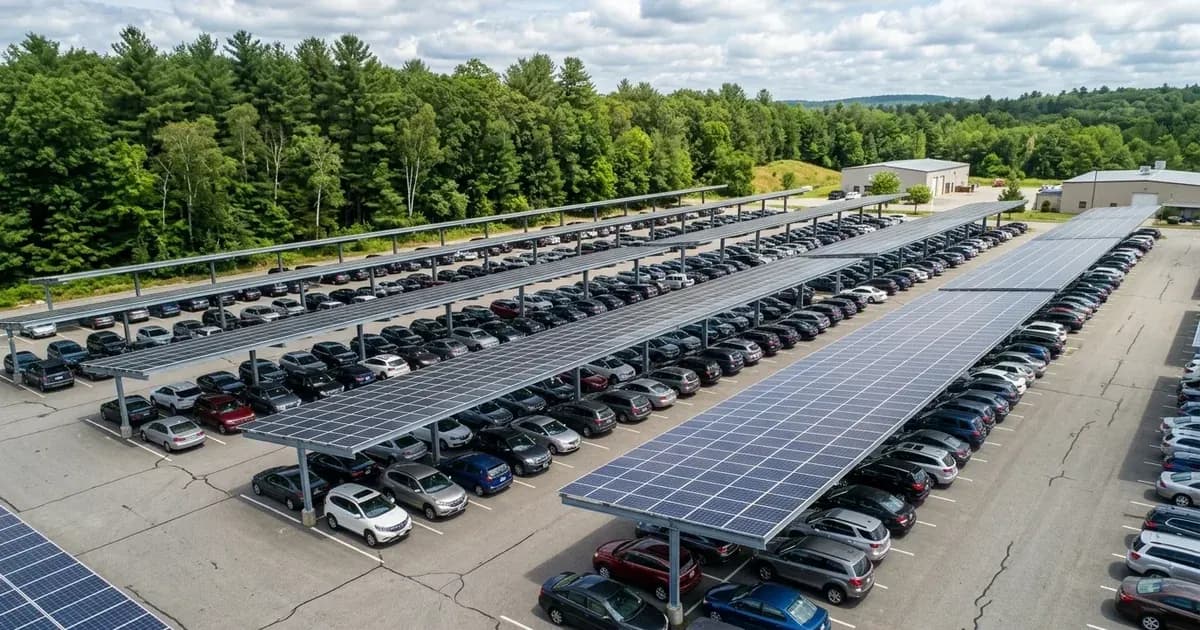
Solar canopies and carports transform underutilised parking areas into power-generating assets, offering shade and protection while producing clean electricity. In Massachusetts, these structures are a strategic investment, supported by specific incentives and designed to integrate seamlessly into commercial and institutional settings. They utilise existing paved surfaces, preserving green space and optimising commercial land use.
The Commonwealth of Massachusetts governs commercial and institutional solar parking canopy installations across the state. These installations are subject to both state-specific incentives and federal tax credits, making them an attractive option for businesses and organisations.
Incentives and Financial Benefits for Massachusetts Solar Carports
Project Component | Massachusetts Requirement / Standard | Purpose & Implementation |
|---|---|---|
SMART Location Adder | Constructed over parking lots or pedestrian walkways | Delivers state-level per-kWh incentive bonus |
Federal Section 48 ITC | Commercial solar parking canopy installations | Provides 30% Investment Tax Credit against federal tax liability |
Structural Engineering | PE-stamped structural steel design | Engineered to withstand regional Massachusetts snow and wind loads |
Foundation & Clearance | Drilled concrete piers below frost line | Resists frost heave; maintains ~14 ft clearance for emergency vehicles |
EV Charging Integration | Level 2 and DC Fast Charging stations | Powers fleet and public vehicle charging from onsite canopy solar |
Grid Safety Disconnect | Lockable, visible-break manual disconnect switch | Located adjacent to utility meter for emergency isolation |
Investing in a solar canopy or carport in Massachusetts provides significant financial advantages through a combination of state and federal programmes.
SMART Solar Canopy Location Adder
Massachusetts offers a specific incentive for solar canopies through its Solar Massachusetts Renewable Target (SMART) Programme. Solar canopy installations constructed over parking lots or pedestrian walkways receive a dedicated SMART location adder. This adder provides an additional financial benefit, recognising the dual-use nature and public utility of these installations.
Federal Commercial Clean Energy Tax Credit (IRC Section 48)
Commercial solar carport installations in Massachusetts qualify for the federal 30% Investment Tax Credit (ITC) under IRC Section 48. This credit allows businesses to deduct a substantial portion of the project's cost from their federal tax liability, significantly reducing the upfront investment and improving the project's return on investment.
Structural and Engineering Requirements
The construction of solar canopies and carports in Massachusetts demands rigorous engineering to ensure safety and longevity.
Structural Steel Engineering Standards
Canopy structures must be designed and stamped by a licensed professional engineer to withstand local snow and wind loads. This engineering ensures the structure can safely support the solar panels and resist environmental forces specific to Massachusetts weather conditions.
Foundation and Pier Depth Standards
Engineered concrete drilled piers must extend below the local frost line to ensure long-term structural stability. This prevents structural damage from frost heave, a common issue in regions with cold winters like Massachusetts. Local zoning boards may also require specific minimum clearance heights, typically 14 feet, to accommodate emergency vehicle access.
Electrical Integration and Safety
Integrating solar canopies into a commercial electrical system requires careful planning and adherence to safety protocols.
EV Charging Infrastructure Integration
Solar parking canopies frequently integrate Level 2 and DC Fast Charging infrastructure for fleet and public charging. This allows businesses to offer convenient electric vehicle charging, powered by the solar array itself, further enhancing the value and utility of the carport.
Safe Electrical Isolation Protocols
Installations require an exterior, lockable, visible-break manual disconnect switch adjacent to the utility metre. This switch provides a clear and accessible point for utility workers or emergency services to safely de-energise the system. Additionally, strict lock-out tag-out safety protocols must be enforced on commercial electrical distribution switchgear to protect personnel during maintenance or repairs.
What you can check yourself, and what you cannot
As a property owner, you can review initial site plans, understand the proposed structural design, and verify that the chosen installer is licensed and insured. You can also ensure that the project adheres to local zoning requirements, including minimum clearance heights.
However, the detailed structural engineering, electrical design, and interconnection with the utility grid are complex tasks that require licensed professionals. You cannot perform structural calculations, design electrical systems, or make modifications to the utility connection yourself. These tasks must be handled by a licensed professional engineer and certified electricians to ensure compliance with building codes and safety standards.
What the published sources do not tell you
While the IRS provides guidance on tax credits and general structural requirements are outlined, specific local zoning ordinances and building codes can vary significantly by municipality within Massachusetts. These local regulations often dictate exact minimum clearance heights, aesthetic requirements, and specific permitting processes. The precise depth of the local frost line, while generally known, can have micro-variations that require site-specific geotechnical surveys. Furthermore, the exact terms and availability of the SMART Solar Canopy Location Adder can evolve, and specific programme details are best confirmed with the Massachusetts Department of Energy Resources (DOER) or a qualified solar developer.
Frequently asked questions
What is the SMART Solar Canopy Location Adder in Massachusetts?
The SMART Solar Canopy Location Adder is an incentive for solar canopy installations constructed over parking lots or pedestrian walkways in Massachusetts, providing an additional financial benefit for these specific types of solar projects.
Do commercial solar carports in Massachusetts qualify for federal tax credits?
Yes, commercial solar carport installations in Massachusetts are eligible for the federal 30% Investment Tax Credit under IRC Section 48, reducing the overall cost of the project.
What structural requirements apply to solar canopies in Massachusetts?
Solar canopy structures in Massachusetts must be designed and stamped by a licensed professional engineer to withstand local snow and wind loads. Foundations typically require engineered concrete drilled piers extending below the local frost line.
Can EV charging stations be integrated into Massachusetts solar carports?
Solar parking canopies in Massachusetts frequently integrate Level 2 and DC Fast Charging infrastructure, supporting both fleet and public electric vehicle charging needs.
What are the electrical safety requirements for Massachusetts solar canopies?
Installations require an exterior, lockable, visible-break manual disconnect switch adjacent to the utility metre. Strict lock-out tag-out safety protocols must be enforced on commercial electrical distribution switchgear.
References
- Massachusetts SMART Solar Canopy Adder Guidelines — accessed 27 August 2026
- IRC Section 48 Commercial Energy Tax Credit — accessed 27 August 2026
Related guides
More from schemes, subsidies & financing.