Medium Voltage Solar Grid Interconnection and Substation Guide South Africa
Updated 16 September 2026 · By SolarNevs Research Desk, Dealer surveys + verified sources · 2 sources · Method ↗
Key Takeaways
- Commercial and utility-scale solar plants in South Africa connect to Eskom's grid at 11kV, 22kV, or 33kV.
- Dedicated step-up transformer substations are mandatory for these medium-voltage interconnections.
- Solar plants must comply with the South African Grid Code's Fault Ride-Through (FRT) requirements.
- Strict lock-out tag-out safety procedures are critical for all medium-voltage switchgear and transformers.
Connecting Solar Plants to South Africa's Medium Voltage Grid
Connecting commercial and utility-scale solar power plants to the electricity grid in South Africa involves adherence to specific medium-voltage (MV) standards. These plants typically interconnect with Eskom distribution networks at voltage levels of 11kV, 22kV, or 33kV. This guide outlines the essential technical and regulatory requirements for such connections, focusing on the infrastructure and operational mandates.
Understanding Medium Voltage Interconnections
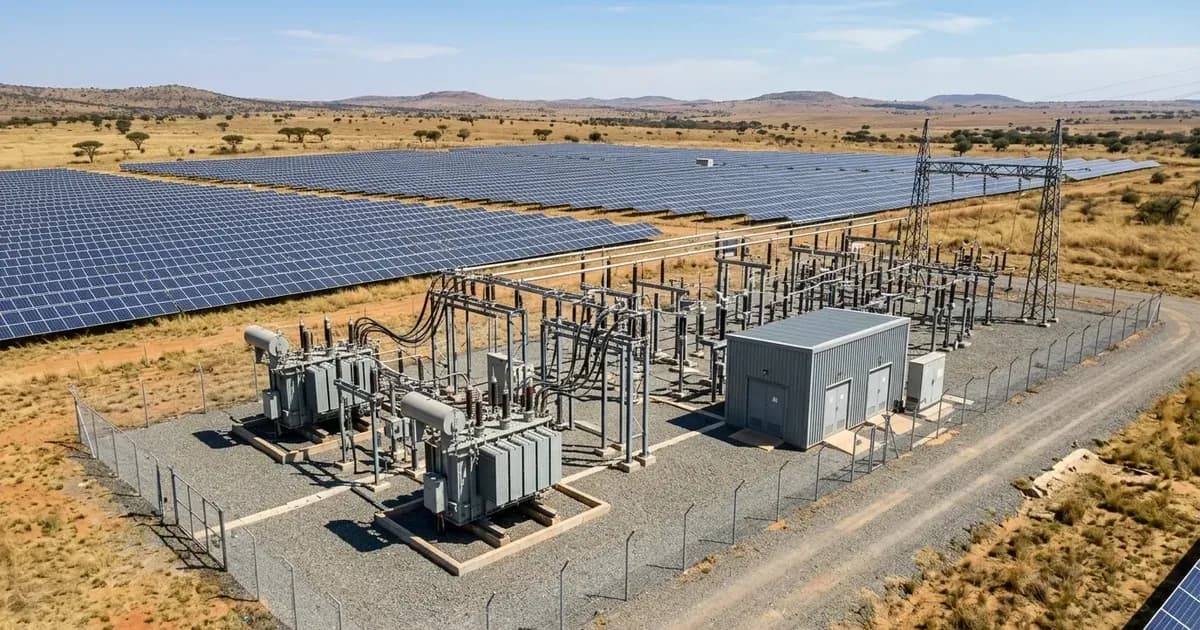
Medium-voltage interconnections are necessary for larger solar installations to efficiently transmit power to the national grid. Solar generation is stepped up through dedicated medium-voltage transformers. These transformers feature specialized vector group configurations to ensure compatibility and stability with the grid. The entire setup, including the transformers and associated switchgear, forms a dedicated substation at the solar plant site.
The governing framework for these connections is the South African Grid Code for Renewable Power Plants (SAGC RPP). This code, along with regulations from the National Energy Regulator of South Africa (NERSA), ensures that all renewable energy facilities operate safely and reliably within the national electricity system managed by Eskom.
Eskom's Technical Requirements for MV Solar
Eskom, as the grid operator, sets out detailed technical requirements for medium-voltage solar interconnections. These requirements cover various aspects from grid stability to operational control and safety.
Parameter | What it means for your solar plant | What to do |
|---|---|---|
MV Interconnection Voltage Levels | Your plant will connect at 11kV, 22kV, or 33kV. | Design your step-up substation to match one of these Eskom distribution network voltage levels. |
Dedicated Step-Up Transformer Substation | Essential for converting solar generation voltage to grid voltage. | Install dedicated medium-voltage transformers with appropriate vector group configurations. |
Grid Code Fault Ride-Through (FRT) | Your plant must remain connected and stable during grid disturbances. | Ensure your inverter and control systems comply with SAGC RPP rules for remaining connected and supporting grid voltage during transient network faults. |
SANS 10142-1-2 Certificate of Compliance | Mandatory legal certification of your electrical installation. | Obtain a comprehensive Certificate of Compliance from a registered professional installation electrician. |
SCADA Telemetry and Remote Curtailment | Eskom needs real-time data and the ability to control your plant remotely. | Implement systems to provide real-time SCADA telemetry and accept Eskom National Control remote curtailment signals. |
Safe MV Switchgear Lockout-Tag-Out | Critical safety procedure for all maintenance and operations. | Enforce strict lock-out tag-out safety procedures on commercial distribution switchgear and transformers. Always isolate PV, battery, and AC breakers, and confirm zero voltage before any work. Opening the unit is authorised-service work. |
Main Earthing Terminal Protective Bonding | Ensures safety from electrical faults and lightning. | Bond all metallic solar mounting structures and battery enclosures directly to the main earthing terminal. |
NRS 097-2-1 Grid Inverter Certification | Your inverters must be approved for grid connection. | Use inverters that appear on the approved equipment register, complying with NRS 097-2-1 grid interconnection standards. |
Class 0.2 Revenue Metering | Accurate measurement of energy imported and exported. | Ensure the municipality installs a certified four-quadrant bidirectional meter to record active energy. |
Eskom Operating Agreement (CUSA) | Formal permission required before connecting to the grid. | Do not synchronize with the municipal network until written permission to connect has been received from Eskom. |
Safety Protocols for Medium Voltage Substations
Safety is paramount when dealing with medium-voltage electrical infrastructure. The operation and maintenance of dedicated step-up transformer substations and MV switchgear require strict adherence to safety protocols.
You must enforce strict lock-out tag-out (LOTO) safety procedures on commercial distribution switchgear and transformers. This means that before any work is performed, all energy sources must be isolated, locked, and tagged to prevent accidental re-energisation. This process ensures that personnel are protected from unexpected startup or release of stored energy. Always isolate PV, battery, and AC breakers, and confirm zero voltage before any work. Opening the unit is authorised-service work.
Furthermore, protective bonding is essential. All metallic solar mounting structures and battery enclosures must be bonded directly to the main earthing terminal. This provides a safe path for fault currents and protects against electrical shock and lightning strikes.
Regulatory Compliance and Certification
Beyond technical specifications, regulatory compliance is a cornerstone of MV solar interconnections in South Africa. The National Energy Regulator of South Africa (NERSA) is the statutory authority overseeing these regulations.
A critical document for any installation is the Certificate of Compliance (CoC), which must be issued by a registered professional installation electrician according to SANS 10142-1-2. This certificate verifies that the electrical installation meets all safety and performance standards.
Inverter selection is also regulated; inverters must comply with NRS 097-2-1 grid interconnection standards and appear on an approved equipment register. This ensures that the equipment is suitable for safe and stable operation with the national grid. Finally, generators may only synchronize with the municipal network following receipt of written permission to connect, typically through an Eskom Operating Agreement (CUSA).
What the Published Sources Do Not Tell You
While Eskom provides comprehensive guidelines, certain aspects of medium-voltage grid interconnections are not fully detailed in publicly available documents. For instance, the specific requirements for MV grid connection studies, including detailed power flow, short-circuit, and harmonic distortion modeling, are often only communicated during the application process. These studies are submitted to the Eskom Grid Access Unit and require specialised engineering expertise. The exact thresholds for remote curtailment signals and the operational nuances of Eskom's National Control Centre are also subject to internal Eskom protocols that are not publicly disclosed. Furthermore, while general safety is covered, the granular detail of site-specific safety plans and emergency response procedures for MV substations are developed in consultation with Eskom and local authorities, rather than being universally published.
Frequently asked questions
What voltage levels are used for medium-voltage solar interconnections in South Africa?
Commercial and utility-scale solar plants in South Africa interconnect to Eskom distribution networks at 11kV, 22kV, or 33kV voltage levels. These are the standard medium-voltage tiers for grid integration.
What is Fault Ride-Through (FRT) in the South African Grid Code?
Fault Ride-Through (FRT) requires renewable power plants to remain connected and support grid voltage during transient network faults. This is a critical requirement under the South African Grid Code for Renewable Power Plants (SAGC RPP).
Is a dedicated step-up transformer substation required for MV solar connections?
Yes, solar generation is stepped up through dedicated medium-voltage transformers with specialized vector group configurations. This substation is essential for matching the plant's output to the grid voltage.
What safety procedures are mandatory for MV switchgear?
Strict lock-out tag-out safety procedures must be enforced on commercial distribution switchgear and transformers. This ensures the safety of personnel working on or near energised equipment.
Who issues the Certificate of Compliance for solar installations in South Africa?
A registered professional installation electrician must issue a comprehensive Certificate of Compliance (CoC) according to SANS 10142-1-2. This certifies the electrical safety and compliance of the installation.
References
- Grid Connection Code for Renewable Power Plants (RPPs) connected to the Transmission or Distribution System in South Africa, Version 3.1 (NERSA, January 2022) — accessed 15 September 2026
- Eskom Standard for the Interconnection of Embedded Generation, 240-61268576 Rev 1 (2013), copy hosted on the National Treasury eTenders portal — accessed 15 September 2026
Related guides
More from inverter errors & fixes.