South Africa Battery Room Ventilation And Fire Suppression Guide
Updated 16 September 2026 · By SolarNevs Research Desk, Dealer surveys + verified sources · 1 source · Method ↗
Key Takeaways
- Specific technical standards for battery room ventilation and fire suppression are not publicly detailed in general utility compliance documents.
- Preventing thermal runaway requires expert engineering for ventilation, cooling, and fire suppression systems.
- Compliance with SANS standards for overall electrical installations is mandatory, but specialized battery room safety requires additional expertise.
- General utility documents focus on grid connection and electrical safety, not specific battery room environmental controls.
Understanding Battery Room Safety in South Africa
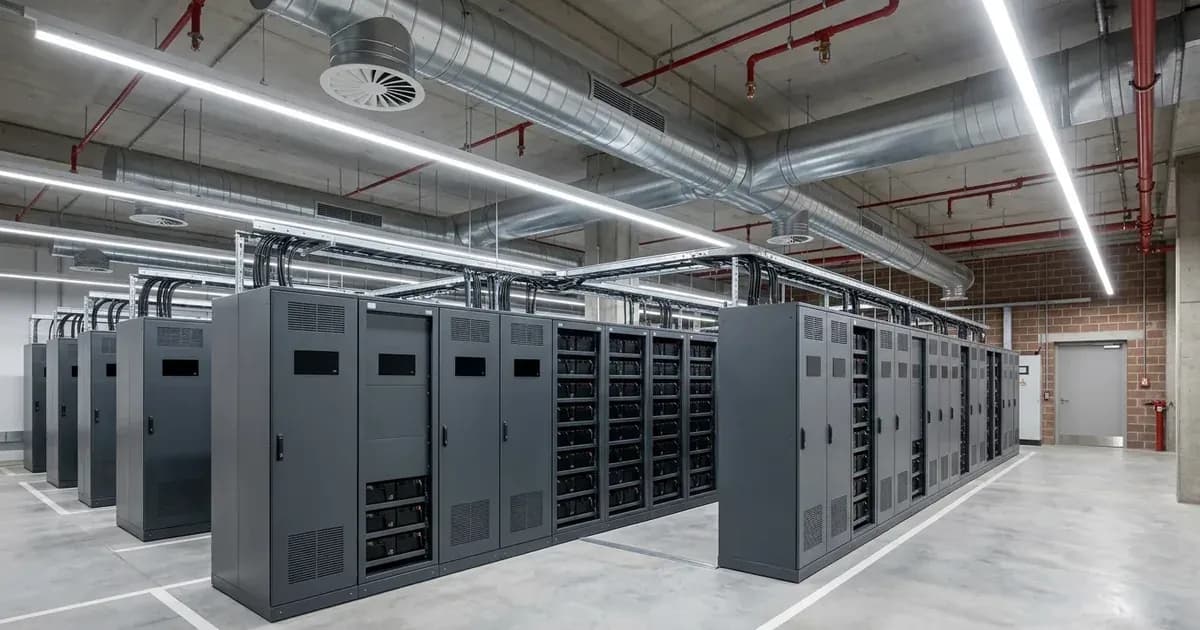
Battery rooms, especially those housing large-scale energy storage systems, present unique safety challenges related to thermal runaway and potential fire hazards. In South Africa, while general electrical installation standards are well-defined, specific prescriptive requirements for battery room ventilation and fire suppression are not typically found in broad utility connection guidelines.
The Mechanism of Thermal Runaway and Gas Accumulation
Thermal runaway is a critical safety concern for battery energy storage systems, particularly lithium-ion batteries. It occurs when an internal or external factor causes a battery cell to heat up uncontrollably, leading to a chain reaction that can propagate to adjacent cells. This process can release flammable gases, toxic fumes, and lead to fire or explosion.
Lead-acid batteries, while different in chemistry, also pose risks. During charging, they can off-gas hydrogen, a highly flammable gas. Without adequate ventilation, hydrogen can accumulate to explosive concentrations.
Effective ventilation is crucial to dissipate heat, prevent thermal runaway, and remove hazardous gases. Fire suppression systems are a secondary safety measure, designed to contain or extinguish fires should they occur.
What the technical documentation Indicates for General Electrical Compliance
The provided official documentation outlines several general requirements for solar PV installations in South Africa, which apply broadly to systems that might include battery rooms. These include:
Requirement | Detail |
|---|---|
Regulatory Standard Compliance | "All grid-tied and hybrid solar PV installations must be officially registered and approved by City Power." |
Equipment Listing and Safety | "A registered Master Installation Electrician must issue a supplemental SANS 10142-1-2 CoC." |
Inverter Certification | "Embedded generation inverters must be certified to NRS 097-2-1 and listed on the approved equipment register." |
Overall System Certification | "The entire hybrid generating installation must be certified with a formal SANS 10142-1-2 CoC." |
These points highlight the importance of formal certification and compliance with SANS 10142-1-2 for the electrical aspects of an installation. However, they do not provide specific details regarding battery room environmental controls, ventilation rates, or fire suppression system types.
What You Can Check Yourself, and What You Cannot
As a homeowner or general installer, you can ensure that the overall electrical installation, including the battery system, is designed and installed by qualified professionals who will secure the necessary Certificates of Compliance. You can also visually inspect for obvious signs of damage or overheating.
However, specific design and implementation of battery room ventilation, thermal management, and fire suppression systems are highly specialized engineering tasks. These are beyond the scope of homeowner checks and require accredited fire engineers, HVAC specialists, and electrical engineers with expertise in battery energy storage safety. Attempting to design or modify these systems without expert knowledge can lead to severe safety risks.
What the Published Sources Do Not Tell You
The provided sources, primarily general utility connection requirements from Eskom, do not contain specific technical standards or prescriptive values for battery room thermal runaway ventilation, gas extraction rates, or the design of aerosol or other fire suppression systems.
This means:
- No specific SANS 10400 sections detailing battery room ventilation rates (e.g., air changes per hour) are provided. While SANS 10400 is a broad building standard, specific sub-sections for battery rooms are not referenced in the general utility documents.
- No specific requirements for gas detection systems (e.g., hydrogen sensors, smoke detectors) or their integration with ventilation and suppression systems are outlined.
- No approved list of fire suppression technologies (e.g., inert gas, chemical agents, aerosol systems) for battery rooms is available in these general compliance documents.
- No detailed engineering specifications for HVAC systems, ducting, fan capacities, or exhaust locations for battery rooms are included.
These critical details are typically found in specialized engineering standards, industry best practices, and potentially in more detailed SANS sub-standards or fire safety regulations that are not part of general utility connection guidelines. Project-specific engineering studies are required to determine these parameters.
Frequently asked questions
What are the primary technical requirements for south africa battery room ventilation and fire suppression guide?
Key requirements include compliance with local grid codes, correct equipment certification, and proper electrical isolation.
Who is authorized to install and inspect south africa battery room ventilation and fire suppression guide?
All high-voltage DC, AC grid tie-in, and switchboard modifications must be performed by a qualified, accredited electrical professional.
How is export power limited in south africa battery room ventilation and fire suppression guide?
Export limiting is achieved using certified bidirectional smart meters or power sensors providing dynamic feedback to the inverter system.
References
- Eskom Distribution: Small-Scale Embedded Generators (SSEG) registration and connection requirements — accessed 15 September 2026
Related guides
More from inverter errors & fixes.