Solar PV Battery Fire Safety and Ventilation Standards Guide South Africa
Updated 16 September 2026 · By SolarNevs Research Desk, Dealer surveys + verified sources · 2 sources · Method ↗
Key Takeaways
- South African battery installations must comply with SANS 10400-T for fire compartmentation and SANS 10142-1-2 for Certificates of Compliance.
- Adequate ventilation, either natural or mechanical, is mandatory to prevent heat build-up and thermal runaway.
- Battery Management Systems (BMS) are essential for thermal runaway mitigation, including high-temperature cut-off and cell balancing.
- All electrical work, including DC circuit protection and earthing, requires sign-off by a registered professional installation electrician.
Understanding South Africa's Battery Storage Safety Requirements
Installing solar PV battery storage in South Africa requires adherence to specific safety standards. These standards ensure the safe operation of systems ranging from residential to commercial and agricultural applications. The South African Bureau of Standards (SABS) governs these technical requirements. The primary standards are SANS 10400-T for fire protection and SANS 10142-1-2 for Certificates of Compliance (CoC).
The Mechanism of Battery Fire Safety
Battery fire safety focuses on preventing thermal runaway and containing any potential fire. Thermal runaway is a condition where an increase in temperature causes a further increase in temperature, leading to a self-sustaining exothermic reaction. This can result in fire or explosion. Proper design and installation mitigate these risks through several mechanisms:
- Fire Compartmentation: This involves constructing physical barriers to prevent fire spread.
- Ventilation: Removing heat and potentially flammable gases from the battery area.
- Electrical Protection: Isolating circuits to prevent overcurrents or short circuits.
- Thermal Management: Using Battery Management Systems (BMS) to monitor and control cell temperatures.
These measures work together to create a safe environment for battery storage, protecting property and lives.
Key South African Battery Fire Safety Standards
The following table outlines the critical fire safety standards and rules for battery storage installations in South Africa. These are derived from Eskom's guidelines, referencing SABS standards.
Parameter | What it means | What to do |
|---|---|---|
Dedicated Battery Room Fire Compartmentation | Battery storage installations exceeding designated energy thresholds must be housed in fire-separated compartments under SANS 10400-T. | Ensure battery rooms are designed and constructed with fire-rated walls, floors, and ceilings as per SANS 10400-T requirements. |
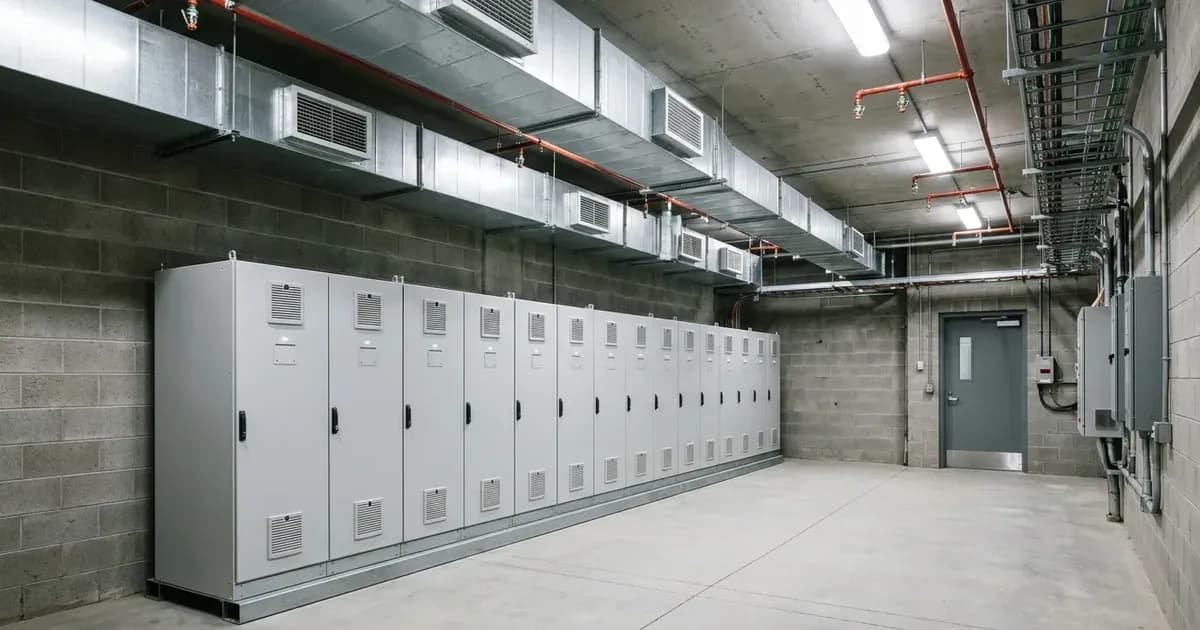
Adequate Natural and Mechanical Ventilation | Battery rooms must incorporate adequate passive or mechanical ventilation to prevent heat accumulation and thermal runaway. | Design the battery room with sufficient airflow, using either natural vents or mechanical fans, to maintain safe operating temperatures and disperse gases. |
SANS 10142-1-2 Certificate of Compliance | A registered professional installation electrician must issue a comprehensive Certificate of Compliance. | Obtain a CoC from a qualified electrician for all new or modified installations before connection to the grid. |
DC Circuit Breaker and Fuse Protection | Install heavy-duty lockable DC isolators on all photovoltaic string inputs adjacent to the inverter. | Ensure all DC circuits have appropriate overcurrent protection and clearly labelled, lockable isolators for safety during maintenance or emergencies. |
Main Earthing Terminal Protective Bonding | Bond all metallic solar mounting structures and battery enclosures directly to the main earthing terminal. | Connect all exposed conductive parts of the solar and battery system to the building's main earthing system to prevent electric shock. |
Approved Fire Suppression and Detection | Install certified smoke and thermal detectors linked to building alarm systems in commercial battery areas. | Equip commercial battery installations with appropriate fire detection systems that can alert occupants and emergency services. |
Thermal Runaway Emergency Isolation | Battery management systems must incorporate automated high-temperature cut-off and cell balancing. | Verify that the Battery Management System (BMS) includes features for monitoring cell temperatures and automatically isolating the battery if overheating occurs. |
NRS 097-2-1 Inverter Grid Protection | The embedded generator must automatically isolate within specified protection clearing times during grid loss. | Ensure the inverter is certified to NRS 097-2-1 standards and is configured to automatically disconnect from the grid during power outages. |
CoC Sign-Off by Master Electrician | Generators may only synchronize with the municipal network following receipt of written permission to connect. | Do not connect your system to the municipal grid until a registered professional installation electrician has issued a CoC and you have received official permission to connect. |
What You Can Check Yourself, and What You Cannot
As a homeowner or system owner, you can perform visual checks and ensure basic safety protocols are followed. However, any electrical work or modifications to the system must be carried out by qualified professionals.
What you can check yourself:
- Ventilation: Ensure that ventilation openings are not blocked and that air can flow freely in and out of the battery area.
- Clearances: Maintain clear spaces around the battery system as recommended by the manufacturer to prevent heat build-up.
- Physical Damage: Visually inspect batteries and wiring for any signs of physical damage, corrosion, or loose connections.
- Warning Labels: Ensure all safety warning labels are present and legible on the battery system and associated equipment.
What you cannot do yourself:
- Electrical Connections: Do not attempt to modify, disconnect, or connect any electrical wiring, especially DC circuits. This includes tightening or disconnecting terminals. Always kill power first, use insulated tools, and be aware that a spanner across a battery bank can short hundreds of amps.
- Inverter Settings: Do not change inverter settings related to grid protection or battery charging parameters. These are set by an accredited installer and changing them can breach your connection agreement and create unsafe conditions.
- Opening Enclosures: Do not open battery enclosures, inverters, or other sealed electrical equipment. Opening the unit is authorised-service work and requires isolating PV, battery, and AC breakers, then waiting the manual's capacitor-discharge time.
- System Modifications: Any changes to the system's design, capacity, or components must be performed by a registered professional installation electrician.
- Fire Suppression System Maintenance: Maintenance of fire suppression and detection systems in commercial installations must be done by certified technicians.
Always consult with a registered professional installation electrician for any concerns beyond basic visual inspection.
What the Published Sources Do Not Tell You
While South African standards provide a robust framework for battery safety, some specifics may vary or require further clarification:
- Detailed Fire Compartmentation Specifications: SANS 10400-T outlines general fire protection requirements, but the precise fire rating and construction details for battery compartments can depend on the specific energy capacity and chemistry of the batteries. These details often require consultation with a fire engineer or local building authority.
- Ventilation Rate Calculations: The term "adequate" ventilation is used in the standards. However, specific airflow rates (e.g., cubic metres per hour) required for different battery chemistries and capacities are not explicitly detailed in the general Eskom guidelines. These calculations are typically part of a detailed engineering design.
- Local Municipal Requirements: While SANS standards are national, individual municipalities may have additional bylaws or specific requirements for solar PV and battery installations. Always check with your local council before commencing an installation.
- Specific Battery Chemistry Limitations: Official scheme guidelines notes that Lithium Iron Phosphate (LiFePO4) chemistries are preferred due to their superior thermal stability compared to NMC cells. However, the exact limitations or specific installation requirements that differentiate between various approved battery chemistries are not detailed in the general guidelines.
- Grid Connection Timelines: The requirement for "written permission to connect" before synchronising with the municipal network is clear. However, the actual processing times for such permissions can vary significantly and are not specified in the technical standards.
Frequently asked questions
What are the main fire safety standards for solar batteries in South Africa?
The primary fire safety standards for solar battery installations in South Africa are SANS 10400-T for fire protection and SANS 10142-1-2 for Certificates of Compliance. These are governed by the South African Bureau of Standards (SABS).
Is ventilation required for battery rooms in South Africa?
Yes, battery rooms must incorporate adequate passive or mechanical ventilation. This is to prevent heat accumulation and thermal runaway, ensuring safe operation of the battery storage system.
What is a Certificate of Compliance (CoC) for solar battery installations in South Africa?
A Certificate of Compliance (CoC) for solar battery installations in South Africa is a comprehensive document issued by a registered professional installation electrician. It confirms that the installation meets all relevant safety and technical standards, and it is required before connecting to the municipal network.
How is thermal runaway addressed in South African battery installations?
Thermal runaway is addressed through Battery Management Systems (BMS) that incorporate automated high-temperature cut-off and cell balancing. This prevents uncontrolled temperature increases within the battery cells.
Are there specific rules for DC protection in South African solar battery systems?
Yes, installations must include heavy-duty lockable DC isolators on all photovoltaic string inputs adjacent to the inverter. This provides a critical safety measure for isolating DC power.
References
- SABS SANS 10400-T Fire Protection in Buildings — accessed 27 August 2026
- SANS 10142-1 (Ed 3:2020) — The wiring of premises Part 1: Low-voltage installations (SABS) — accessed 27 August 2026
Related guides
More from inverter errors & fixes.