South Africa Commercial Solar Plant Earth Mat Design Guide
Updated 16 September 2026 · By SolarNevs Research Desk, Dealer surveys + verified sources · 1 source · Method ↗
Key Takeaways
- Commercial solar plants in South Africa require registration with the relevant distributor.
- Compliance with NRS 097 standards is mandatory for grid interconnection.
- All installations must be certified with a Certificate of Compliance.
- High-voltage electrical work requires certified, licensed personnel.
Understanding Commercial Solar Plant Earthing in South Africa
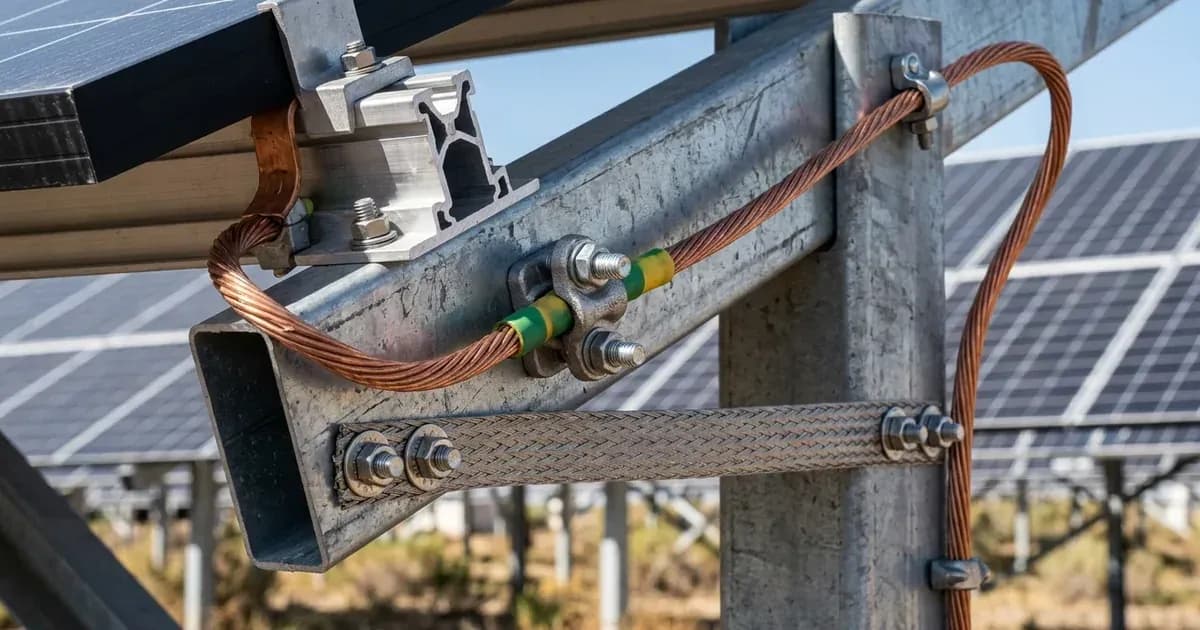
For commercial solar power plants in South Africa, ensuring proper earthing is critical for safety and compliance. While specific technical designs for earth mats, soil resistivity testing, and step and touch potential limits are detailed in various engineering guidelines and standards, the overarching framework is set by national regulations. These regulations dictate the administrative and safety requirements that all embedded generation systems, including solar plants, must meet.
What is actually going on
In South Africa, the operation of a commercial solar plant, particularly its connection to the national grid, is governed by a set of regulatory requirements. These requirements ensure that the installation is safe, reliable, and does not negatively impact the existing electricity network. The process involves several key steps, from initial registration to final certification, all of which are designed to maintain high standards of electrical safety and grid stability.
The primary mechanism for ensuring compliance revolves around adherence to specific national standards and the involvement of qualified professionals. This structured approach helps to mitigate risks associated with high-voltage systems and complex grid interconnections.
Regulatory Compliance Steps for Commercial Solar Plants
Requirement | What it means | What to do |
|---|---|---|
Embedded generation registration | All systems generating electricity and connected to the grid must be formally registered. | Register your commercial solar plant with the relevant electricity distributor, such as Eskom. |
NRS 097 standards compliance | Systems must meet specific technical standards for grid interconnection. | Ensure your solar plant's design and installation adhere to the NRS 097 series of standards. |
Certificate of Compliance (CoC) | A legal document certifying that the electrical installation complies with safety standards. | Obtain a valid Certificate of Compliance for your entire solar installation from a qualified person. |
What you can check yourself, and what you cannot
As a commercial solar plant owner or operator, your role primarily involves ensuring that all regulatory and safety requirements are met by accredited professionals.
What you can check yourself:
- Documentation: Verify that all necessary registrations (e.g., with Eskom) are complete and current.
- Certificates: Confirm that a valid Certificate of Compliance (CoC) has been issued for the installation.
- Professional Credentials: Ensure that any personnel performing high-voltage work are certified and licensed.
What you cannot check yourself:
- Technical Design: You should not attempt to design or verify the technical specifics of the earth mat, soil resistivity tests, or step and touch potential calculations. These tasks require specialised engineering knowledge and equipment.
- High-voltage Work: High-voltage DC, AC grid interconnection, and switchgear modifications must be performed exclusively by certified, licensed personnel. Attempting these tasks without proper qualifications is extremely dangerous and illegal.
What the published sources do not tell you
While the regulatory framework for commercial solar plants in South Africa is clear on the need for registration, compliance with NRS 097 standards, and certification, the specific technical details for earth mat design, soil resistivity Wenner testing methodologies, step and touch potential limits under SANS 10199, and detailed module bonding requirements are not universally published by regulatory bodies like Eskom.
These granular engineering specifications are typically found in:
- Statutory regulations: Such as SANS 10199, which requires expert interpretation.
- Manufacturer engineering guidelines: Specific to the equipment used.
- Certified quality registers: Which may contain detailed design principles.
Therefore, while the requirement for safe and compliant earthing is explicit, the precise methods and values for achieving this compliance are left to the discretion of qualified electrical engineers and installers, who must apply relevant South African National Standards (SANS) and best practice. This means that a definitive, universally applicable table of values for soil resistivity, step potential, or touch potential cannot be provided without specific site data and engineering analysis.
Frequently asked questions
What are the primary technical requirements for south africa commercial solar plant earth mat design guide?
Key requirements include compliance with local grid codes, correct equipment certification, and proper electrical isolation.
Who is authorized to install and inspect south africa commercial solar plant earth mat design guide?
All high-voltage DC, AC grid tie-in, and switchboard modifications must be performed by a qualified, accredited electrical professional.
How is export power limited in south africa commercial solar plant earth mat design guide?
Export limiting is achieved using certified bidirectional smart meters or power sensors providing dynamic feedback to the inverter system.
References
- Eskom Distribution: Small-Scale Embedded Generators (SSEG) registration and connection requirements — accessed 15 September 2026
Related guides
More from inverter errors & fixes.