Solar Drone Thermography And Hotspot Inspection Guide South Africa
Updated 16 September 2026 · By SolarNevs Research Desk, Dealer surveys + verified sources · 1 source · Method ↗
Key Takeaways
- Aerial drone thermography identifies hidden thermal anomalies in solar panels, such as hotspots and micro-cracks.
- Inspections in South Africa follow IEC TS 62446-3 for thermography and SABS SANS 10142-1-2 for electrical compliance.
- Accurate thermal data requires specific environmental conditions, including minimum solar irradiance of 700 W/m² under clear skies.
- While thermal imaging identifies issues, a registered professional installation electrician is required for compliance certification and repairs.
What is Solar Drone Thermography and Why is it Important in South Africa?
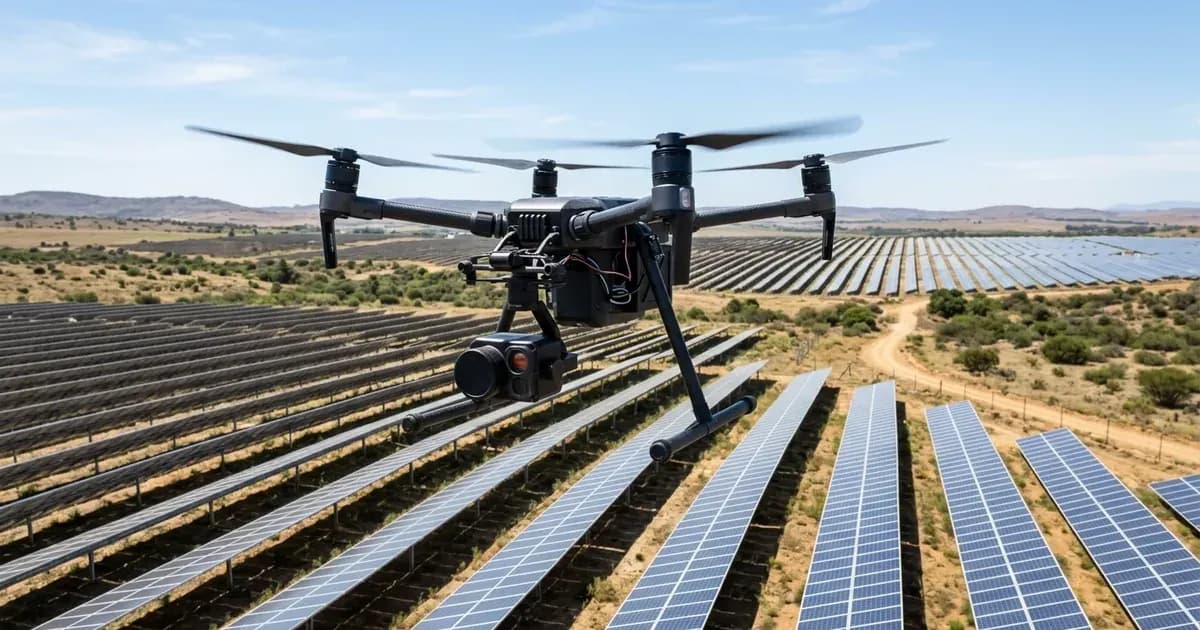
Solar drone thermography uses infrared cameras mounted on unmanned aerial vehicles (drones) to inspect photovoltaic (PV) systems. This technology is crucial in South Africa for maintaining the efficiency and safety of solar installations, from residential rooftops to large-scale commercial and agricultural arrays. It allows for the detection of module-level thermal anomalies, hotspots, and micro-cracks that are invisible to the naked eye.
The primary goal is to identify defects that can reduce energy production, shorten panel lifespan, or pose fire risks. In South Africa, these inspections help ensure that solar installations comply with national electrical safety standards, specifically SABS SANS 10142-1-2, which mandates a comprehensive Certificate of Compliance issued by a registered professional installation electrician. This compliance is essential for insurance validity and grid connection approval.
How Drone Thermography Works to Detect PV System Faults
Drone thermography works by capturing the infrared radiation emitted by solar panels. Healthy solar cells operate within a predictable temperature range. Defects, however, cause localized increases in temperature due to increased electrical resistance or reduced energy conversion. The infrared camera translates these temperature differences into a visual thermal map.
For example, thermal imaging identifies localized overheating caused by defective bypass diodes or severe localized cell shading. Bypass diodes are designed to shunt current around shaded or damaged cells, but if they fail, the affected cells can overheat significantly. Similarly, infrared string patterns reveal potential-induced degradation (PID) and cell mismatch across high-voltage solar arrays. PID occurs when a voltage difference between the solar cells and the grounded module frame causes ions to migrate, leading to power loss and often visible thermal patterns. Micro-cracks, often caused by manufacturing defects or handling damage, can also lead to localized hotspots as current flow is restricted.
The process involves flying a drone equipped with a high-resolution thermal camera over the solar array. Specialized software then analyses the thermal images to pinpoint anomalies, categorize them by severity, and generate detailed reports. This non-invasive method allows for rapid inspection of large areas, significantly reducing inspection time and costs compared to manual methods.
Common Thermal Anomalies and Their Implications
Drone thermography can pinpoint various defects that impact solar panel performance and safety. The table below outlines common thermal anomalies detected and their potential implications for your solar installation.
Anomaly Type | What it means | What to do |
|---|---|---|
Hotspots | Localized overheating in a specific cell or area of a module. | Indicates increased resistance, micro-cracks, or partial shading. Requires professional assessment to prevent further degradation or fire risk. |
Defective Bypass Diodes | Overheating of cells protected by a failed bypass diode. | Leads to significant power loss from the affected string and potential module damage. Professional repair or module replacement is necessary. |
Potential-Induced Degradation (PID) | Distinctive thermal patterns across strings or modules, often at the edges of arrays. | Signifies a reversible or irreversible power loss due to voltage differences. Requires professional diagnosis and potential mitigation strategies. |
Cell Mismatch | Variations in temperature across cells within a module or across modules in a string. | Can reduce overall string efficiency and accelerate degradation of hotter cells. Professional analysis is needed to identify root cause (e.g., manufacturing defect, shading). |
Micro-cracks | Small, often invisible cracks in solar cells that cause localized heating. | Can lead to power loss and module failure over time. Professional inspection can confirm and advise on replacement. |
Compliance and Safety Requirements for South African Solar Installations
In South Africa, installing and operating a solar PV system involves strict compliance with electrical safety and grid connection standards. These requirements are in place to ensure the safety of the installation, its users, and the stability of the national grid.
Electrical Safety and Certification:
- A registered professional installation electrician must issue a comprehensive Certificate of Compliance (CoC) for the electrical installation, as per SABS SANS 10142-1-2. This document confirms that the system meets all safety standards.
- For commercial installations, maintaining an audited equipment inventory and maintenance log is crucial for insurance validity. This demonstrates a commitment to ongoing system health and safety.
Grid Connection and Operation:
- Generators may only synchronize with the municipal network following receipt of written permission to connect. This ensures the local grid infrastructure can safely accommodate the new power source.
- The municipality installs a certified four-quadrant bidirectional meter to record imported and exported active energy. This meter is essential for accurate billing and managing energy flow.
- The embedded generator must automatically isolate within specified protection clearing times during grid loss, adhering to NRS 097-2-1 Inverter Grid Standard. This prevents the solar system from back-feeding a de-energized grid, which is a critical safety measure for utility workers.
Physical Installation Safety:
- Install heavy-duty lockable DC isolators on all photovoltaic string inputs adjacent to the inverter. These provide a safe means to disconnect the DC power from the solar array.
- Bond all metallic solar mounting structures and battery enclosures directly to the main earthing terminal. This protective bonding is vital for preventing electric shock hazards in case of an electrical fault.
While drone thermography helps identify potential issues, addressing these issues and ensuring overall system compliance always requires the expertise of qualified professionals. Homeowners can ensure their documentation is current and that visible safety measures, like isolator switches, are accessible and in good condition. However, any work involving electrical connections, system repairs, or changes to grid settings must be performed by an accredited installer or electrician.
What the Published Sources Do Not Tell You
While official documentation provides crucial information on standards and detection methods, it does not detail every aspect of solar drone thermography and PV system maintenance.
For instance, official documentation states that drone thermography inspections must be conducted during minimum solar irradiance levels of 700 W/m² under clear sky conditions. However, it does not specify the exact thermal thresholds or temperature differentials that definitively classify an anomaly as a "hotspot" requiring immediate intervention. These specific thresholds can vary based on module technology, ambient temperature, and industry best practices, often requiring expert interpretation.
The sources also do not provide a list of recommended drone models, thermal camera specifications, or the specific software used for analysis. Furthermore, while official documentation outlines compliance requirements, it does not detail the step-by-step process for obtaining written permission to connect from every municipality in South Africa, as these procedures can vary locally. Finally, official documentation focuses on detection and compliance, but does not offer detailed repair methodologies for the identified faults, which would typically be covered in separate technical manuals or by professional service providers.
Frequently asked questions
What are the primary technical requirements for solar drone thermography and hotspot inspection guide south africa?
Key requirements include compliance with local grid codes, correct equipment certification, and proper electrical isolation.
Who is authorized to install and inspect solar drone thermography and hotspot inspection guide south africa?
All high-voltage DC, AC grid tie-in, and switchboard modifications must be performed by a qualified, accredited electrical professional.
How is export power limited in solar drone thermography and hotspot inspection guide south africa?
Export limiting is achieved using certified bidirectional smart meters or power sensors providing dynamic feedback to the inverter system.
References
- Eskom Distribution: Small-Scale Embedded Generators (SSEG) registration and connection requirements — accessed 15 September 2026
Related guides
More from inverter errors & fixes.