Sol-Ark 30K-3P Commercial Three-Phase Hybrid Inverter Setup Guide
Updated 7 September 2026 · By SolarNevs Research Desk, Dealer surveys + verified sources · 1 source · Method ↗
Key Takeaways
- The Sol-Ark 30K-3P is a commercial three-phase hybrid inverter, manufactured in Allen, Texas, USA.
- It integrates with the MySolArk platform for comprehensive energy management and monitoring, hosted on secure US-based AWS servers.
- Detailed electrical specifications, installation procedures, and specific setup parameters for the 30K-3P are not publicly disclosed by the manufacturer on marketing pages.
- Commercial hybrid inverter installations require professional design, certified electricians, and adherence to local electrical codes due to the high voltages and currents involved.
Understanding the Sol-Ark 30K-3P Commercial Hybrid Inverter
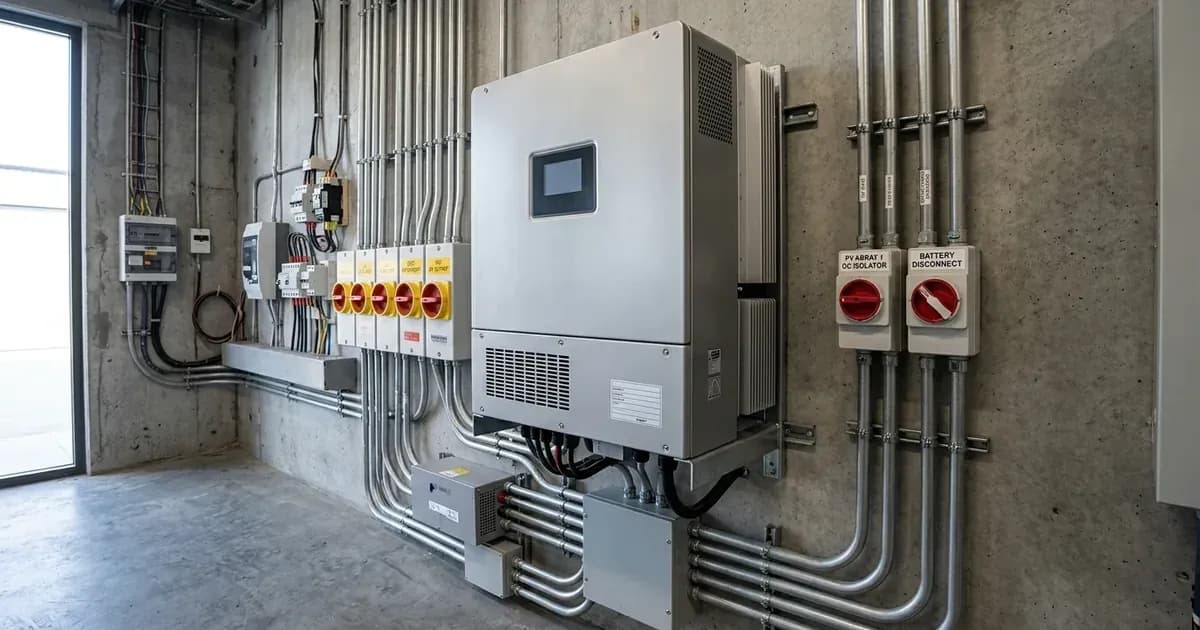
The Sol-Ark 30K-3P is a commercial three-phase hybrid inverter designed for robust energy management in commercial settings. Sol-Ark, an American-owned and controlled company, manufactures these inverters in Allen, Texas, utilising both US and imported materials. The company highlights that its inverters contribute towards system-level Prohibited Foreign Entity (PFE) and FEOC compliance.
This guide outlines the known features and capabilities of the Sol-Ark 30K-3P based on available product information, while also addressing the absence of detailed technical specifications and installation procedures in the public domain.
What is a Commercial Hybrid Inverter?
A commercial hybrid inverter is a sophisticated power electronics device that manages multiple energy sources within a commercial or industrial facility. It typically integrates solar photovoltaic (PV) input, battery energy storage, and the utility grid. Its primary function is to optimise energy flow, ensuring reliable power supply and potentially reducing electricity costs.
In a commercial context, these inverters can manage peak demand, store excess solar energy for use during periods of high tariffs (Time of Use management), and provide backup power during grid outages. They can also facilitate participation in Virtual Power Plants (VPPs) or Microgrids, allowing businesses to earn revenue by providing grid services or operating independently. The Sol-Ark 30K-3P, as a hybrid inverter, is designed to fulfil these roles, offering flexibility in energy management for commercial operations.
Sol-Ark 30K-3P and 60K-3P Model Overview
The Sol-Ark commercial inverter line includes models tailored for different voltage requirements. The 30K-3P-208V model is a commercial hybrid inverter, indicating its suitability for 208V three-phase systems. A higher-capacity model, the 60K-3P-480V, is also available for 480V applications. Both models are described as commercial hybrid inverters, designed to provide comprehensive energy solutions.
These units are manufactured in Allen, Texas, from US and imported materials. Sol-Ark states that its inverters are produced in the USA and contribute toward system-level FEOC compliance, positioning them as a domestic option for commercial solar and storage projects.
Model | Rating | Technical Reference |
|---|---|---|
30K-3P-208V | Commercial Hybrid Inverter | Sol-Ark Commercial 30K Product Page |
60K-3P-480V | Commercial Hybrid Inverter | Sol-Ark Commercial 30K Product Page |
Monitoring and Energy Management with MySolArk
The Sol-Ark 30K-3P integrates with the MySolArk monitoring platform, which is described as a purpose-built, professional-grade energy management system for both installers and homeowners. MySolArk is hosted on secure, U.S.-based AWS servers, ensuring data security and reliability.
For businesses and homeowners, MySolArk provides a centralised location to view and manage energy production. Key features include simple Time of Use (TOU) settings to maximise energy storage and lower energy bills, as well as the ability to integrate with Virtual Power Plants (VPPs) and Microgrids to earn revenue.
Installers benefit from MySolArk's simple and streamlined commissioning process and centralised ESS (Energy Storage System) management. The platform supports various regulatory requirements, such as SGIP reporting, LUMA compliance, and VPP onboarding, simplifying compliance for commercial installations.
Installation Safety and Professional Requirements
Installing a commercial three-phase hybrid inverter like the Sol-Ark 30K-3P involves high voltages and currents, posing significant electrical hazards. Due to the inherent risks and the complexity of commercial systems, all installation, commissioning, and maintenance work must be performed by qualified and certified electricians or authorised technicians.
Mandatory Safety Procedures:
- Isolation: Before any work begins, ensure complete electrical isolation of the inverter. This includes disconnecting all AC sources (grid), DC sources (PV array and battery bank), and waiting for the manufacturer-specified capacitor discharge time. Verify zero voltage with a suitable meter.
- Personal Protective Equipment (PPE): Always wear appropriate PPE, including insulated gloves, eye protection, arc-flash rated clothing, and safety footwear.
- Insulated Tools: Use only insulated tools when working on electrical connections to prevent accidental short circuits and electric shock.
- Earthing: Ensure the inverter and all associated metallic enclosures are properly earthed according to local electrical codes and manufacturer guidelines to prevent electric shock hazards.
- DC Breakers: Install appropriately rated DC circuit breakers or disconnects on all PV array strings and battery connections to allow for safe isolation and overcurrent protection.
- AC Switchgear: Ensure suitable AC switchgear (e.g., circuit breakers, contactors) is installed on the grid and load side of the inverter, rated for the system's maximum current and voltage.
- Authorised Service: Opening the inverter enclosure, replacing internal components (such as fans), or re-pinning connectors should only be performed by Sol-Ark authorised service personnel. Unauthorised access can void warranties and create dangerous conditions.
Given the lack of specific safety facts for the Sol-Ark 30K-3P in the provided documentation, adherence to general electrical safety practices and local regulations is paramount.
What the Published Sources Do Not Tell You
The publicly available marketing pages for the Sol-Ark 30K-3P commercial hybrid inverter provide a high-level overview but lack critical technical and installation-specific information essential for a comprehensive setup guide.
Specifically, the following details are not documented in the provided sources:
- Detailed Electrical Specifications: There is no information on maximum PV input voltage or current, MPPT voltage range, battery voltage range, maximum charge or discharge current, precise AC output current ranges (beyond the nominal 208V), efficiency ratings, or surge capacity.
- Installation Requirements: Physical dimensions, weight, specific mounting instructions, required clearances for ventilation, detailed wiring diagrams, or environmental operating conditions (such as specific temperature and humidity ranges or IP rating) are not provided.
- 480V/208V Configuration Details: While the 30K-3P-208V model is mentioned, there are no specifics on how to configure it for 208V systems, or if the 30K-3P can be configured for both 208V and 480V applications, or if the 60K-3P-480V is a distinct, non-configurable model.
- Multi-Unit Paralleling: Information regarding whether the 30K-3P supports multi-unit paralleling, the maximum number of units that can be paralleled, or the specific procedures and requirements for such a setup is absent.
- Battery Compatibility and Settings: There is no list of compatible battery brands or models, communication protocols (e.g., CAN, RS485), or specific battery charging and discharging settings.
- Error/Fault Codes and Troubleshooting: A list of error codes, their meanings, or troubleshooting steps is not available.
- Fault Modes and Causes: Information on common fault modes, their symptoms, or underlying causes is not provided.
- Communication and Monitoring Setup: While MySolArk is mentioned, details on how to physically connect the inverter to the monitoring system (e.g., Ethernet, Wi-Fi dongle, specific ports) or initial setup steps for the app or platform are not specified.
- Warranty Information: The product warranty period or terms are not detailed.
- Certifications: Specific electrical or safety certifications (e.g., UL, NEC compliance) are not mentioned.
- Manuals/Datasheets: The provided URLs are marketing pages and do not link directly to product manuals or detailed datasheets, which would typically contain most of this missing technical information.
Without these specifics, a detailed setup guide cannot be provided. Installers should consult official Sol-Ark technical documentation, typically available through authorised distributors or directly from the manufacturer upon purchase, for comprehensive installation and configuration instructions.
Still showing the fault? Book a technician
If the steps above did not clear it, tell us the inverter or battery and the exact code. We pass it to a technician who covers your city; visit charges are quoted before they come.
How this pays for the site: the technician or verifier pays SolarNevs a fixed introduction fee. Nobody pays to be recommended, and you are free to use our free guides instead.
Frequently asked questions
What is the Sol-Ark 30K-3P?
The Sol-Ark 30K-3P is a commercial three-phase hybrid inverter, specifically the 30K-3P-208V model, designed for energy management in commercial applications.
Where is the Sol-Ark 30K-3P manufactured?
Sol-Ark inverters, including the 30K-3P, are manufactured in Allen, Texas, using US and imported materials.
What monitoring platform does Sol-Ark use for its commercial inverters?
Sol-Ark uses the MySolArk platform for monitoring and energy management, which is hosted on secure, U.S.-based AWS servers.
Does the Sol-Ark 30K-3P comply with Foreign Entity of Concern (FEOC) requirements?
Sol-Ark states that its inverters are produced in the USA and contribute towards system-level FEOC compliance.
What are the key features of the MySolArk monitoring platform?
MySolArk allows users to view and manage energy production, utilise simple Time of Use (TOU) settings to maximise energy storage, and integrate with Virtual Power Plants (VPPs) and Microgrids to earn revenue.
References
- Sol-Ark Commercial 30K Product Page — accessed 29 August 2026
Related guides
More from inverter errors & fixes.