UK Solar Inverter Replacement: Cost, Lifespan & Warranties
Updated 18 September 2026 · By SolarNevs Research Desk, Dealer surveys + verified sources · 3 sources · Method ↗
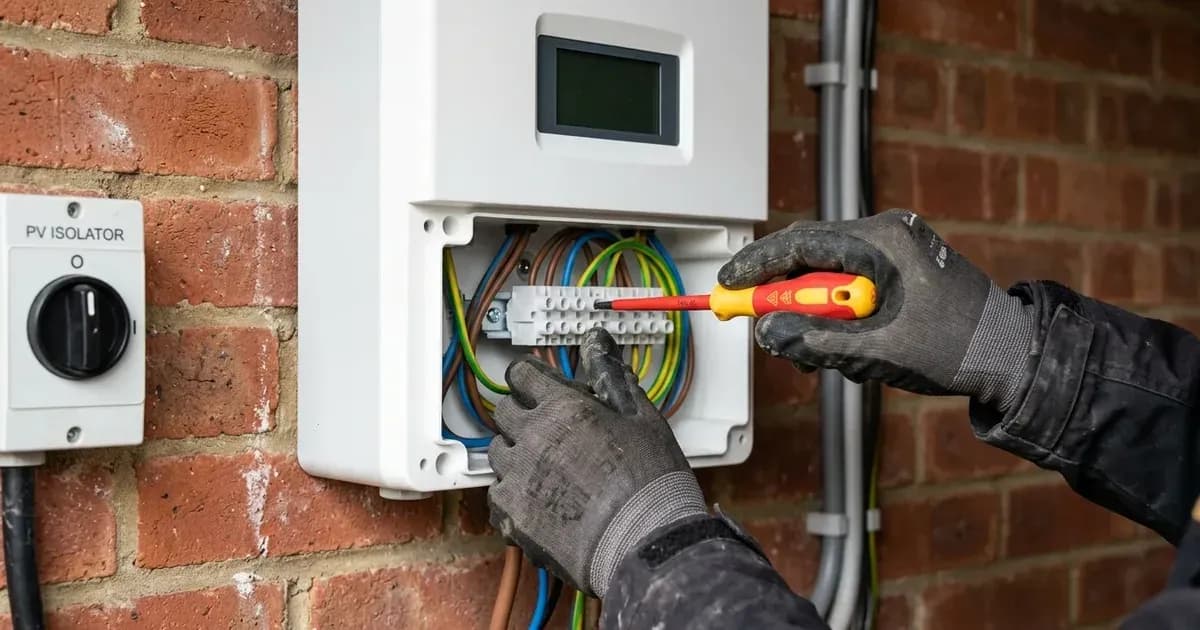
When investing in domestic solar photovoltaic systems, homeowners frequently focus on panel durability while overlooking the operational lifecycle of power conversion electronics. As central power components operating under continuous electrical loading, solar inverters experience thermal wear that necessitates planned mid-life replacement.
Understanding the divergence between panel longevity and inverter lifespan is essential for realistic long-term domestic energy budgeting across Great Britain.
Operational Lifespan Divergence and Warranty Coverage
Photovoltaic modules contain no moving parts and undergo minimal annual degradation. Official guidance from the Energy Saving Trust confirms that your solar panels should last 25 years or more under standard UK weather conditions.
Conversely, power electronic assemblies contain capacitors, inductors, cooling fans, and high-frequency switching semiconductors subject to continuous electrical cycling. Technical assessments indicate that if you have a solar inverter you need to replace this after around 12 years. Consequently, virtually every residential array will require at least one inverter replacement during its operating lifespan.
Factory warranty provisions reflect this component reality. Most inverters have warranties of five years as a minimum which you can often extend by up to 15 years. However, evaluating warranty extensions requires close financial scrutiny.
Warranty Extension Economics and Electrical Conversion
Homeowners considering warranty extensions must weigh upfront premiums against the falling cost and rising efficiency of replacement electronics. Analysis indicates that you might find that a 15-year warranty costs almost as much as a replacement inverter so consider it carefully. Opting for a replacement unit after a decade often yields a more efficient inverter with superior smart functionality rather than maintaining obsolete hardware.
Functionally, the inverter remains the critical bridge between generation and consumption. The direct current passes through a solar inverter to turn it into alternating current (AC) electricity. You need AC electricity to run your household appliances.
Modern units also provide critical asset management intelligence. Some inverters have online monitoring functions and can warn you by email if the system fails. This automated alert prevents undetected generation loss.
During installation or replacement handover, installers are required to provide comprehensive operational instructions. This should include details of the main inverter fault signals and key troubleshooting guidance. Ideally your installer should show this to you after installing the system to ensure immediate recognition of grid or component anomalies.
Replacement Hardware Architecture: Hybrid Integration
When replacing a failed first-generation string inverter, homeowners frequently upgrade to hybrid technology. Rather than purchasing a simple string replacement, hybrid units allow seamless battery retrofitting.
For example, the third generation of the GivEnergy Hybrid Inverter is a battery and solar inverter in one unit. This architecture eliminates the need for redundant conversion hardware when adding domestic storage.
Modern replacement inverters offer enhanced manufacturer backing and robust weatherproofing. Modern units feature a 12 year warranty as standard, matching the expected operating lifecycle. Enclosures provide an IP65 ingress protection rating, permitting installation in lofts, garages, or sheltered external elevations.
Output capacities have expanded to accommodate larger residential arrays and heat pumps. High-capacity domestic hybrid units deliver a 10000W nominal output power, supporting an oversized photovoltaic array with up to 15000W maximum DC input power.
Technical Specifications and Grid Compliance
Replacement inverters must align with modern high-power PV modules and Distribution Network Operator (DNO) safety standards.
For households requiring backup security during power outages, modern hybrid inverters deliver an emergency power supply (EPS) with rapid ups-level switchover time. This keeps essential household loads operating during local network interruptions.
Module compatibility is another vital consideration. Older inverters restricted string current to lower thresholds, whereas modern high-output panels require higher current capacity. Replacement units accommodate up to 16A DC input current for high power solar panel configurations, ensuring compatibility with the latest high-efficiency modules.
Finally, any replacement inverter connected to the UK electrical grid must hold valid engineering compliance certification. The installation must comply with Engineering Recommendation G99 or G98 standards, ensuring automated anti-islanding disconnection whenever grid mains supply fails. Certified installers handle DNO notification, ensuring that replacement hardware operates safely within UK network regulations.
Frequently asked questions
How long do solar inverters last in the UK before needing replacement?
According to the Energy Saving Trust, solar panels last 25 years or more, but central inverters typically require replacement after around 12 years of continuous operation.
Is it worth buying an extended inverter warranty?
Industry experts note that a 15-year extended warranty often costs almost as much as purchasing a modern replacement unit with updated efficiency and features.
Can I replace an old string inverter with a modern hybrid inverter?
Yes, replacing an older string unit with a hybrid inverter allows you to add battery storage directly without installing separate AC-coupling hardware.
References
- Energy Saving Trust Solar Panels Guide — accessed 29 August 2026
- GivEnergy Hybrid Inverter Datasheet — accessed 29 August 2026
- SolaX Power X1-Hybrid G4 Datasheet — accessed 29 August 2026
Related guides
More from sizing, net billing & installation.