Nv Energy Rule 15 Solar Interconnection And Permitting Guide
Updated 17 September 2026 · By SolarNevs Research Desk, Dealer surveys + verified sources · 1 source · Method ↗
Key Takeaways
- Solar installations connecting to the grid in Nevada must adhere to specific safety and operational requirements.
- Key standards include IEEE 1547-2018, UL 1741-SB, and relevant sections of the National Electrical Code (NEC).
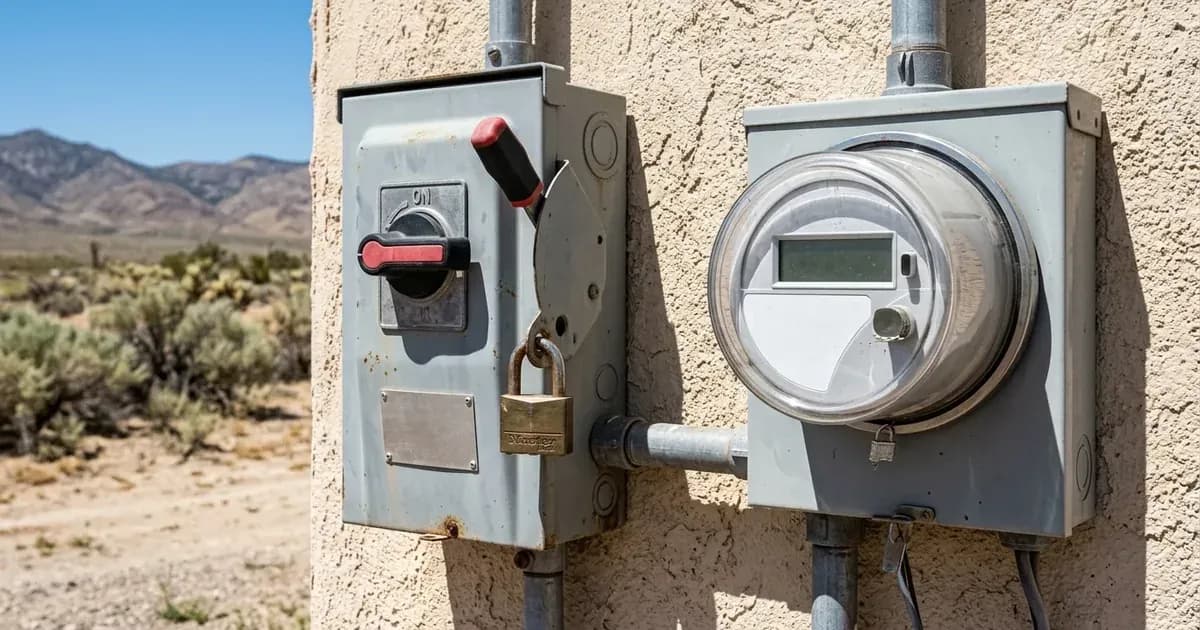
- A lockable, utility-accessible AC disconnect switch is mandatory, typically located near the revenue meter.
- Operating a solar generating facility before receiving written Permission to Operate (PTO) from NV Energy is strictly prohibited.
Understanding Solar Interconnection with NV Energy
Connecting a solar photovoltaic (PV) system to the electrical grid in Nevada requires adherence to specific rules and procedures. These are primarily governed by NV Energy's Rule 15 Electric Service Interconnection and overseen by the Public Utilities Commission of Nevada (PUCN). The process ensures that your solar system operates safely, reliably, and in harmony with the existing electrical infrastructure.
The interconnection process involves several technical and administrative steps, from initial application to final permission to operate. Compliance with national electrical codes and specific utility requirements is paramount to ensure the safety of homeowners, utility workers, and the stability of the grid.
The Mechanism of Grid Interconnection
When your solar system generates electricity, it can either power your home directly or, if there is excess, export it to the grid. For this export to happen safely and legally, your system must be interconnected with the utility. This involves ensuring your inverter can synchronise with the grid's voltage and frequency, and that it can quickly disconnect in case of a grid outage (anti-islanding).
The utility needs to be able to safely isolate your system for maintenance or in an emergency. This is why specific equipment, such as AC disconnect switches and rapid shutdown devices, are mandated. These components provide critical safety functions, allowing for the quick de-energisation of your solar system when necessary. The entire process is designed to protect both the homeowner's property and the integrity of the wider electrical network.
Key Interconnection Requirements for NV Energy
Connecting a generating facility to the NV Energy grid involves meeting several technical and safety requirements. These standards ensure the safe and reliable operation of your solar system and its interaction with the utility's infrastructure.
Requirement | Verbatim Interconnection Protocol / Standard | Source |
|---|---|---|
Inverter Compliance | "Grid-tied solar inverters must comply with UL 1741-SB and IEEE 1547-2018 anti-islanding parameters." | IRS Instructions for Form 5695 |
AC Disconnect | "A lockable utility-accessible AC disconnect switch is required within 10 feet of the revenue meter." | IRS Instructions for Form 5695 |
Rapid Shutdown | "Rooftop PV systems must incorporate rapid shutdown devices complying with NEC 690.12 specifications." | IRS Instructions for Form 5695 |
Grounding & Bonding | "Equipment grounding conductors must be bonded directly to the main building service grounding electrode." | IRS Instructions for Form 5695 |
Overcurrent Protection | "Dedicated overcurrent protection devices must be sized according to NEC 705.12 120% busbar rules." | IRS Instructions for Form 5695 |
Backfed Breaker Securing | "Connection of generating sources to panelboards must follow the 120% ampacity calculation in NEC 705.12." | IRS Instructions for Form 5695 |
Warning Signage | "Photovoltaic systems operating at 80 volts DC or greater require certified Type 1 AFCI protection." | IRS Instructions for Form 5695 |
Permission to Operate | "Operating the generating facility prior to receiving written Permission to Operate is strictly prohibited." | IRS Instructions for Form 5695 |
What you can check yourself, and what you cannot
As a homeowner, you can familiarise yourself with the general requirements for solar interconnection and permitting. This includes understanding the need for specific safety equipment like AC disconnects and rapid shutdown systems, and the importance of obtaining Permission to Operate (PTO) before energising your system. You can also review your site plans to ensure they indicate the exact distances between the meter panel, AC disconnect switch, and battery energy storage enclosures, if applicable.
However, the detailed design, installation, and electrical work for a solar PV system must be carried out by accredited and licensed professionals. This includes sizing overcurrent protection devices, ensuring correct grounding and bonding continuity, and verifying compliance with all relevant electrical codes and utility-specific rules. Attempting to modify or connect your system to the grid without professional expertise and proper authorisation can be dangerous and may lead to non-compliance, system damage, or safety hazards.
What the published sources do not tell you
While the provided sources outline critical safety and compliance standards, they do not detail the specific application process, timelines, or unique engineering benchmarks for NV Energy Rule 15 interconnection. official documentation primarily references federal tax credit instructions and general electrical code requirements, rather than specific NV Energy interconnection forms or technical specifications.
Therefore, this information does not provide a step-by-step guide to the NV Energy interconnection application process, nor does it specify any capacity ceilings for simplified interconnection or fast-track review timelines that might be unique to NV Energy. For precise procedural details, application forms, and the most current technical requirements specific to NV Energy Rule 15, you would need to consult NV Energy's official interconnection guides and the Public Utilities Commission of Nevada (PUCN) regulations directly.
Frequently asked questions
What are the primary technical requirements for nv energy rule 15 solar interconnection and permitting guide?
Key requirements include compliance with local grid codes, correct equipment certification, and proper electrical isolation.
Who is authorized to install and inspect nv energy rule 15 solar interconnection and permitting guide?
All high-voltage DC, AC grid tie-in, and switchboard modifications must be performed by a qualified, accredited electrical professional.
How is export power limited in nv energy rule 15 solar interconnection and permitting guide?
Export limiting is achieved using certified bidirectional smart meters or power sensors providing dynamic feedback to the inverter system.
References
Related guides
More from schemes, subsidies & financing.