South Africa Solar Diesel Hybrid Fuel Saver Controllers Guide
Updated 16 September 2026 · By SolarNevs Research Desk, Dealer surveys + verified sources · Method ↗
Key Takeaways
- Fuel Saver Controllers (FSCs) dynamically adjust solar inverter output based on generator load.
- Diesel generators require a minimum continuous loading of 30% to prevent engine damage.
- Reverse power protection is essential to prevent solar power from back-feeding into generator alternators.
- A Certificate of Compliance (SANS 10142-1-2) from a registered electrician is mandatory for connection.
What are Fuel Saver Controllers (FSCs) in South African solar-diesel hybrid systems?
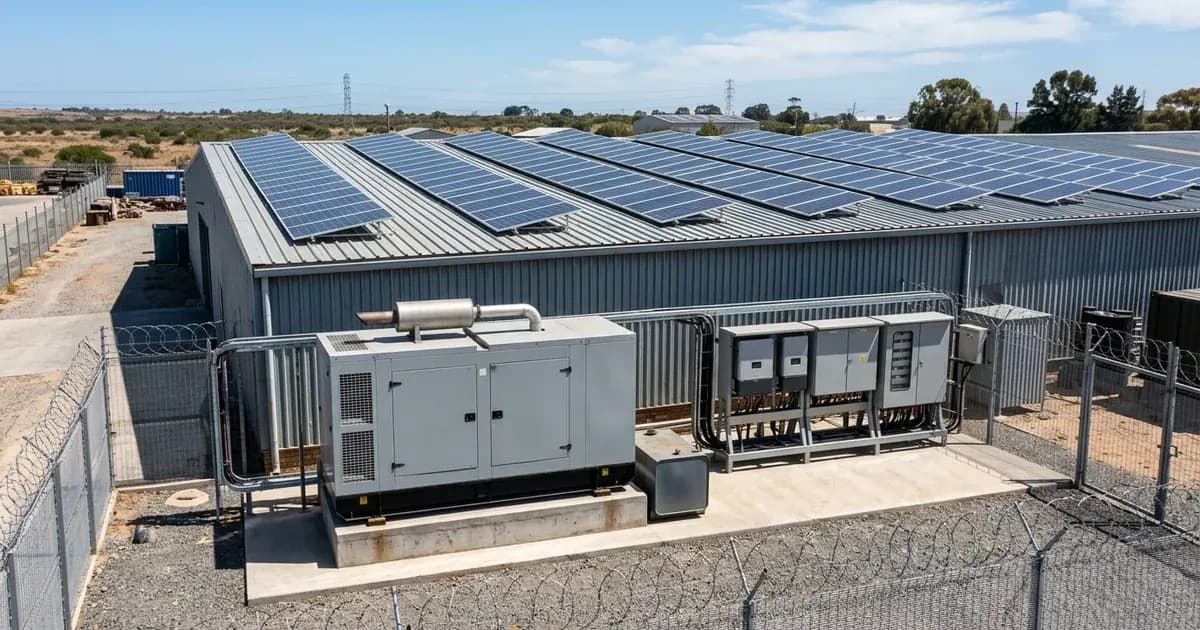
Fuel Saver Controllers (FSCs) are critical components in South African solar-diesel hybrid microgrids, dynamically modulating solar inverter power output based on real-time generator load demands. These systems are employed across residential, commercial, and agricultural renewable energy setups connected to municipal distribution networks. Their primary role is to optimize fuel consumption by integrating solar photovoltaic (PV) generation with existing diesel generators.
What is actually going on: The mechanism of hybrid microgrids
Commercial solar-diesel hybrid microgrids combine solar PV generation with diesel generators to provide reliable and cost-effective power. The diesel generator typically serves as the primary power source or backup, while solar PV offsets a significant portion of the daytime load.
The challenge in such systems is managing the variable output of solar PV alongside the operational requirements of diesel generators. Diesel generators are not designed to run efficiently at very low loads. Running them below a certain threshold can lead to a condition known as "wet stacking" or carbon fouling, where unburnt fuel and carbon deposits accumulate in the engine, reducing efficiency and lifespan.
This is where Fuel Saver Controllers, such as those from DEIF, ComAp, and DSE, come into play. These microgrid controllers automate voltage and frequency synchronization between solar inverters and diesel gensets. They continuously monitor the load on the diesel generator and the available solar power. If the solar output is too high and threatens to push the generator's load below its minimum operating threshold, the FSC will reduce the solar inverter's power output. This ensures the diesel generator maintains a minimum continuous loading of 30%, preventing wet stacking and carbon fouling.
The system also incorporates reverse power relays to prevent solar power from back-feeding into generator alternators. This protection mechanism is vital for safeguarding the generator from damage and maintaining grid stability.
Key engineering standards and requirements for connection
Connecting a solar-diesel hybrid system to the municipal network in South Africa involves adherence to specific engineering standards and regulatory requirements. These are crucial for safe operation and grid stability.
Requirement | Verbatim Engineering Standard / Rule | What it means for your system |
|---|---|---|
FSC Sizing | "Fuel saver controllers dynamically modulate solar inverter power output based on real-time generator load demands." | The FSC must be correctly sized to manage the interaction between your solar inverters and diesel generators effectively. |
Minimum Generator Loading Limit (30%) | "Diesel generators must maintain a minimum continuous loading of 30% to prevent engine wet stacking and carbon fouling." | Your system design must ensure the diesel generator never operates below 30% load, with the FSC managing solar output to achieve this. |
Reverse Power Protection Relay | "Incorporate reverse power relays to prevent solar power from back-feeding into generator alternators." | A dedicated relay is required to stop solar energy from flowing back into the generator, protecting its alternator. |
SANS 10142-1-2 Certificate of Compliance | "A registered professional installation electrician must issue a comprehensive Certificate of Compliance." | After installation, a certified electrician must inspect and certify the system's compliance with national electrical safety standards. |
Automatic Synchronizing and Load Sharing | "Microgrid controllers automate voltage and frequency synchronization between solar inverters and diesel gensets." | The FSC (microgrid controller) handles the complex task of matching the electrical characteristics of solar and diesel sources. |
Safe DC Array Isolation Switch | "Install heavy-duty lockable DC isolators on all photovoltaic string inputs adjacent to the inverter." | For safety during maintenance or emergencies, each solar string must have an accessible, lockable DC isolation switch near the inverter. |
Main Earthing Terminal Protective Bonding | "Bond all metallic solar mounting structures and battery enclosures directly to the main earthing terminal." | All metallic components of the solar and battery systems must be securely connected to the main earthing system for electrical safety. |
NRS 097-2-1 Grid Standard Compliance | "The embedded generator must automatically isolate within specified protection clearing times during grid loss." | Your system must comply with NRS 097-2-1, meaning it must automatically disconnect from the municipal grid in the event of a power outage. |
Four-Quadrant Smart Metering | "The municipality installs a certified four-quadrant bidirectional meter to record imported and exported active energy." | To accurately measure energy flow, the municipality will install a special meter that tracks both energy drawn from and supplied to the grid. |
Written Permission to Connect | "Generators may only synchronize with the municipal network following receipt of written permission to connect." | You cannot connect your system to the municipal grid until you have received formal written approval from the relevant authority. |
These requirements are governed by standards such as NRS 097-2-1 for Small Scale Embedded Generation (SSEG) Interconnection and SABS SANS 10142-1-2, which covers electrical installations. Eskom Distribution and the South African Bureau of Standards (SABS) are the key authorities in this domain.
What you can check yourself, and what you cannot
As a system owner, you can perform certain checks to ensure your solar-diesel hybrid system is operating correctly, but many tasks require the expertise of an accredited professional.
What you can check yourself:
- Visual inspection: Regularly check for any visible damage to solar panels, wiring, or the generator. Ensure all isolation switches are in the correct position.
- Fuel levels: Monitor diesel fuel levels in the generator to ensure continuous operation.
- System monitoring: Use the system's monitoring interface (if available) to observe solar generation, generator load, and overall energy flow. Look for consistent operation within expected parameters.
- Cleanliness: Keep solar panels clean to maximize energy production. Ensure the generator area is free from debris.
What you cannot check or adjust yourself:
- FSC settings: Do not attempt to change the settings of the Fuel Saver Controller (DEIF, ComAp, DSE, etc.). These are configured by accredited technicians to ensure compliance with minimum generator loading limits and grid synchronization rules. Incorrect settings can lead to wet stacking, generator damage, or grid instability.
- Electrical connections: Never open electrical enclosures or attempt to modify wiring. This is hazardous and must only be done by a registered professional installation electrician.
- Generator maintenance: Complex generator maintenance, including adjustments to engine parameters or fuel systems, requires specialized training.
- Grid connection parameters: Do not attempt to alter any settings related to grid synchronization or protection. The embedded generator must automatically isolate within specified protection clearing times during grid loss, and these settings are critical for safety and compliance with NRS 097-2-1.
- Opening the unit: Replacing a fan, opening the enclosure, cleaning heatsink fins, or re-pinning a connector requires isolating PV, battery, and AC breakers, waiting the manual's capacitor-discharge time, and should only be performed by authorised service personnel.
Always refer to the system's operation and maintenance manuals, and contact your accredited installer or service provider for any issues beyond routine visual checks and monitoring.
Fuel savings and economic benefits
The implementation of Fuel Saver Controllers in solar-diesel hybrid microgrids offers significant economic benefits, primarily through reduced diesel fuel consumption. In mining and commercial agriculture, hybrid controllers reduce diesel fuel consumption by 30% to 60% during daylight operating hours. This translates directly into lower operational costs and a reduced carbon footprint.
The ability of FSCs to dynamically manage solar output ensures that the diesel generator operates efficiently, avoiding the inefficiencies and maintenance issues associated with low-load operation. This not only saves fuel but also extends the lifespan of the diesel generator by preventing conditions like wet stacking and carbon fouling. The investment in a well-designed solar-diesel hybrid system with an FSC can lead to substantial long-term savings and increased energy independence for commercial and agricultural operations in South Africa.
What the published sources do not tell you
While the engineering standards and guidelines provide a robust framework, they do not detail specific commercial tariff structures or the exact process for obtaining written permission to connect from every municipality. The municipality installs a certified four-quadrant bidirectional meter to record imported and exported active energy, but the rates for these transactions vary by municipal policy and are not standardized across South Africa. Furthermore, the precise protection clearing times for automatic isolation during grid loss (as per NRS 097-2-1) are technical specifications that are typically part of detailed connection agreements and not publicly listed in a general guide. The specific models or configurations of Fuel Saver Controllers from manufacturers like DEIF, ComAp, or DSE are not detailed in general Eskom guidelines, as these are product-specific engineering details.
Frequently asked questions
What is a Fuel Saver Controller (FSC) in South African solar-diesel hybrid systems?
Fuel Saver Controllers dynamically modulate solar inverter power output based on real-time generator load demands. They are crucial for integrating solar PV with diesel generators in commercial and agricultural microgrids in South Africa.
Why is a minimum generator loading limit important for diesel generators in hybrid systems?
Diesel generators must maintain a minimum continuous loading of 30% to prevent engine wet stacking and carbon fouling. FSCs help manage solar output to ensure this minimum load is consistently met.
What is reverse power protection in a solar-diesel hybrid system?
Reverse power protection incorporates relays to prevent solar power from back-feeding into generator alternators. This protects the generator from damage and ensures safe operation within the microgrid.
What South African standards apply to solar-diesel hybrid systems?
Governing standards include NRS 097-2-1 for SSEG Interconnection and SABS SANS 10142-1-2 for electrical installations. Compliance with these standards is mandatory for connection to the municipal network.
What are the typical fuel savings achieved with solar-diesel hybrid controllers?
In mining and commercial agriculture, hybrid controllers can reduce diesel fuel consumption by 30% to 60% during daylight operating hours, significantly lowering operational costs.
Related guides
More from inverter errors & fixes.