GivEnergy All-in-One and Giv-Gateway Whole-Home Backup Setup Guide
Updated 6 September 2026 · By SolarNevs Research Desk, Dealer surveys + verified sources · 2 sources · Method ↗
Key Takeaways
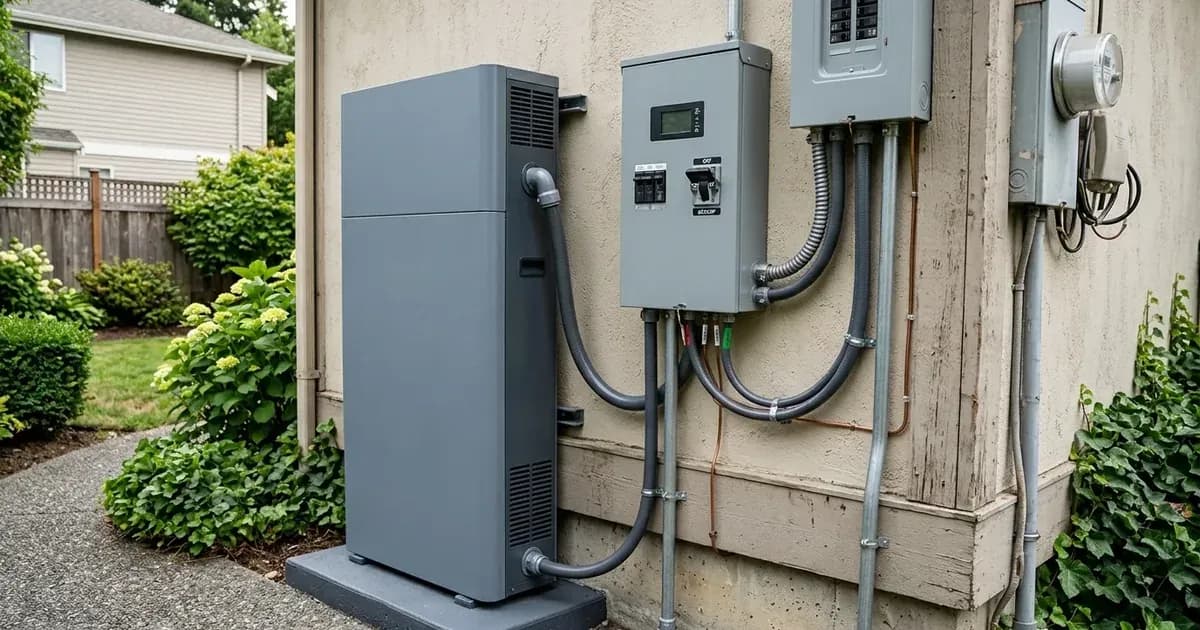
- The GivEnergy All-in-One integrates an AC inverter with 13.5 kilowatt-hours of usable LiFePO4 battery storage.
- The Giv-Gateway provides whole-home backup by isolating the household from the grid within 20 milliseconds during an outage.
- UK installations of the Giv-Gateway require a dedicated earth electrode to maintain neutral-earth reference in islanded mode.
- Installation involves working with live AC circuits and requires complete isolation and lock-out by an accredited installer.
What is the GivEnergy All-in-One and Giv-Gateway system?
The GivEnergy All-in-One and Giv-Gateway system is designed to provide comprehensive energy management and whole-home backup for residential and commercial properties. The core of this system is the GivEnergy All-in-One unit. This unit integrates an AC inverter with high-capacity usable LiFePO4 battery storage. Specifically, the All-in-One offers 13.5 kilowatt-hours (kWh) of usable battery capacity, combining the functions of energy conversion and storage into a single, compact device.
System Component | Key Technical Specification | Core Function in Whole-Home Backup |
|---|---|---|
GivEnergy All-in-One | Integrated AC inverter + 13.5kWh usable LiFePO4 storage | Primary power conversion and energy storage |
Giv-Gateway | 20ms Automatic Transfer Switch & built-in metering | Grid isolation, islanded microgrid creation, and power tracking |
Communication Link | High-speed LoRa / RS485 via shielded twisted-pair | Real-time coordination and dynamic ESS charge/discharge control |
UK Earth Electrode | Dedicated ground rod / islanded earthing reference | Maintains neutral-earth reference during grid outage operation |
Alongside the All-in-One, the Giv-Gateway acts as the critical interface for whole-home backup. The Giv-Gateway incorporates an automatic transfer switch. This switch is responsible for isolating the entire household from the main electrical grid during a power cut. This isolation happens very quickly, within 20 milliseconds, ensuring a near-seamless transition to backup power. The system is compatible with standard single-phase and three-phase electrical distribution systems globally, and it is engineered for both residential and commercial off-grid and grid-parallel energy storage systems worldwide.
How whole-home backup works with the Giv-Gateway
The Giv-Gateway's primary function is to enable automatic whole-home backup. When the main grid supply fails, the Giv-Gateway's automatic transfer switch detects the outage and isolates the entire household from the grid. This isolation occurs within 20 milliseconds. This rapid switching capability means that essential loads within the home can continue to operate using stored energy from the GivEnergy All-in-One battery.
The Giv-Gateway also features built-in current sensing and metering. This allows it to track total home power import and export. This data is crucial for managing energy flow efficiently. The system's Energy Storage System (ESS) assistant dynamically manages battery charge and discharge. This management is based on factors such as grid tariffs and the current electrical load of the property. This dynamic optimisation helps to maximise energy savings and ensure power availability when needed.
Furthermore, the system complies with international microgeneration safety and grid protection standards, including certified anti-islanding protection. This ensures that the system safely disconnects from the grid during an outage, preventing the inverter from feeding power into a de-energised grid, which could pose a hazard to utility workers. Communication between the All-in-One and Giv-Gateway is established using high-speed LoRa or RS485 protocols, requiring shielded twisted-pair cables for reliable data exchange.
Setting up zero-export limitation
Many grid connection agreements or local regulations require that a solar or battery storage system does not export excess power back to the grid, or that it limits export to specific statutory levels. The GivEnergy All-in-One and Giv-Gateway system supports this requirement through its zero-export grid limitation mode.
To activate this feature, you must enable export limitation in the cloud management portal. This portal provides a user interface where you can configure various system parameters, including export settings. Once enabled, the system will actively restrict the amount of power it sends back to the grid, ensuring compliance with local regulations. The built-in current sensing and metering capabilities of the Giv-Gateway are essential for this function, as they provide the real-time data needed to monitor and control export levels accurately. This ensures that the system operates within the specified statutory limits, avoiding potential penalties or issues with your electricity supplier.
Critical earthing requirements for UK installations
Proper earthing and protective bonding are fundamental to the safe operation of any electrical installation, especially those involving energy storage systems. For Giv-Gateway installations in the UK, there is a specific and critical requirement: a dedicated earth electrode is necessary. This dedicated earth electrode ensures a stable neutral-earth reference when the system is operating in islanded backup mode. Without this, the safety of the electrical supply within the home during a power cut could be compromised.
Beyond the dedicated earth electrode, it is also essential to bond the inverter chassis ground and the battery metal enclosure to the main installation earthing terminal. This protective bonding ensures that any fault currents are safely directed to earth, preventing dangerous voltage build-ups on exposed metal parts.
Safety Warning: All earthing and bonding work must be carried out by a qualified and accredited electrician. Incorrect earthing can lead to severe safety hazards, including electric shock and fire. This is not a task for a homeowner to undertake.
What you can check yourself, and what you cannot
Understanding the boundaries of what you can safely check and what requires a professional is crucial for both your safety and the integrity of your GivEnergy system.
What you cannot check or do yourself:
- Installation of the GivEnergy All-in-One or Giv-Gateway: This entire process involves working with high-voltage AC and DC circuits, complex wiring, and adherence to specific electrical standards. It must be performed by an accredited installer.
- Wiring and communication cable connections: Connecting the All-in-One and Giv-Gateway with shielded twisted-pair cables, or any other electrical wiring, requires professional expertise. Incorrect wiring can damage the equipment, create fire hazards, or lead to electric shock.
- Installation of CT clamps: Official scheme guidelines explicitly states: "Ensure complete AC circuit isolation and lock-out before installing CT clamps on live busbars." This is a hazardous operation involving live electrical components and must only be performed by a qualified electrician following strict safety protocols, including lockout-tagout procedures.
- Earthing and protective bonding: As detailed above, the installation of a dedicated earth electrode and the bonding of equipment enclosures are critical safety steps that require professional knowledge and tools.
- Changing internal inverter settings for grid protection: Grid protection settings are typically configured by the accredited installer during commissioning to comply with local network operator requirements. Changing these settings yourself can breach your connection agreement and compromise grid stability.
What you can check yourself (monitoring and observation):
- System performance via the cloud management portal: You can monitor your system's energy generation, consumption, battery charge level, and overall operational status through the GivEnergy cloud portal. This allows you to track energy savings and identify any obvious performance anomalies.
- Export limitation status: You can verify that the zero-export limitation feature is enabled and appears to be functioning as expected by observing your energy export data in the portal.
- Communication status: While you cannot troubleshoot wiring, you can observe if the All-in-One and Giv-Gateway are communicating effectively through the portal, as indicated by data flow.
- Visual inspection for obvious damage: You can perform a visual check of the external units for any signs of physical damage or unusual noises, reporting any concerns to your installer.
Any issues beyond simple monitoring or observation should be reported to your accredited installer or GivEnergy technical support.
What the published sources do not tell you
While official scheme guidelines provides essential details about the GivEnergy All-in-One and Giv-Gateway system, there are several aspects that are not covered in publicly available summary documents. These typically reside in detailed installer manuals, proprietary technical specifications, or vary by local network operator.
For instance, official scheme guidelines mentions "Connect communication wiring between All-in-One and Giv-Gateway using shielded twisted-pair cables." However, it does not specify the exact pinout, maximum cable lengths, or specific requirements for the LoRa/RS485 communication protocols beyond the cable type. These details are crucial for installers but are not typically disclosed in general product overviews.
Similarly, while the system allows you to "Enable export limitation in the cloud management portal to restrict grid export power to statutory limits," the precise statutory limits themselves are not provided. These limits can vary based on your local Distribution Network Operator (grid operator) and specific grid connection agreement in Great Britain. Installers must consult local regulations and grid operator requirements to set these correctly.
Detailed wiring diagrams, specific installation sequences, and comprehensive troubleshooting guides for internal components are also not part of general product official documentations. These are typically found in restricted access installer manuals, which are provided to accredited professionals who have undergone specific training for the equipment. This ensures that complex installations and maintenance are performed by individuals with the necessary expertise and safety knowledge.
Add a battery at a surveyed price
Installers quote supply and fitting of the battery on this page for your existing or new system.
How this pays for the site: installers pay SolarNevs a fixed introduction fee when we pass them a genuine enquiry. They cannot pay to appear higher, and our surveyed prices are published before any introduction. You can also take our dated price tables straight to any installer.
Frequently asked questions
What is the GivEnergy All-in-One?
The GivEnergy All-in-One integrates an AC inverter with 13.5 kilowatt-hours of usable LiFePO4 battery storage, providing a complete energy storage solution.
How does the Giv-Gateway provide whole-home backup?
The Giv-Gateway incorporates an automatic transfer switch that isolates the entire household from the grid within 20 milliseconds during a power cut, enabling seamless backup.
What is zero-export limitation?
Zero-export limitation restricts the power your system sends back to the grid to statutory limits. This feature can be enabled through the cloud management portal.
What are the specific earthing requirements for Giv-Gateway in the UK?
In the UK, Giv-Gateway installations require a dedicated earth electrode to ensure neutral-earth reference when the system is operating in islanded backup mode.
How quickly does the Giv-Gateway switch to backup power?
The Giv-Gateway's automatic transfer switch isolates the entire household and switches to backup power within 20 milliseconds of a grid outage.
References
- GivEnergy All in One + Giv-Gateway Installation Guide — accessed 27 August 2026
- GivEnergy All in One + Giv-Gateway Installation Manual — accessed 27 August 2026
Related guides
More from what to buy — and how not to get cheated.