SMA Data Manager M ennexOS Commercial Power Plant Controller Setup Guide
Updated 6 September 2026 · By SolarNevs Research Desk, Dealer surveys + verified sources · 2 sources · Method ↗
Key Takeaways
- Commercial power plant controllers manage grid interaction for large-scale solar.
- Their primary role is to ensure grid stability and prevent dangerous back-feed.
- Unmanaged solar generation can lead to grid instability and widespread outages.
- All grid-tied systems typically require utility registration for safety and proper grid operation.
Understanding the Purpose of a Commercial Power Plant Controller
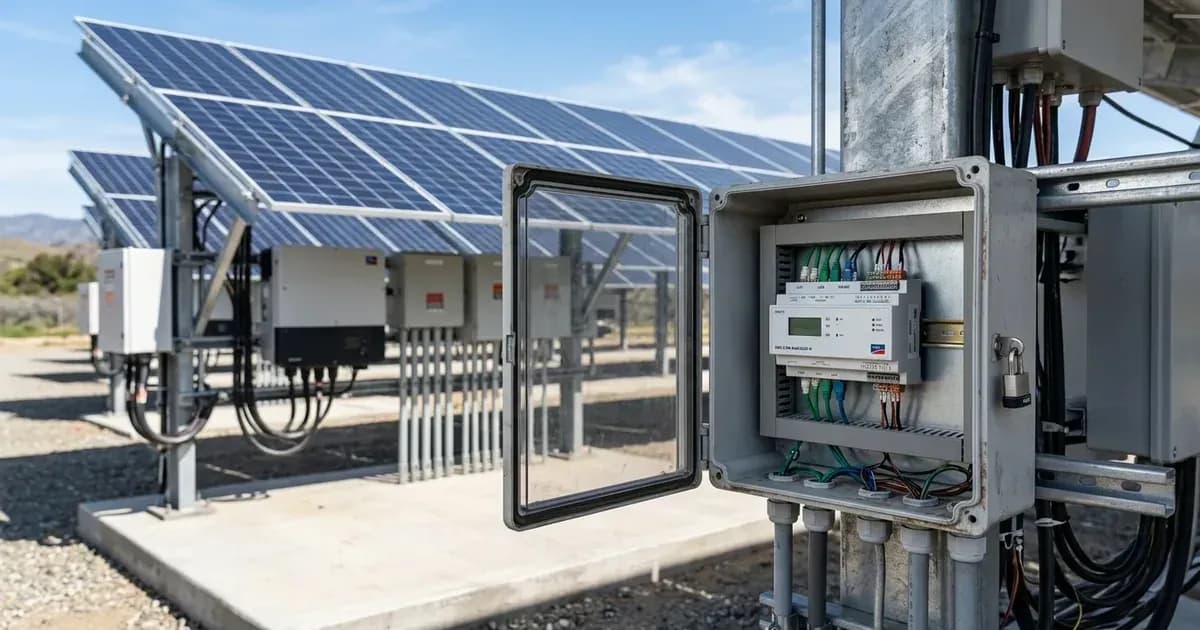
A commercial power plant controller, such as the SMA Data Manager M (EDMM-10) with ennexOS integration, serves as the central management unit for large-scale grid-tied solar PV systems. Its primary role is to orchestrate the PV system's interaction with the electricity grid, ensuring stable and compliant operation. This involves managing active and reactive power, controlling export limits, and responding to grid conditions.
The information provided does not contain specific details regarding the SMA Data Manager M (EDMM-10) commercial energy management system, ennexOS Sunny Portal integration, or its specific zero export functionalities. Therefore, this guide focuses on the general principles and regulatory considerations that such a system addresses.
The Need for Grid Stability Management
The integration of significant solar generation capacity into the electricity grid introduces complexities, particularly concerning grid stability. When rooftop solar exports are very high and electricity demand is very low, the grid can become unstable. This imbalance between electricity supply and demand, if not managed, could lead to widespread power outages.
Commercial power plant controllers are designed to mitigate these risks by dynamically adjusting solar output. This can involve temporary curtailment of rooftop solar generation, where the controller reduces the PV system's output to maintain grid stability during system security emergencies.
Safety and Compliance for Grid-Tied Systems
Connecting any generator to the grid affects power flows, making proper management and registration crucial for safety and grid integrity. Unregistered Small Scale Embedded Generation (SSEG) systems pose several risks:
- Back-feeding during faults: They can back-feed electricity into lines during faults, endangering electrical workers doing maintenance.
- Equipment damage: They can damage household appliances and utility equipment.
- Power quality issues: They may disturb voltage and reduce power quality for the neighbourhood.
A registered and compliant system ensures the inverter shuts off automatically during outages, preventing dangerous back-feed onto the grid. Utilities often require all grid-tied SSEG systems to be registered by law, even if they do not export electricity, to ensure proper operation of the grid and for safety reasons.
General Requirements for Embedded Generation Systems
While specific requirements vary by utility and region, general principles for embedded generation systems include:
Feature / Step | General Requirement | Technical Reference |
|---|---|---|
System Registration | All grid-tied embedded generation systems typically require registration with the local electricity distributor. | For safety and proper grid operation |
Inverter Compliance | Inverters must meet relevant technical and compliance standards for grid connection. | To ensure safe and stable grid interaction |
Export Management | Systems may be required to limit or prevent export, or to have bi-directional metering for export. | To manage grid capacity and stability |
Automatic Disconnection | Inverters must automatically disconnect from the grid during outages to prevent back-feeding. | To protect utility workers and equipment |
Installation Safety and Switchgear Requirements
Installation of commercial grid-tied solar systems, including power plant controllers, must adhere to stringent safety protocols. This involves working with high-voltage DC from the PV array and high-current AC from the grid.
Mandatory Safety Procedures:
- Isolation: Before any work on the system, isolate all power sources. This includes opening the AC grid breaker, the DC PV array disconnect, and any battery disconnects.
- Lock-Out/Tag-Out: Implement a lock-out/tag-out procedure to prevent accidental re-energisation.
- Capacitor Discharge: Wait the manufacturer's specified capacitor discharge time after isolation before touching internal components, as high-voltage DC buses can remain energised.
- Personal Protective Equipment (PPE): Always wear appropriate PPE, including insulated gloves, safety glasses, and arc-flash protection, especially when working near live conductors or opening enclosures.
- Earthing: Ensure all metallic enclosures and equipment are properly earthed according to local electrical codes to prevent electric shock hazards.
- Authorised Personnel: Opening the unit or performing internal maintenance is typically authorised-service work and should only be undertaken by qualified and certified technicians.
What the published sources do not tell you
The provided information does not contain any product-specific details for the SMA Data Manager M (EDMM-10) commercial energy management system. This includes:
- Specific model numbers, ratings, or dimensions.
- Error or fault codes specific to the SMA Data Manager M.
- Specific settings, values, or protocols for battery/inverter pairing.
- Details on app names, port names, or specific setup steps for WiFi/app/logger features.
- Information on ennexOS Sunny Portal integration or specific zero export functionalities of this particular SMA product.
Therefore, any detailed setup or troubleshooting of the SMA Data Manager M would require consulting the manufacturer's specific documentation, which was not available in the provided sources.
Add a battery at a surveyed price
Installers quote supply and fitting of the battery on this page for your existing or new system.
How this pays for the site: installers pay SolarNevs a fixed introduction fee when we pass them a genuine enquiry. They cannot pay to appear higher, and our surveyed prices are published before any introduction. You can also take our dated price tables straight to any installer.
Frequently asked questions
What is the primary function of a commercial power plant controller?
A commercial power plant controller manages the interaction between a solar PV system and the electricity grid. Its primary function is to maintain grid stability by controlling active and reactive power, preventing issues such as over-generation or dangerous back-feed during grid outages.
Why is grid stability a concern with large-scale solar installations?
When solar exports are high and electricity demand is low, the grid can become unstable. An imbalance between electricity supply and demand dueating unmanaged solar generation can lead to widespread power outages if not properly managed by a controller.
What are the safety implications of unmanaged grid-tied solar systems?
Unregistered or unmanaged grid-tied systems can back-feed electricity into lines during faults, endangering electrical workers doing maintenance. They can also disturb voltage, reduce power quality for the local network, and potentially damage household appliances and utility equipment.
Do all grid-tied solar systems require registration with the utility?
Any generator connected to the grid affects power flows, even if it does not export electricity. For safety reasons and to ensure proper operation of the grid, utilities typically require registration of all grid-tied embedded generation systems.
What is solar curtailment and why is it necessary?
Solar curtailment is the temporary reduction of solar generation to maintain grid stability during system security emergencies. This is necessary to prevent grid instability that could lead to widespread power outages if the supply-demand balance is lost.
References
- SA Power Networks — accessed 29 August 2026
- SA Power Networks — accessed 29 August 2026
Related guides
More from what to buy — and how not to get cheated.